
The Social Innovation
Waves for change (W4C) has developed an innovative approach to use physical activity and psychological education as an instrument to promote mental well-being among traumatized children and youth around the world.
The model was developed at their South African youth centres, launched in 2010, where 2700 children engage with their programs per week, and so far, 15,000 youngsters have participated in their program and have developed positive self-identities and healthy social behaviour patterns.
Magnitude of the Problem, and its Root Causes
However, millions of children from violent & unstable communities experience trauma without access to emotional support. According to the Harvard Centre for the Developing Child, the continued activation of a child’s stress response system can lead to a condition called ‘Toxic Stress’, which can have dramatic effects on a child's physical and mental health if left unresolved.
Poor mental health is projected to cost the global economy $6 trillion annually by 2030 with more than 80% of the global mental health burden occurring in low-middle income countries (United for Mental Health).
During their participation in the 2016 and 2023 Globalizers co-created by Ashoka with Fossil Foundation and Fit for Life Foundation respectively, the Waves for Change team outlined some of the key factors behind the inaccessibility of emotional support include:
- Focus on scaling treatment programmes, which are often rooted in talk therapy with is less attractive for youth and expensive and complex to scale
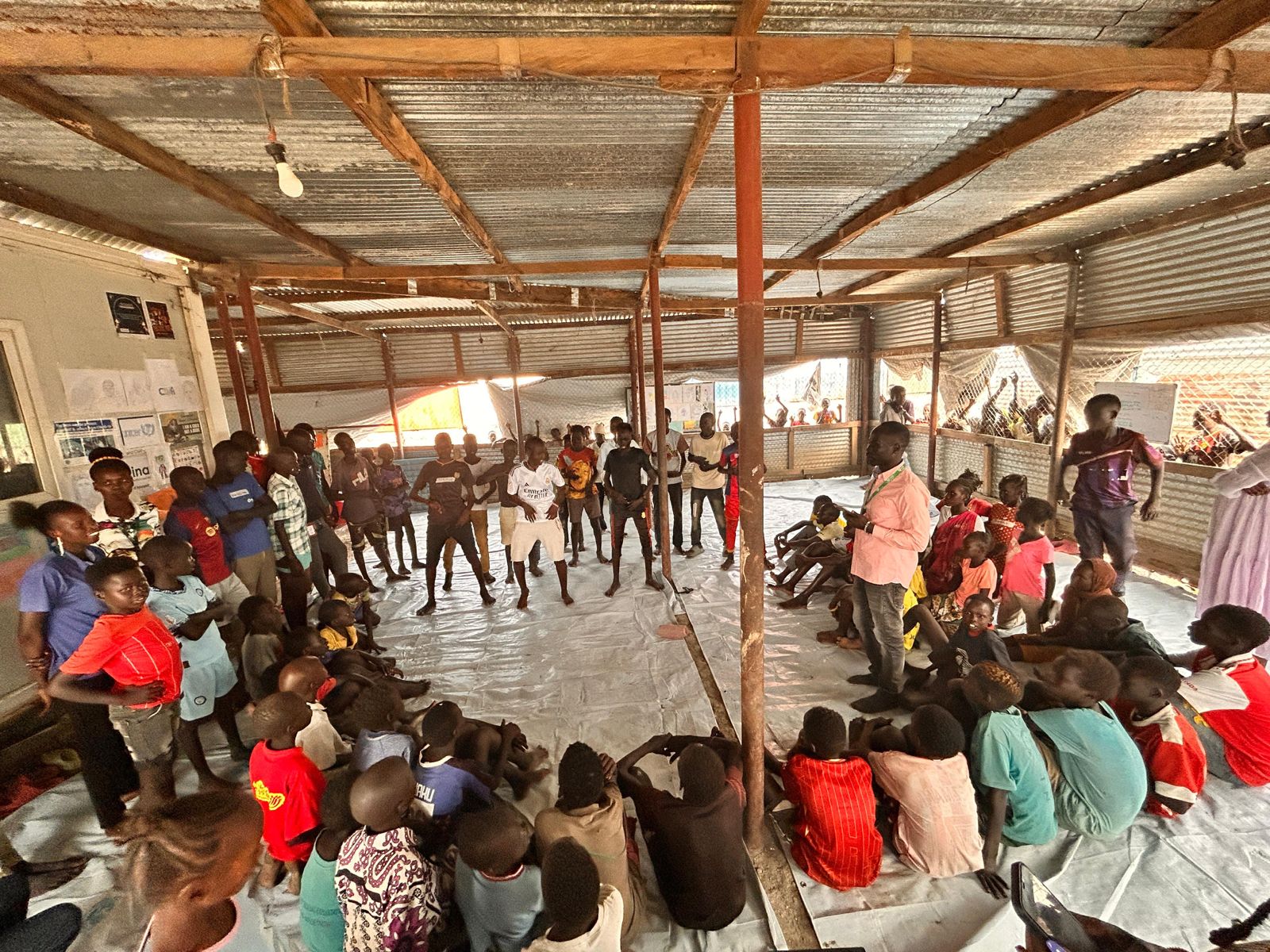
- Lack of safe third spaces for children to play and relax (outside of home and school which can be stressful)
- Lack of adults trained in basic resilience building caregiving techniques
- Lack of investment in resilience building programmes that protect against toxic stress
- Inconsistent training for local coaches to lead resilience building programmes
Based on their systems change analysis, the Waves for Change team identified a huge opportunity and made it their mission to better equip coaches to build resilience of vulnerable children using play.
We were doing something that was really effective, very much in isolation- reaching a few 1000 kids on the beaches of South Africa. But there are processes within that surfing program, for example how we trained our staff and how we structured our sessions, that had far wider application. - That's what the Globalizer helped us understand- how do we unlock that value so more people can use it. With Take 5, we’re creating more spaces where children can play, relax and thrive. The secret is in how we mobilise... and we mobilise with Take 5!
Strategy to Catalyze a Network of Changemakers towards the Targeted Mission
The strategy revolved around codifying their coach training and support/supervision process so others can use it.
Some of the tactics they deployed towards the mission as a part of the strategy include:
1) Involving and Inviting players that Employ Coaches to Adapt their Innovation by Manualizing their Coach Training Protocol
The World Health Organisation had recently recognized physical activity as an active ingredient in mental health promotion and the prevention programmes. In response, governments and humanitarian organisations have mobilised large networks of coaches to deliver physical activity programmes to vulnerable communities.
To support these efforts, Waves for Change developed a scalable coach training and supervision protocol, based on the successful protocol developed to grow their youth centres across South Africa, to better equip coaches to build resilience of vulnerable children using play.
The protocol focused on teaching 9 resilience-building coaching skills to improve coaches’ ability to work with vulnerable children. The protocol also taught coaches a simple, memorable five step routine to augment the physical activity and play sessions coaches already delivered.
The 5-step routine – named ‘The Take 5 Routine’, contains intentional play and song-based games that boost the social connections children form through sport as well as integrating simple self-regulation techniques – without disrupting the main focus of a sport or play based session – uninterrupted fun play!
To assist in the scale-up of Take 5, the team manualized the Take 5 approach.
Organisations who want to use Take 5 can now access a Coach Training and Supervision guide. This helps organisations rapidly embed the Take 5 model in their existing programmes to make their coaches more motivated and competent. For coaches working with children, a Take 5 coaching guide exists. This helps coaches master the Take 5 teaching routine and 9 resilience building caregiver skills.
Both the above guides are also available digitally, free of charge, to help organisations providing sport, arts and culture-based programmes improve their offering to children around the globe. Read more about Take 5 and Waves for Change here.
2) Collaborating with Strategic Organizations delivering Physical Activity Programmes to Pilot and Scale the Take 5 Train-the-trainer for Coaches
Waves for Change researched which organisations were delivering physical activity programmes at scale and trained their managers to embed the Take 5 model in their national programmes. Pilot partners included UNICEF South Sudan and the Department of Culture, Arts and Sport for the Western Cape.
Pilot studies showed that the Take 5 model improved training and supervision for coaches as well as motivation and competency outcomes for coaches. In other words, coaches got better! This led to improved attendance at sessions run by these coaches, and improved wellbeing and resilience outcomes for children attending their sessions.
In 2025, UNICEF’s ESARO office opened a special Take 5 fund, allowing any UNICEF offices in the South and East regions of Africa to apply for training in Take 5. In 2026, UNICEF offices in Malawi, Ethiopia and Kenya will be embedding the model in their child protection and education responses.
Since the Waves for Change team open accessed the Take 5 model and supervised a handful of trainers across each partner (governments and humanitarian orgs), 2,500 adults who are employed by these organizations to provide sport, play and arts programming to more than 95,000 children have been trained and are up taking the Take 5 model.
For more than 40 years, Ashoka has built and nurtured a network of 4000+ leading social entrepreneurs in the world. Read more about the Ashoka Fellowship here.
- 2016,
- 2024,
The Globalizer strategy accelerator supports social entrepreneurs gain clarity on systemic root causes of social and environmental problems and the importance of engaging more changemakers as part of the solutions. It enables them to design effective collaborative systems change strategies (based on respect to all humans and nature).
Refined since 2010, the accelerator is a structured collective thinking and experimenting process between social entrepreneurs, systems thought partners from Ashoka and selected leaders from business and the social sector.
Participated with support from
Elements of the Collaborative Systems Change Strategy
Hover/Click on things to dive deepType of Root Cause identified as a Leverage Point for Systems Change (Donella Meadows)
The first element of crafting a collaborative systems change strategy to address a problem is to define the problem and identify the most strategic change needed to address the root cause(s) of the problem. That becomes the targeted Systems Change Goal or the Mission.
To identify it, analyze the root causes—barriers, factors, dynamics, points or conditions driving the problem—and determine which offers the greatest leverage for change.
According to the FSG, leverage points include:
- Policies
- Practices
- Resource Flows
- Relationships & Roles
- Power Dynamics
- Mental Models
These "leverage points" are derived from the work of Donella Meadows, the pioneer in the field of systems thinking who articulated and conceptualized "Leverage Points: Places to Intervene in a System to Create Effective Change".
Explore Case Studies of different types of "Systems Change Goal(s)" in our Library.
Endgame / Pathway applied towards Activating a Network of Changemakers towards the targeted Systems Change
The second element of crafting a collaborative systems change strategy includes determining how to achieve the systems change goal.
This means choosing a strategy suited to the system’s context. The strategy could be to:
- Work with government
- Create a new field/market
- Build a competitive advantage
- Shift societal narratives
The items on the list are neither mutually exclusive, nor collectively exhaustive.
You can read more about the types of systems change strategies/pathways/endgames/stories we have come across in this article by Odin Muehlenbein.
Explore Case Studies on different "Types of Strategy" in our Library.
Types of stakeholders activated as changemakers towards the systems change
The third element of crafting a collaborative systems change strategy includes identifying the critical stakeholders to activate as partners- those who influence an exponential number of people in the context of the system.
Irrespective of the type of strategy, systemic change always requires activation of a network of stakeholders for different tactics towards the mission.
Typical stakeholder groups for systemic change include:
- government agencies
- universities (e.g. education schools for the empathy paradigm, public health and med schools for the health paradigm, etc.)
- publishers (e.g. education publishers for empathy, medical journals for health, etc.)
- informal & formal communities / unions (e.g. AARP for longevity, teachers' unions for empathy, families, etc.)
- media companies
- industry-specific companies / organizations (e.g. tech companies and financial institutions for the technology paradigm, insurance and healthcare companies for longevity, relevant civil society organizations etc.).
Explore Case Studies on different "Types of Partners Engaged" in our Library.
The depths of engagements in play for the different stakeholders (CoCreative)
The fourth and final element of crafting a collaborative systems change strategy includes reflecting on what depth to engage with each stakeholder.
Activating a broad network is essential, but so is clarifying their role: Are they simply informed, consulted, or co-creating the strategy?
CoCreative's Five Levels of Engagement Framework guides how one may engage with each stakeholder. Are you:
- co-creating?
- collaborating?
- involving?
- consulting?
- informing?
Explore Case Studies on different "Levels of Stakeholder Engagement" in our Library.
Their work contributes towards


The 2030 Agenda for Sustainable Development, adopted by all United Nations Member States in 2015, provides a shared blueprint for peace and prosperity for people and the planet, now and into the future. At its heart are the 17 Sustainable Development Goals (SDGs), which are an urgent call for action by all countries - developed and developing - in a global partnership.
Explore Case Studies on strategies contributing to addressing different "SDGs" in our Library.
The root causes of global socio-ecological unsustainability their work is addressing (FSSD)
According to the Framework for Strategic Sustainable Development (FSSD) co-created by Ashoka Fellow Dr. Karl-Henrik Robèrt and Dr. Göran Broman and Dr. Merlina Missimer of the Blekinge Institute of Technology, Sweden, there are 8 root causes of all socio-ecological unsustainability problems (also referred to as Sustainability Principles):
- extraction from Earth's crust
- chemical pollution
- physical destruction
- barriers to health
- barriers to competence
- barriers to influence/participation
- barriers to impartiality
- barriers to meaning-making
To get a deeper feel, here are videos on the ecological and social sustainability principles.
You can see case studies of changemakers contributing to addressing different root causes ("Sustainability Principles") in our Library.


