The Social Innovation
Founded in 1998, ZMQ aimed to improve the lives of underserved and marginalized communities by using mobile games to address challenges in healthcare and education. Within a few years of its founding, it moved to addressing issues on communicable diseases and maternal and child health.
At the core of ZMQ’s work is its Communication for Development model, which empowers communities to take charge of their health through interactive, grassroots strategies. Collaborating closely with community health workers, ZMQ employs role-play games, decision-tree storytelling, mobile training tools, and Internet of Things (IoT)-enabled wearables to drive sustainable behavior change.
Its YourStoryTeller platform has reached over 12 million viewers with authentic, locally relevant stories that shift social norms around health, while IoT-based “Toys for Change” use RFID chips to deliver messages and track engagement even in areas with limited connectivity. These tools were formulated to overcome ZMQ’s belief that information alone is not enough—true transformation requires storytelling, experiential learning, and tangible reminders that resonate with communities.
Complementing these tools, ZMQ’s Technology for Development and Triple Impact models harness artificial intelligence, big data, and IoT to accelerate social transformation. The Triple Impact framework includes:
- AI4D (Artificial Intelligence for Development), which designs and trains models to deliver life-saving and life-improving tools;
- IoT4D (Internet of Things for Development), which embeds IoT in disconnected regions to generate ground-level data and knowledge; and
- R4D (Research for Development), which builds applications and scientifically tests them to ensure solutions can be applied for human development.
Together, these approaches serve as the essence of their programs, and strengthen public health, advance climate resilience, and drive social behavior change.
Magnitude of the Problem, and its Root Causes
High maternal and infant mortality rates persist in low-resource settings. In India, the Maternal Mortality Rate (MMR) is 167/100,000 live births, and the Infant Mortality Rate (IMR) is 34/1,000. Rural and urban poverty-stricken populations, especially migrants and marginalized groups, face systemic barriers to accessing health information and services.
During their participation in the Globalizer co-created by Ashoka and Philips Foundation in 2018, the ZMQ team highlighted the following key factors contributing to the magnitude of the problem:
- Lack of accessible, culturally relevant health information for women (especially illiterate/semi-literate)
- Overburdened and under-resourced Community Health Worker (CHW) networks; insufficient last-mile connectivity
- Social exclusion and mistrust of health systems among marginalized groups (e.g., migrants, transgender people)
- Gender inequity and lack of dignified livelihood opportunities for women
Based on their systems change analysis, ZMQ made it a mission to transform the role of pregnant women and new mothers from passive recipients of care to proactive demand-generators for it and, ultimately, to custodians of their own health in the maternal and child healthcare systems in India and beyond.
"Every Globalizer is a great learning. If I get an opportunity to participate in the Globalizer, it is not to just to go to the Summit and meet other Fellows—it is to reflect through the strategy process and learn about what all is possible. We look at other Fellows, see their models, and realize: my model is based on something, but when I see how someone else does it, I learn from them."
Strategy to Catalyze a Network of Changemakers towards the Targeted Mission
The strategy includes driving widespread adoption of the tools and technology through cross-sector stakeholder engagement where mothers are the custodians of health.
Some of the tactics they deployed towards the mission as a part of the strategy include:
1) Collaborating with Multi-Sector Partners for Involving Mothers as Custodians
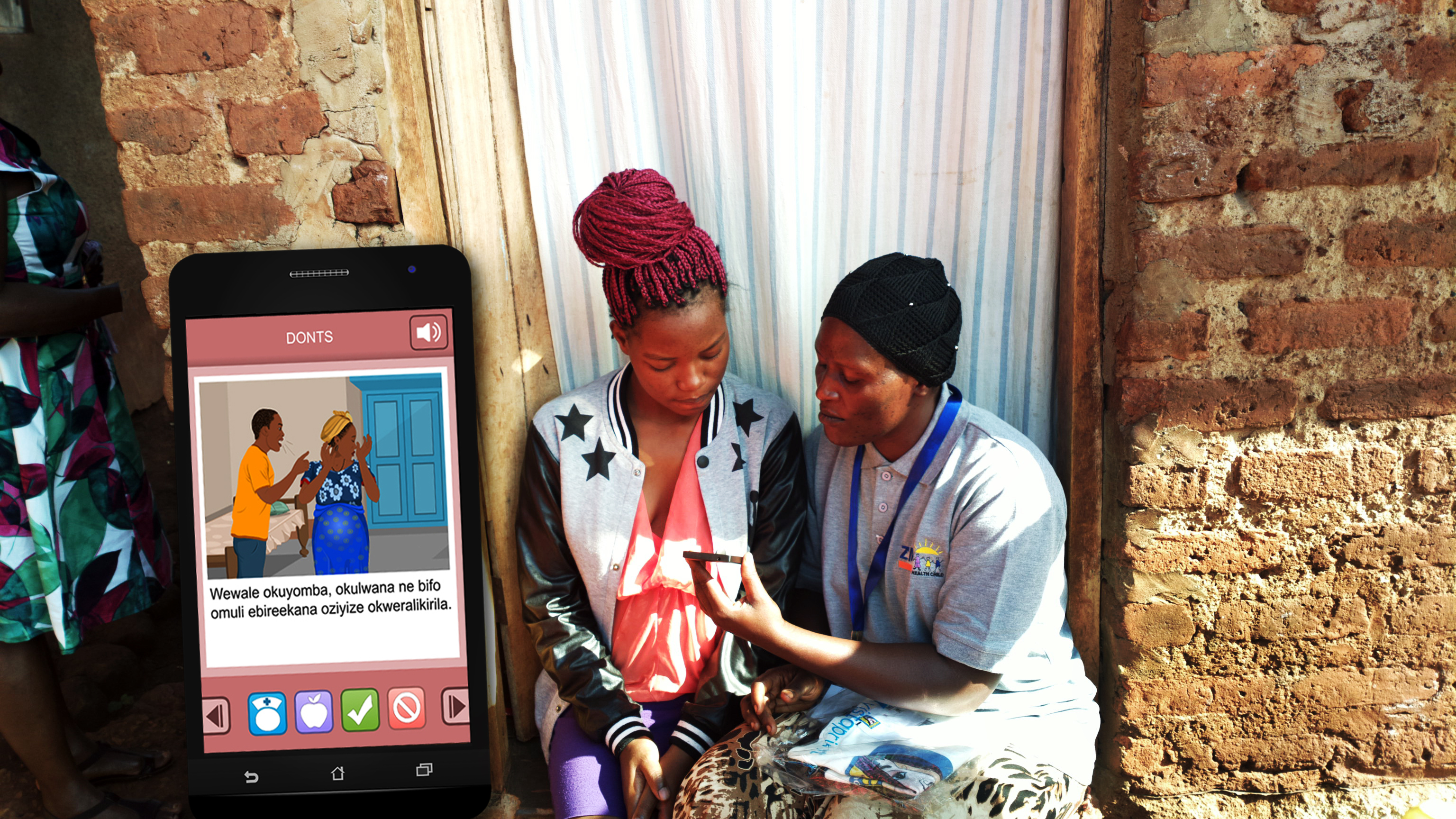
In 2012, ZMQ launched the MIRA Channel—a mobile phone–based maternal and child health platform designed for rural women—aimed at shifting pregnant women and new mothers from passive recipients of services to active drivers of care and informed stewards of their own health.
MIRA Channel is a mobile-based integrated health platform reducing maternal and child mortality through last-mile, cost-effective solutions.
The work starts with teams conducting house-to-house visits to identify pregnant women and children for immunization. The platform:
- Digitally registers and tracks pregnant women, children (0–5 years), and adolescent girls.
- Provides customized weekly health information and behavior-change stories.
- Monitors pregnancies, identifies high-risk cases and connects women to ANC, TT, IFA, ultrasounds and other services.
- Equips health workers with decision-support tools, live-data dashboards and house-to-house engagement to strengthen service delivery.
MIRA helps strengthen the health systems by training health workers, supporting mothers to adopt proactive health-seeking practices and detecting high risk pregnancies on time.
ZMQ has co-created multi-sector partnerships for government adoption of MIRA which required aligning stakeholders around a shared vision and national priorities.
For the adoption and scaling up of any effective healthcare system, government involvement is crucial. With this in mind ZMQ collaborates with public, private, civil society, and researchers early through structured dialogue to build ownership and define clear roles. This engagement generated strong evidence and unified messaging to influence policy windows and decision-makers. ZMQ has developed a sustainable model where, on the one hand, government provides infrastructure and policy support along with access to their system and CHWs and, on the other, international donors, the private sector and Corporate Social Responsibility partners contribute with resources and funding.
The collaborative approach has enabled ZMQ to scale MIRA in different states in India and to Uganda and Afghanistan, with pilots carried out in Rwanda and Haiti as well. Through this multi-stakeholder approach to amplify government adoption, MIRA has reached over 5,200,000 beneficiaries and 7,700 CHWs. This extended reach substantially improved MMR and IMR in the areas of interventions. See more here.
The lasting uptake and expansion of this effective healthcare information and diagnostics tool requires more than technology and frontline workers—it demands a network of committed partners.
2) Involving and Training Transgender People as Health Intermediaries in Poverty Stricken Urban Areas to Influence Communities (especially Mothers) to Immunize Children
Recognizing that traditional health outreach often misses the most marginalized, ZMQ also works with hyper-local solutions like their SAKHEE program which provide direct benefit to the communities as is the case of poverty-stricken urban areas in Thane, Maharashtra.
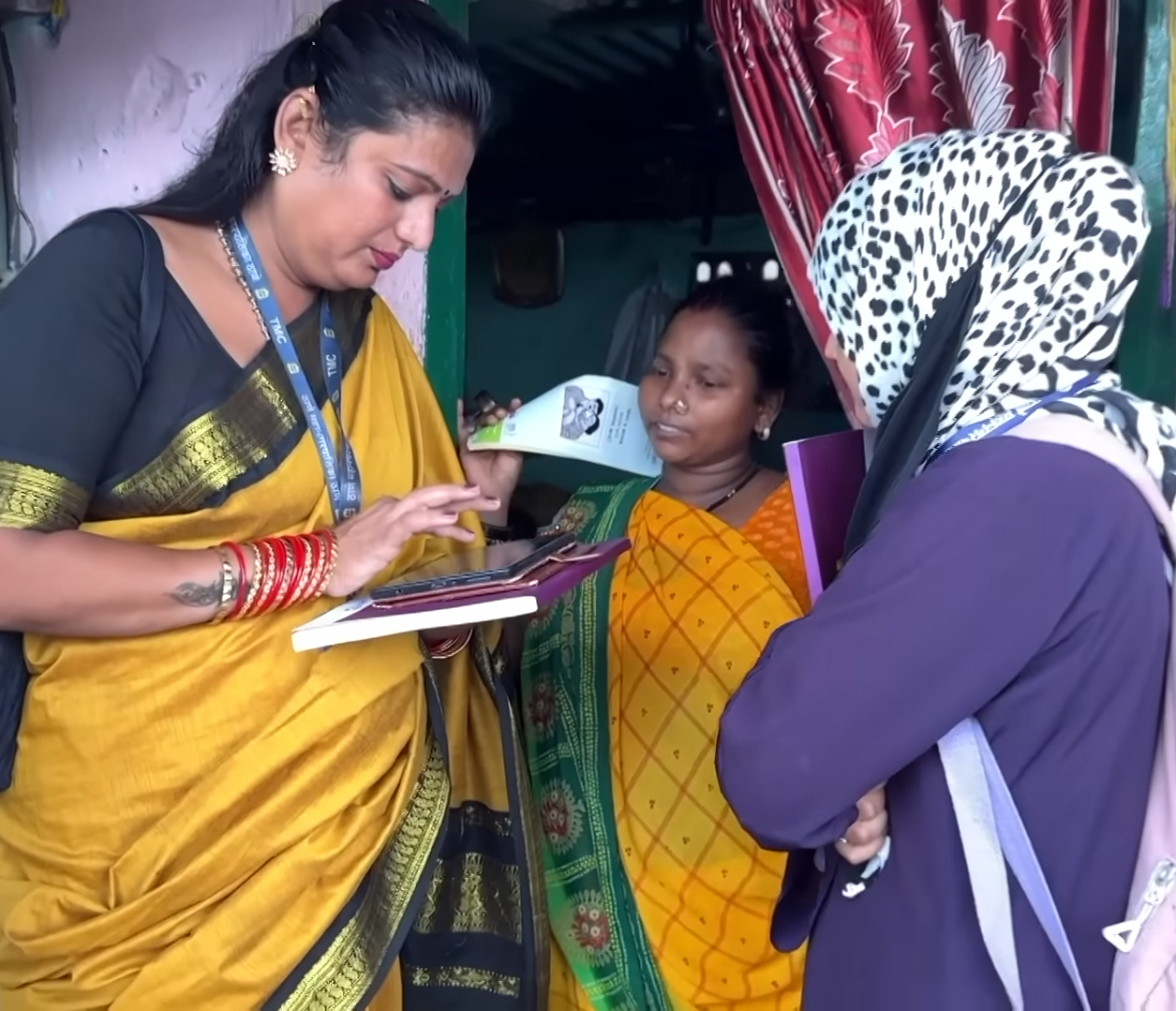
SAKHEE trains transgender individuals as Intermediary Health Workers, leveraging their informal community networks and technology to identify zero-dose and low-immunized children, build trust, and improve access to vaccination.
SAKHEE has reached over 390,000 population, identified 1,511 zero-doe and low-immunized children and successfully converted 73% refusal cases. This tactic has not only improved health outcomes but has also provided dignified livelihoods for transgender individuals, challenging social stigma and creating new models of inclusion.
3) Involving and Training Women from Vulnerable Communities to Improve Nutrition and Livelihoods
Along with providing healthcare support, ZMQ recognizes undernutrition and economic inequality in India continue to weaken women’s health, especially in tribal and rural areas. Limited nutrition and healthcare reduce their strength and productivity, restricting access to education and entrepreneurship. These restrictions trap families in cycles of poverty and intergenerational malnutrition.
ZMQ’s Hatching Hope India initiative empowers women in vulnerable tribal communities of Mayurbhanj, Odisha, by promoting backyard poultry farming to improve household nutrition and create sustainable livelihood opportunities. The program combines digital and non-digital tools for training and capacity building of women entrepreneurs with strong community mobilization, robust on-ground implementation, and real-time monitoring through a live dashboard.
The program has reached 330,802 households (1,654,010 people), trained 120,000 girls on nutrition, 80,000 women on poultry farming and created over 120 rural women entrepreneurs and substantially improved the nutrition level of the communities.
____
Over the years, across these tactics and more, ZMQ has delivered 230+ behaviour-change projects and 65+ system-change solutions, reaching over 275 million people worldwide. Through a South-South collaboration model, ZMQ scales proven innovations across Low- and Middle-Income Countries including Uganda, Rwanda, Afghanistan and DR Congo with offices in Kampala and Montreal, supporting its growing global impact.
Moving forward, ZMQ aims to focus on tackling the impact of climate change on health, livelihoods, and gender equity through its multi-dimensional approach, ZMQ is reaching underserved communities and advancing holistic development in line with India's vision of Viksit Bharat to achieve zero poverty through inclusive development and financial empowerment of marginalized communities by 2047.
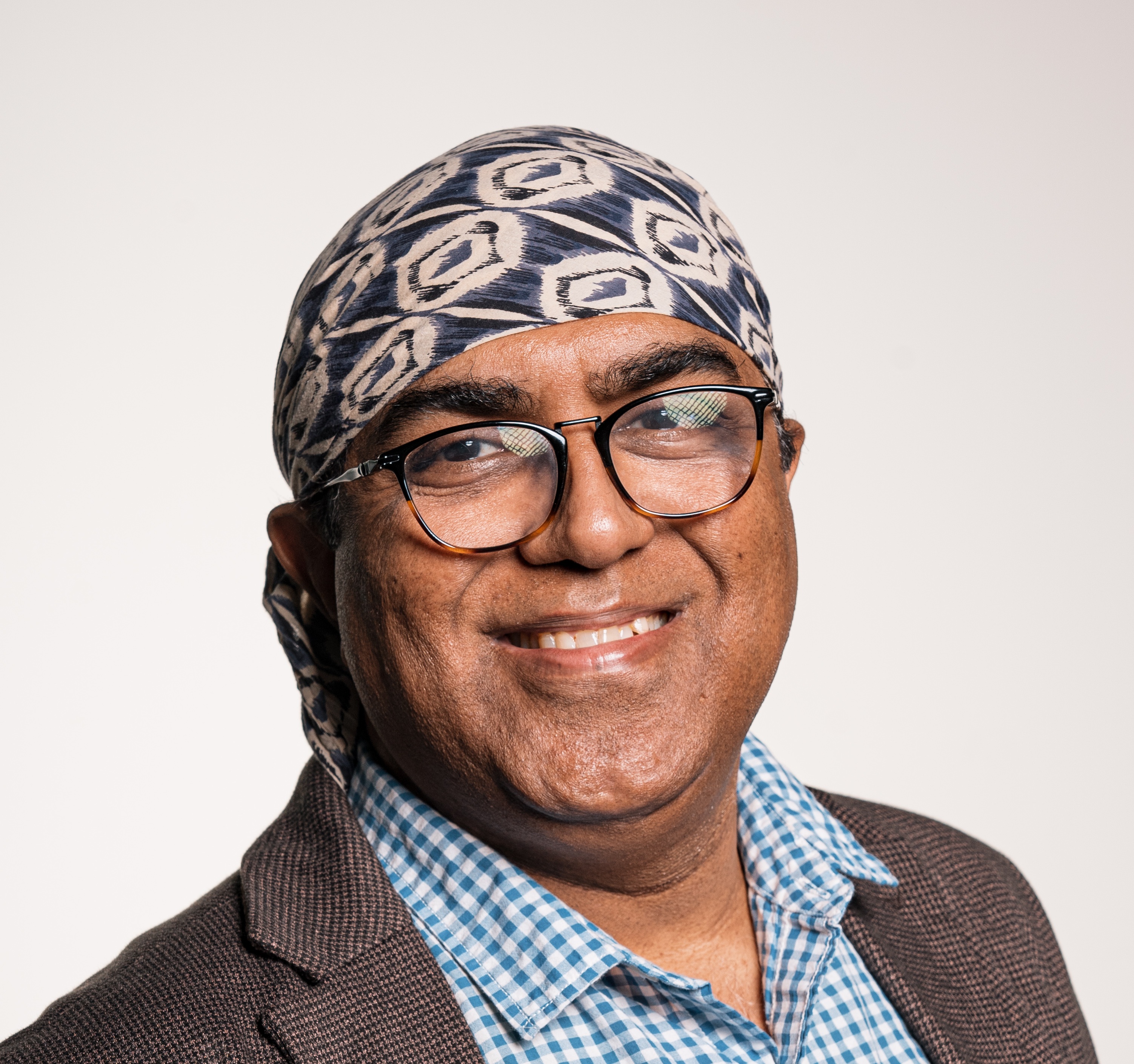
For more than 40 years, Ashoka has built and nurtured a network of 4000+ leading social entrepreneurs in the world. Read more about the Ashoka Fellowship here.
- 2010,
- 2012,
- 2018,
The Globalizer strategy accelerator supports social entrepreneurs gain clarity on systemic root causes of social and environmental problems and the importance of engaging more changemakers as part of the solutions. It enables them to design effective collaborative systems change strategies (based on respect to all humans and nature).
Refined since 2010, the accelerator is a structured collective thinking and experimenting process between social entrepreneurs, systems thought partners from Ashoka and selected leaders from business and the social sector.
Participated with support from
Elements of the Collaborative Systems Change Strategy
Hover/Click on things to dive deepType of Root Cause identified as a Leverage Point for Systems Change (Donella Meadows)
The first element of crafting a collaborative systems change strategy to address a problem is to define the problem and identify the most strategic change needed to address the root cause(s) of the problem. That becomes the targeted Systems Change Goal or the Mission.
To identify it, analyze the root causes—barriers, factors, dynamics, points or conditions driving the problem—and determine which offers the greatest leverage for change.
According to the FSG, leverage points include:
- Policies
- Practices
- Resource Flows
- Relationships & Roles
- Power Dynamics
- Mental Models
These "leverage points" are derived from the work of Donella Meadows, the pioneer in the field of systems thinking who articulated and conceptualized "Leverage Points: Places to Intervene in a System to Create Effective Change".
Explore Case Studies of different types of "Systems Change Goal(s)" in our Library.
Endgame / Pathway applied towards Activating a Network of Changemakers towards the targeted Systems Change
The second element of crafting a collaborative systems change strategy includes determining how to achieve the systems change goal.
This means choosing a strategy suited to the system’s context. The strategy could be to:
- Work with government
- Create a new field/market
- Build a competitive advantage
- Shift societal narratives
The items on the list are neither mutually exclusive, nor collectively exhaustive.
You can read more about the types of systems change strategies/pathways/endgames/stories we have come across in this article by Odin Muehlenbein.
Explore Case Studies on different "Types of Strategy" in our Library.
Types of stakeholders activated as changemakers towards the systems change
The third element of crafting a collaborative systems change strategy includes identifying the critical stakeholders to activate as partners- those who influence an exponential number of people in the context of the system.
Irrespective of the type of strategy, systemic change always requires activation of a network of stakeholders for different tactics towards the mission.
Typical stakeholder groups for systemic change include:
- government agencies
- universities (e.g. education schools for the empathy paradigm, public health and med schools for the health paradigm, etc.)
- publishers (e.g. education publishers for empathy, medical journals for health, etc.)
- informal & formal communities / unions (e.g. AARP for longevity, teachers' unions for empathy, families, etc.)
- media companies
- industry-specific companies / organizations (e.g. tech companies and financial institutions for the technology paradigm, insurance and healthcare companies for longevity, relevant civil society organizations etc.).
Explore Case Studies on different "Types of Partners Engaged" in our Library.
The depths of engagements in play for the different stakeholders (CoCreative)
The fourth and final element of crafting a collaborative systems change strategy includes reflecting on what depth to engage with each stakeholder.
Activating a broad network is essential, but so is clarifying their role: Are they simply informed, consulted, or co-creating the strategy?
CoCreative's Five Levels of Engagement Framework guides how one may engage with each stakeholder. Are you:
- co-creating?
- collaborating?
- involving?
- consulting?
- informing?
Explore Case Studies on different "Levels of Stakeholder Engagement" in our Library.
Their work contributes towards


The 2030 Agenda for Sustainable Development, adopted by all United Nations Member States in 2015, provides a shared blueprint for peace and prosperity for people and the planet, now and into the future. At its heart are the 17 Sustainable Development Goals (SDGs), which are an urgent call for action by all countries - developed and developing - in a global partnership.
Explore Case Studies on strategies contributing to addressing different "SDGs" in our Library.
The root causes of global socio-ecological unsustainability their work is addressing (FSSD)
According to the Framework for Strategic Sustainable Development (FSSD) co-created by Ashoka Fellow Dr. Karl-Henrik Robèrt and Dr. Göran Broman and Dr. Merlina Missimer of the Blekinge Institute of Technology, Sweden, there are 8 root causes of all socio-ecological unsustainability problems (also referred to as Sustainability Principles):
- extraction from Earth's crust
- chemical pollution
- physical destruction
- barriers to health
- barriers to competence
- barriers to influence/participation
- barriers to impartiality
- barriers to meaning-making
To get a deeper feel, here are videos on the ecological and social sustainability principles.
You can see case studies of changemakers contributing to addressing different root causes ("Sustainability Principles") in our Library.