
The Social Innovation
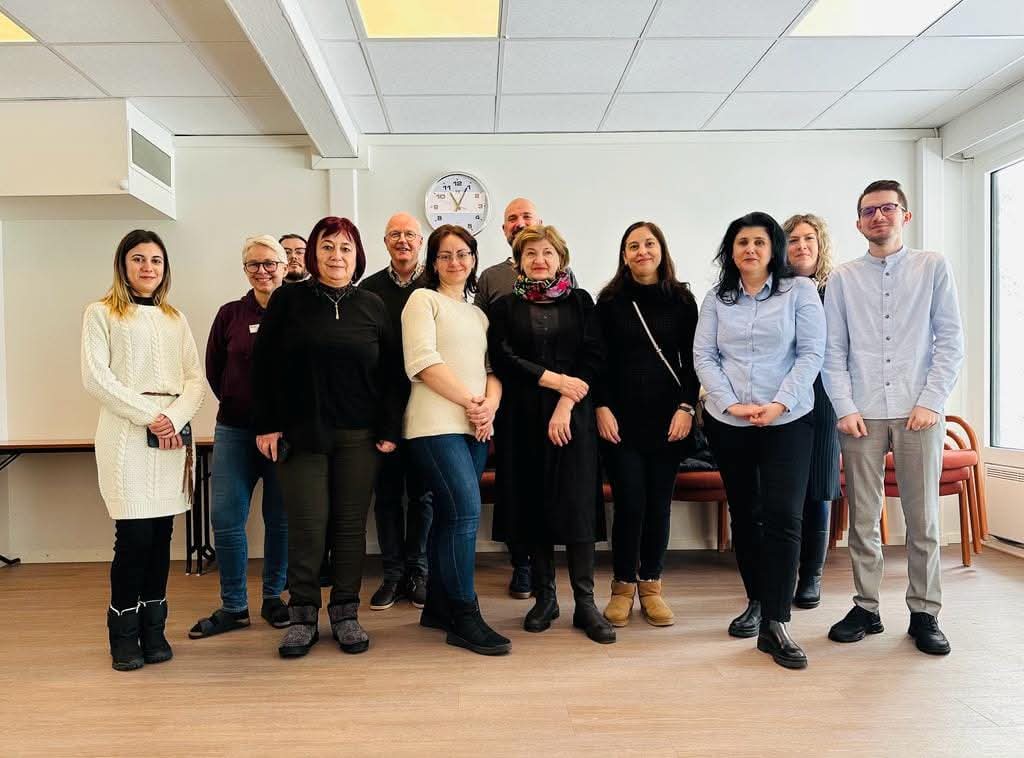
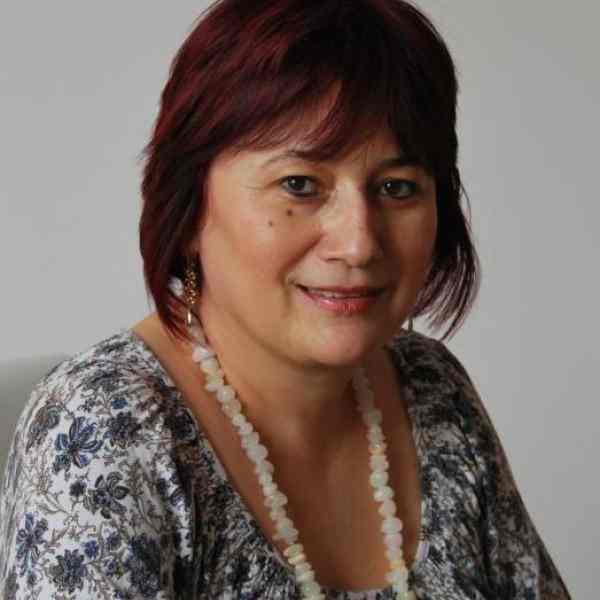
Dorica Dan and Asociația Prader Willi din România (RPWA) provides critical support for patients with rare diseases (RDs) and their families, facilitating faster diagnoses and better treatments, in Romania through the NoRo centers. NoRo serves as a comprehensive service hub, offering therapies, therapeutic education, training, and integrated medical and social services.
Since 2003, RPWA has supported over 7,348 patients with rare diseases through clinical consultations, connections to care services, and therapeutic interventions. Additionally, RPWA engages in advocacy to improve legislation and raise awareness about rare diseases in Romania. The organization was instrumental in establishing the National Council for Rare Diseases in Romania.
Magnitude of the Problem, and its Root Causes
In Romania, more than 90% of the patients with rare diseases (RDs) are undiagnosed and struggle to access the services and the support they need, about half of them are children.
During their participation in the Accelerating Healthcare Access Globalizer, co-created by Ashoka and the Philips Foundation in 2020, the RPWA team identified key factors contributing to the improper diagnosis and lack of access to treatment for patients with rare diseases in Romania:
- Patients with RDs are not found in statistics at national level- there is no national registry for rare diseases.
- Inadequate codification of RDs (ICD 10 used in the health and care systems covers only about 500 different RDs among almost 8000 known RDs).
- 95 % of RDs do not have approved treatments or therapies anywhere in the world and in Romania we have not yet approved all the existing treatments.
- waiting time for getting treatment is at least 4.8 years from the first symptoms which means that many children die before the age of five.
- the disconnected nature of health services results in an unstructured and uncertain care pathway, with 65% of patients needing to visit more than seven physicians before receiving a diagnosis.
- 40% of patients are misdiagnosed at least once.
- shrinking capacity of medical staff.
Based on their systems change analysis, RPWA made it their mission to address the disconnected nature of health services by improving formal processes in the Romanian public healthcare system.
Strategy to Catalyze a Network of Changemakers towards the Targeted Mission
The strategy to increase the connectedness of the health services includes working with the government to coordinate existing social and healthcare services, establish new ones, make them more physically accessible for patients across the country and empower the healthcare providers to build and exercise their agency to adopt new practices to support patients with rare diseases.
Some of the tactics they deployed towards the mission as a part of the strategy include:
1) Co-creating an Advocacy Campaign to push for Policies to be Inclusive of Needs of Patients with Rare Diseases
RPWA in partnership with Romanian National Alliance for Rare Diseases, Romanian Association for Rare Cancers and other stakeholders recently successfully advocated for rare cancers to be part of the national cancer plan and to include needs of patients with rare diseases in the National Strategy for Health.
By collaborating with the Ministry of Health, National Drug Agency and the National Health Insurance, they are making sure that the care and treatment for patients with rare diseases are accounted for in the policy plans.
2) Involving Community Nurses to Adopt the Role of Case Managers for RDs by Co-creating Training Curriculum with key Stakeholders
RPWA, in collaboration with partners like the Ministry of Healthcare, National Health Insurance, local authorities in Zalău and Sălaj, and medical universities, has designed a curriculum and trained over 1200 community nurses to serve as case managers for patients with rare diseases. They plan to train an additional 2,000 nurses in the coming months, continuing their capacity-building efforts.
3) Collaborating with Partners to Test and Advocate for a National Case Management Platform
To enable a more structured caregiving pathway for patients with rare diseases, RPWA has established a partnership agreement with Ministry of Health in 2016 and worked with other stakeholders like Medical University in Timișoara, Children Hospital Louis Țurcanu Timișoara and Frambu Center for Rare Disorders Norway on testing a case management module for RDs in the national platform for community nurses and demonstrated feasibility.
In 2024, RPWA has created the RDs module in the case management platform for community nurses, so that they don’t need to report in a different platform or duplicate the work. It makes the experience smoother and less stressful for the patients as they navigate the disconnected caregiving pathway, ensuring better health outcomes.
4) Knowledge Sharing and Consulting with Peers to bring International Best Practices to the National Healthcare System
RPWA is part of a global network of nurses supporting patients with rare diseases and different working groups for rare diseases at EU level. This enables them to bring best practices and learnings to Romania, leveraging expertise from the European Organization for Rare Diseases – Eurordis and Rare Disease International for complex cases.
RPWA and RONARD (another collaborator) participate in the JARDIN (Joint Action for Rare Diseases on Integration of ERNs into National Healthcare Systems), and through that work towards reducing the waiting time for patients and making the patient pathway smoother.
This Joint Action, co-funded by the European Union, is part of a commitment to improve the lives of people, to make the so-called ‘patient journey’ a little easier and more accessible. Therefore, JARDIN’s mission is to improve accessibility to European Reference Networks by integrating them into National Healthcare Systems.
For more than 40 years, Ashoka has built and nurtured a network of 4000+ leading social entrepreneurs in the world. Read more about the Ashoka Fellowship here.
- 2020,
The Globalizer strategy accelerator supports social entrepreneurs gain clarity on systemic root causes of social and environmental problems and the importance of engaging more changemakers as part of the solutions. It enables them to design effective collaborative systems change strategies (based on respect to all humans and nature).
Refined since 2010, the accelerator is a structured collective thinking and experimenting process between social entrepreneurs, systems thought partners from Ashoka and selected leaders from business and the social sector.
Participated with support from
Elements of the Collaborative Systems Change Strategy
Hover/Click on things to dive deepType of Root Cause identified as a Leverage Point for Systems Change (Donella Meadows)
The first element of crafting a collaborative systems change strategy to address a problem is to define the problem and identify the most strategic change needed to address the root cause(s) of the problem. That becomes the targeted Systems Change Goal or the Mission.
To identify it, analyze the root causes—barriers, factors, dynamics, points or conditions driving the problem—and determine which offers the greatest leverage for change.
According to the FSG, leverage points include:
- Policies
- Practices
- Resource Flows
- Relationships & Roles
- Power Dynamics
- Mental Models
These "leverage points" are derived from the work of Donella Meadows, the pioneer in the field of systems thinking who articulated and conceptualized "Leverage Points: Places to Intervene in a System to Create Effective Change".
Explore Case Studies of different types of "Systems Change Goal(s)" in our Library.
Endgame / Pathway applied towards Activating a Network of Changemakers towards the targeted Systems Change
The second element of crafting a collaborative systems change strategy includes determining how to achieve the systems change goal.
This means choosing a strategy suited to the system’s context. The strategy could be to:
- Work with government
- Create a new field/market
- Build a competitive advantage
- Shift societal narratives
The items on the list are neither mutually exclusive, nor collectively exhaustive.
You can read more about the types of systems change strategies/pathways/endgames/stories we have come across in this article by Odin Muehlenbein.
Explore Case Studies on different "Types of Strategy" in our Library.
Types of stakeholders activated as changemakers towards the systems change
The third element of crafting a collaborative systems change strategy includes identifying the critical stakeholders to activate as partners- those who influence an exponential number of people in the context of the system.
Irrespective of the type of strategy, systemic change always requires activation of a network of stakeholders for different tactics towards the mission.
Typical stakeholder groups for systemic change include:
- government agencies
- universities (e.g. education schools for the empathy paradigm, public health and med schools for the health paradigm, etc.)
- publishers (e.g. education publishers for empathy, medical journals for health, etc.)
- informal & formal communities / unions (e.g. AARP for longevity, teachers' unions for empathy, families, etc.)
- media companies
- industry-specific companies / organizations (e.g. tech companies and financial institutions for the technology paradigm, insurance and healthcare companies for longevity, relevant civil society organizations etc.).
Explore Case Studies on different "Types of Partners Engaged" in our Library.
The depths of engagements in play for the different stakeholders (CoCreative)
The fourth and final element of crafting a collaborative systems change strategy includes reflecting on what depth to engage with each stakeholder.
Activating a broad network is essential, but so is clarifying their role: Are they simply informed, consulted, or co-creating the strategy?
CoCreative's Five Levels of Engagement Framework guides how one may engage with each stakeholder. Are you:
- co-creating?
- collaborating?
- involving?
- consulting?
- informing?
Explore Case Studies on different "Levels of Stakeholder Engagement" in our Library.
Their work contributes towards


The 2030 Agenda for Sustainable Development, adopted by all United Nations Member States in 2015, provides a shared blueprint for peace and prosperity for people and the planet, now and into the future. At its heart are the 17 Sustainable Development Goals (SDGs), which are an urgent call for action by all countries - developed and developing - in a global partnership.
Explore Case Studies on strategies contributing to addressing different "SDGs" in our Library.
The root causes of global socio-ecological unsustainability their work is addressing (FSSD)
According to the Framework for Strategic Sustainable Development (FSSD) co-created by Ashoka Fellow Dr. Karl-Henrik Robèrt and Dr. Göran Broman and Dr. Merlina Missimer of the Blekinge Institute of Technology, Sweden, there are 8 root causes of all socio-ecological unsustainability problems (also referred to as Sustainability Principles):
- extraction from Earth's crust
- chemical pollution
- physical destruction
- barriers to health
- barriers to competence
- barriers to influence/participation
- barriers to impartiality
- barriers to meaning-making
To get a deeper feel, here are videos on the ecological and social sustainability principles.
You can see case studies of changemakers contributing to addressing different root causes ("Sustainability Principles") in our Library.


