The Social Innovation
Quick: Garbage Truck Approaching! began as a Facebook Page in 2013, encouraging people to save reusable items from landfill.
The initiative empowers Polish citizens to prevent waste, repair and reuse items, and take pride in sustainable behaviors. The work has saved 35,000 tons of items from going to the landfill per year.
The movement has inspired similar groups and initiatives, multiplying its impact beyond direct control.
Magnitude of the Problem, and its Root Causes
Each year, approximately 415,000 tons of reusable objects are destroyed and discarded in Poland, despite their potential for reuse. This contributes to waste, pollution, resource depletion, and climate change, while also imposing high costs on waste management systems.
During their participation in the Dela Program co-created by Ashoka and IKEA Social Entrepreneurship in 2021, they highlighted the following key factors contributing to the magnitude of the problem:
- A consumer mindset that equates buying with happiness, and a stigma around using second-hand goods
- The perception that being eco-friendly is difficult, ineffective, or shameful
- Business models that discourage repair and reuse
- Legal structures not aligned with EU circular economy goals
- Lack of accessible, enjoyable tools and spaces for giving away or repairing items
Based on their systems change analysis, they made it their mission to make people aware, responsible and empowered to reuse and repair things to prevent more waste that goes to landfills.
Strategy to Catalyze a Network of Changemakers towards the Targeted Mission
The strategy to shift the mental models and behaviour of the Polish society towards waste includes spreading awareness and strengthening infrastructure to make repair and reuse easier.
Some of the tactics they deployed towards the mission as a part of the strategy include:
1) Consulting with Volunteers and Leaders across Sectors to Create an Umbrella Structure to Involve more People in the Movement
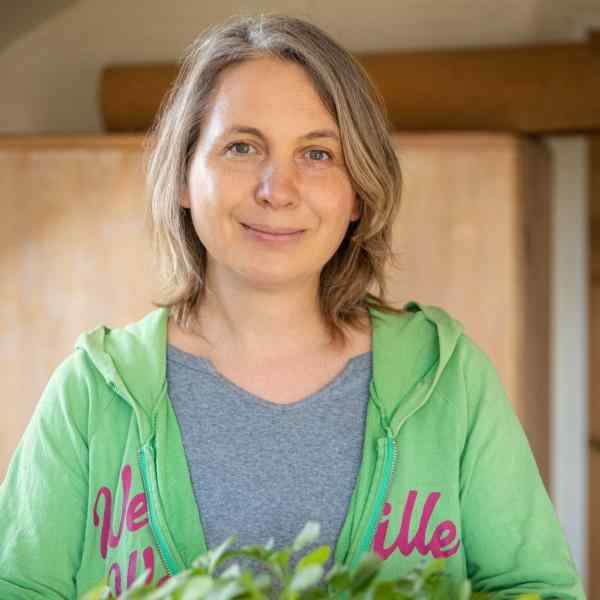
Recognizing the need for sustainability and scale, Dominika transitioned the initiative from an informal network to a formal foundation. She built a board, professionalized volunteer management, and secured grants for organizational development from the Polish Government’s National Freedom Institute.
The foundation also invested in impact measurement, fundraising strategy, and communications, ensuring long-term viability and the ability to attract further support. This structure provided legitimacy, access to funding, and a platform for scaling.
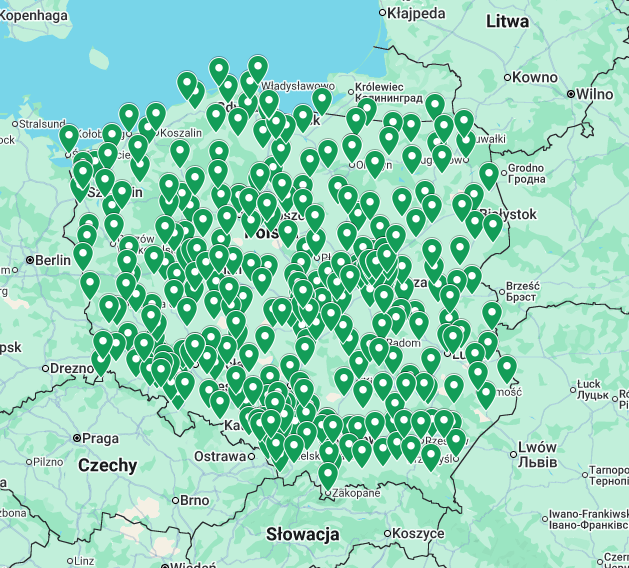
Over 13 years, it has grown into a nationwide movement with 328 Facebook groups, a community of 1,190,000 users, and 201 volunteers.
2) Collaborating with Tech for Rescue & Pro Bono Experts to Involve People more easily to Exchange Items
Given the recent shifts in Facebook algorithms, an idea was to move beyond Facebook groups and create a dedicated, user-friendly online platform to make giving away, repairing, and reusing items easy, fun, and measurable.
The idea was to build an automated tool that would allow people across Poland to list unwanted items, find things they needed, connect with others, and track the collective environmental impact of their actions. This tool was also envisioned as a way to build community, facilitate education, and provide data for advocacy and fundraising.
With support from Tech To The Rescue—a nonprofit that connects tech companies with social initiatives—Dominika’s team was able to develop a minimum viable product (MVP) for the platform. The MVP demonstrated the basic functionality: users could post items and see some impact metrics.
While building the tool itself was achievable (with pro bono tech support), the real challenge emerged in sustaining and scaling it. They found that there was no clear business model for such a platform. Grants for charity projects often require a path to sustainability, but the tool did not fit neatly into either a traditional charity or a for-profit impact business model. There was uncertainty about whether users would pay for access, and no established market for monetizing the platform through ads or data.
The team has paused further development until a viable business model or sustainable funding source could be identified.
3) Creating Awareness by Informing and Inviting People to join the movement by Collaborating with Schools, Artists and National Heritage Museum
Dominika understands that infrastructure alone does not change behavior; people need to feel proud, not ashamed, of reusing and repairing. To shift mindsets, they are planning to launch something on the lines of the “Waste Prevention Fiesta” in schools—a festive, hands-on event where students, teachers, and parents can experience the joy of waste prevention. The program will includes toolkits for organizing events, educational workshops, flea markets, repair demonstrations, and upcycling art shows.
Beyond schools, the foundation runs webinars, social media campaigns, and collaborations with artists and influencers to make sustainability visible, fun, and aspirational. The aim is to normalize circular behaviors and create a sense of community pride.
Another approach they have deployed is to identify that valuable national heritage items are being lost to landfill. To address this, the foundation runs educational webinars about what constitutes heritage, how to preserve it, and where to donate items. They collaborate with museums and archives to rescue and restore objects found through the groups, and document success stories to inspire others.
For more than 40 years, Ashoka has built and nurtured a network of 4000+ leading social entrepreneurs in the world. Read more about the Ashoka Fellowship here.
- 2021,
The Globalizer strategy accelerator supports social entrepreneurs gain clarity on systemic root causes of social and environmental problems and the importance of engaging more changemakers as part of the solutions. It enables them to design effective collaborative systems change strategies (based on respect to all humans and nature).
Refined since 2010, the accelerator is a structured collective thinking and experimenting process between social entrepreneurs, systems thought partners from Ashoka and selected leaders from business and the social sector.
Participated with support from
Elements of the Collaborative Systems Change Strategy
Hover/Click on things to dive deepType of Root Cause identified as a Leverage Point for Systems Change (Donella Meadows)
The first element of crafting a collaborative systems change strategy to address a problem is to define the problem and identify the most strategic change needed to address the root cause(s) of the problem. That becomes the targeted Systems Change Goal or the Mission.
To identify it, analyze the root causes—barriers, factors, dynamics, points or conditions driving the problem—and determine which offers the greatest leverage for change.
According to the FSG, leverage points include:
- Policies
- Practices
- Resource Flows
- Relationships & Roles
- Power Dynamics
- Mental Models
These "leverage points" are derived from the work of Donella Meadows, the pioneer in the field of systems thinking who articulated and conceptualized "Leverage Points: Places to Intervene in a System to Create Effective Change".
Explore Case Studies of different types of "Systems Change Goal(s)" in our Library.
Endgame / Pathway applied towards Activating a Network of Changemakers towards the targeted Systems Change
The second element of crafting a collaborative systems change strategy includes determining how to achieve the systems change goal.
This means choosing a strategy suited to the system’s context. The strategy could be to:
- Work with government
- Create a new field/market
- Build a competitive advantage
- Shift societal narratives
The items on the list are neither mutually exclusive, nor collectively exhaustive.
You can read more about the types of systems change strategies/pathways/endgames/stories we have come across in this article by Odin Muehlenbein.
Explore Case Studies on different "Types of Strategy" in our Library.
Types of stakeholders activated as changemakers towards the systems change
The third element of crafting a collaborative systems change strategy includes identifying the critical stakeholders to activate as partners- those who influence an exponential number of people in the context of the system.
Irrespective of the type of strategy, systemic change always requires activation of a network of stakeholders for different tactics towards the mission.
Typical stakeholder groups for systemic change include:
- government agencies
- universities (e.g. education schools for the empathy paradigm, public health and med schools for the health paradigm, etc.)
- publishers (e.g. education publishers for empathy, medical journals for health, etc.)
- informal & formal communities / unions (e.g. AARP for longevity, teachers' unions for empathy, families, etc.)
- media companies
- industry-specific companies / organizations (e.g. tech companies and financial institutions for the technology paradigm, insurance and healthcare companies for longevity, relevant civil society organizations etc.).
Explore Case Studies on different "Types of Partners Engaged" in our Library.
The depths of engagements in play for the different stakeholders (CoCreative)
The fourth and final element of crafting a collaborative systems change strategy includes reflecting on what depth to engage with each stakeholder.
Activating a broad network is essential, but so is clarifying their role: Are they simply informed, consulted, or co-creating the strategy?
CoCreative's Five Levels of Engagement Framework guides how one may engage with each stakeholder. Are you:
- co-creating?
- collaborating?
- involving?
- consulting?
- informing?
Explore Case Studies on different "Levels of Stakeholder Engagement" in our Library.
Their work contributes towards
The 2030 Agenda for Sustainable Development, adopted by all United Nations Member States in 2015, provides a shared blueprint for peace and prosperity for people and the planet, now and into the future. At its heart are the 17 Sustainable Development Goals (SDGs), which are an urgent call for action by all countries - developed and developing - in a global partnership.
Explore Case Studies on strategies contributing to addressing different "SDGs" in our Library.
The root causes of global socio-ecological unsustainability their work is addressing (FSSD)
According to the Framework for Strategic Sustainable Development (FSSD) co-created by Ashoka Fellow Dr. Karl-Henrik Robèrt and Dr. Göran Broman and Dr. Merlina Missimer of the Blekinge Institute of Technology, Sweden, there are 8 root causes of all socio-ecological unsustainability problems (also referred to as Sustainability Principles):
- extraction from Earth's crust
- chemical pollution
- physical destruction
- barriers to health
- barriers to competence
- barriers to influence/participation
- barriers to impartiality
- barriers to meaning-making
To get a deeper feel, here are videos on the ecological and social sustainability principles.
You can see case studies of changemakers contributing to addressing different root causes ("Sustainability Principles") in our Library.