The Social Innovation
Dr. Lis Suarez-Visbal is a social entrepreneur, a transdisciplinary researcher, and systems change practitioner who has spent nearly two decades working at the intersection of gender, textiles, and circular economy — evolving from founding FEM International, a pioneering ethical fashion organization in Canada, to leading transdisciplinary research and investment strategy that is reshaping how circularity is understood and operationalized globally.
FEM International, founded by Lis in Montreal in 2005, was built on a simple but radical premise: the fashion industry employs more than 50 million workers worldwide, 75% of them women — yet those women have almost no power in the value chain that depends on them. FEM worked on both sides of that chain simultaneously: equipping women artisans and immigrant entrepreneurs with the skills, networks, and market access to run sustainable businesses; and educating the future generations and shifting consumer behavior toward ethical, circular fashion through its sister organization ETHIK Eco Design Hub.
Magnitude of the Problem, and its Root Causes
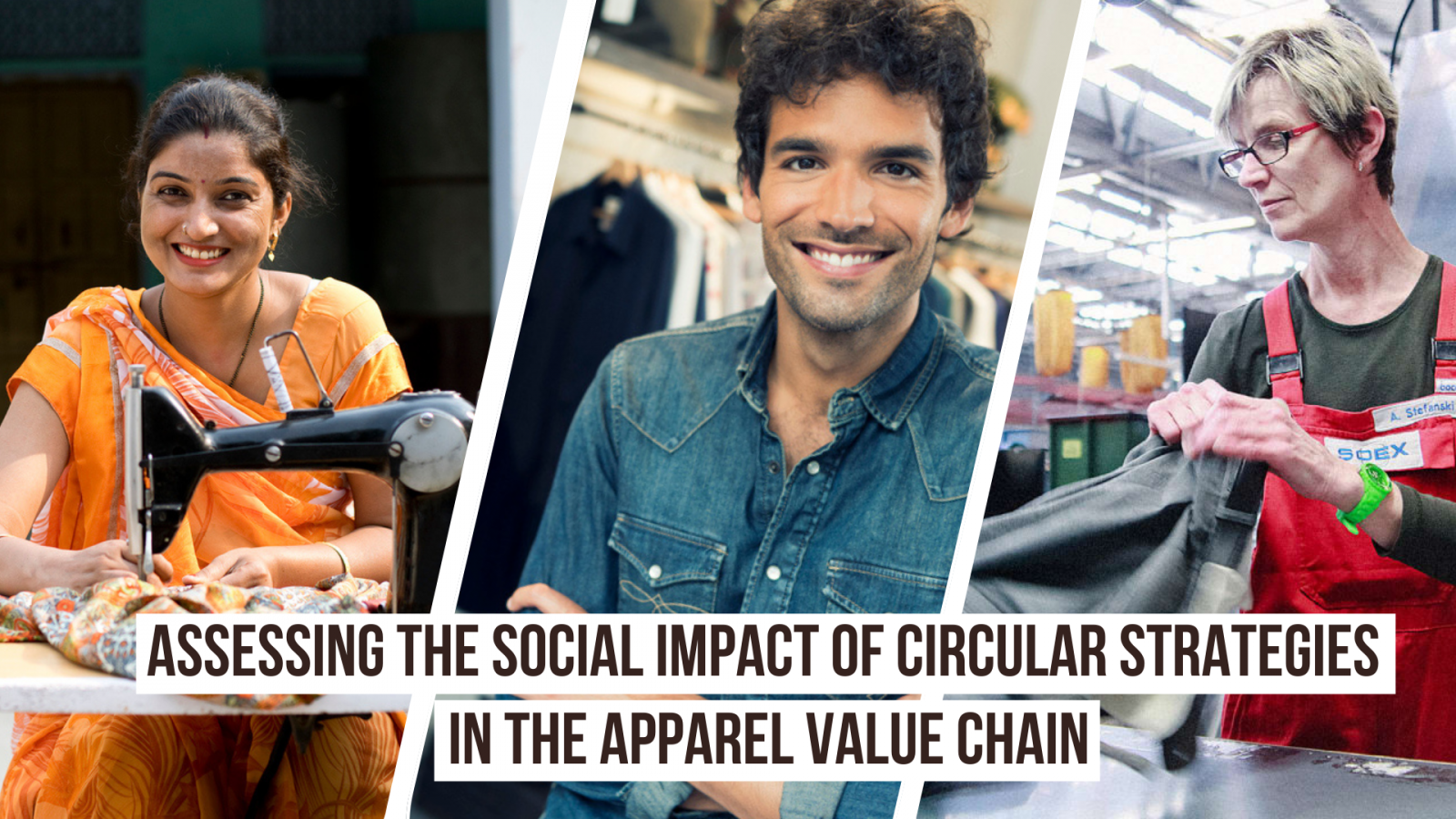
The global fashion and textile industry is the second most environmentally polluting industry in the world and the first in terms of labor exploitation and child labor violations. It is also one of the most gendered: women make up 75% of the workforce and control more than 80% of purchasing decisions — yet remain economically marginalized at every step of the value chain.
During their participation in the Fabric of Change Globalizer co-created by Ashoka and the Laudes Foundation (formerly C&A Foundation) in 2017, they highlighted the key factors contributing to the magnitude of the problem:
- A linear system by design: Fashion's take-make-waste model generates pollution and exploitation at every step — and emerging circular alternatives address the environment, not social equity
- Fragmented value chains: Women artisans, entrepreneurs and informal workers at the core of the industry have no bargaining power, no market access, and no infrastructure to connect them to conscious consumers
- Immigrant women left behind: 23% of immigrant women in Canada risk poverty — blocked by systemic barriers to employment, entrepreneurship, and economic participation
- On a global scale migrants and informal workers (whom the majority are women) constitute the most vulnerable workers
- No system-level investment: Funders support projects, not conditions — leaving NGOs, governments, and corporations to address fragments of the problem in isolation
- Circularity without justice: The global circular economy movement has been captured by techno-environmental thinking, erasing the social dimension that makes transitions durable
Based on their systems change analysis, Lis has made it a mission for circularity to be recognized and operationalized as both a social and environmental transition — embedded into business models, policy frameworks, and investment strategies across the global textile value chain and beyond, with women and marginalized producers at its center rather than its margins.
"The problems of today are the children of yesterday's solutions. For me it was critical to spend more time understanding the problem — and that required me to zoom out, to remove the jacket of the organization, and to really see the connections and leverage points. When you are running an organization, you are blinded by your circumstances. It's a lot easier to see those things from the outside. The Globalizer gave me that vantage point — it touches you on both a strategic and a personal level. It helped me put the strategy more concretely, but it also helped me rethink everything. "
Strategy to Catalyze a Network of Changemakers towards the Targeted Mission
The overall strategy has evolved through three interlocking phases — direct entrepreneurial work, transdisciplinary research, and systemic investment — each building on the last. Lis does not aim to run the transition herself. She aims to shape the conditions — the narratives, the evidence, the investment logic, and the cross-sector relationships — that make a just circular transition possible at scale.
Some of the tactics Lis deployed towards this mission as a part of the strategy include:
1) Building FEM International and ETHIK to Involve Producers & Influence Consumers on an Inclusive Ethical Fashion Value Chain
From 2005 to 2018, Lis built FEM International and its sister organization ETHIK Eco Design Hub into pioneering institutions in Canada's ethical fashion ecosystem. FEM worked on the producer side: training women artisans and immigrant entrepreneurs in eco-design, social entrepreneurship, and circular economy principles across Canada, Colombia, Bolivia, India, Mali, and Thailand. By 2016, FEM had helped more than 1,000 women start or grow businesses across six countries, with 84% of Canadian program participants increasing their social capital and networks, and 87% increasing their economic capital.
ETHIK worked on the consumer side: driving ethical awareness through eco-workshops, pop-up galleries, a primary and secondary educational program called Un autre MODE d'agir, and an ethical fashion incubator in Montreal.
Together, FEM and ETHIK demonstrated that it was possible to build a shorter, more direct, and more inclusive fashion value chain — and that doing so at scale required conditions that the current system did not provide. But Lis increasingly recognized that the conditions for systemic change — cross-sector funding, policy alignment, and institutional support — were not present. The energy required to sustain direct operations was consuming the capacity needed to work at the level where change was most needed. In 2018, Lis stepped down from FEM International to pursue that work at a systems level. The organization wound down by 2020 — but its legacy lived on: the Quebec government integrated FEM's sustainable fashion education program into its official English language training curriculum; the circular textiles consortium Lis co-founded in Montreal inspired the creation of a national initiative; and the evidence and relationships she had built became the foundation for everything that followed.
"I was increasingly aware that the strategy was not working — not because the work wasn't valuable, but because we were a small organization with big ambitions and small funding, trying to fix big problems. I could see that if there was no system change funding operating in this space, we were just not going to be able to make it."
2) Co-creating the Infrastructure, that paved the way for a National Circular Textiles Movement
Together with academic, industry, and government partners, Lis co-founded MUTREC (Mutations Textiles) — a Montreal-based interdisciplinary research consortium designed to tackle textile waste through a circular economy approach. Formed in 2017/2018 in response to a call for projects by RECYC-QUÉBEC, MUTREC was the first initiative of its kind in Canada: bridging academic research with industry, civil society, and government to identify concrete, systemic solutions to the largely linear textile industry in Quebec.
MUTREC's research uncovered the scale of the problem with precision. Of the approximately 343,000 tons of textile products consumed in Quebec annually, 170,000 tons become post-consumer waste — 124,000 tons of which are burned or buried. MUTREC mapped textile flows, identified recycling outlets for difficult-to-process "unloved" fibers, and facilitated industrial symbiosis between companies — including coordinating projects between Niedner and Alkegen-Texel to test recycled materials. Its policy influence was tangible: MUTREC's work contributed to the repeal of the Act respecting upholstered and stuffed articles in 2021, which had previously hindered the use of recycled materials. It also supported the development of regional circular economy roadmaps and promoted the establishment of specialized defibration facilities across Quebec.
Beyond Quebec, MUTREC's work provided a critical foundation for national action — generating data on pre-consumer textile waste that had not previously existed at this scale, and serving as a model for multi-stakeholder textile research across Canada. The experience and evidence base Lis helped build through MUTREC contributed to the conditions that later enabled the establishment of the Canadian Circular Textiles Consortium (CCTC) — now uniting 110+ partners around a shared national agenda to close the loop on textile waste.
3) Co-creating a Transdisciplinary Research Framework to Put the Social Dimension of Circularity on the Global Policy Agenda by Consulting a Network of Networks
After stepping down from FEM, Lis pursued a PhD — funded by a $500,000 grant from the Laudes Foundation (formerly C&A Foundation) — not to leave practice behind, but to go deeper into how circularity operates and whether it could create genuine social impact. The research became inseparable from the network that made it possible.
The connections that mattered most had begun at the Globalizer itself. Lis had collaborated with fellow Ashoka Fellow Anita Ahuja (India) for nearly a decade — but they had never met in person until the 2017 Globalizer Summit. That first in-person meeting became the catalyst for a formal research collaboration. Together with fellow Ashoka Fellow María Almazán (Spain), the three identified shared gaps — the missing social dimension of circularity, the disconnect between local practice and global value chains, the absence of gender equity in circular frameworks — and secured joint funding to address them.
The result was a four-year, transdisciplinary research project exploring the intersection of gender, justice, textiles, and circular economy across three countries. The project operated as an international living lab, with steering committees in each country and active participation from 60 businesses, policymakers, government officials at municipal and national levels, and civil society actors — all part of an international community of practice. The methodology builds directly on the systems change frameworks Lis had internalized through the Globalizer — particularly the FSG Waters of Systems Change model — now applied at the level of a global value chain rather than a single organization.
The research produced 14 publications, including a book, four scientific papers, three book chapter collaborations, three white papers, and three policy briefs presented to the Ministry of Water and Infrastructure in the Netherlands, the Ministry of Textiles in India, and the government of Spain. All 14 publications are available here.
Its most consequential contribution: demonstrating that the circular economy, as currently designed and funded, was a techno-environmental solution that systematically excluded the social dimension — and providing a theory of change for a more just circular transition that both businesses and policymakers could operationalize. To bridge theory and practice, the team ran year-long experiments with 10 companies across the three countries — testing how integrating social and environmental circularity changed outcomes. Significant changes were measurable within a year, and many persisted after the research team withdrew.
The network has continued to grow. Changemakers working on textiles from gender, environmental, and community perspectives were mapped globally, surfacing collaboration opportunities that would not otherwise have been visible.
"That transdisciplinary approach — having stakeholders participate actively in shaping how we worked — is a cornerstone of how I've worked ever since. It was really embedded through the Globalizer."
4) Collaborating with Funders and Researchers to Build the Investment Conditions for Deep Systemic Transitions — including the Circular Economy
Lis's current frontier is what she identifies as the most critical and most neglected challenge: changing how investors and funders understand and support systems change. She is now working with the Deep Transition Lab — a transdisciplinary research and practice hub linked to Utrecht University — whose core mission is captured in a deliberate inversion: Not Finance for Change, but Change Finance. The Lab is developing new investment frameworks, metrics, and narratives to move funders from project-based to conditions-based thinking.
The core argument is straightforward but radical: systemic transitions — including the shift to a just circular economy — cannot be funded organisation by organisation. They require investors to understand the ecosystem, the interdependencies between actors, and the preconditions for change — and to fund transition bundles: constellations of organisations, enablers, and connectors that together shift the conditions of a system.
To make this concrete, the Deep Transition Lab is developing new metrics for systems change — moving from outcome-based measurement to process-based indicators that allow funders and practitioners to track whether the conditions for change are being built, even before the change itself is visible.
One flagship expression of this work is ACT! (Accelerate the Circular Transition) — a visionary, an NWO (Dutch Research Council)-funded transdisciplinary project bringing together a consortium of more than 40 partner organisations across the Netherlands, including all major universities, ministries, municipalities, business associations, NGOs, citizens' initiatives, and a bank. The goal: to develop visions and transformational pathways for a deep system change that accelerates the transition to a circular Dutch society by 2050.
Meanwhile, Lis is in active conversation with partners in Colombia and South Africa about extending the Deep Transition Lab's work to new contexts.
What Lis brings to this frontier is rare: a practitioner's grasp of what it actually takes to run an organisation inside a system, combined with a researcher's ability to see the system from the outside.
"You're working for an end result, but how do you measure the process? We don't see the change here. We need metrics that help us see the process, not just the end result."
______________________________________________________________________________________________
Progress is real, but the mission is unfinished. The circular textiles consortium she co-founded in Montreal inspired the creation of a national initiative; the Quebec government adopted her sustainable fashion education program into its official English language training curriculum; fourteen publications — including scientific papers, book chapters, white papers, and policy briefs — have shaped policy discussions in the Netherlands, India, and Spain; and through the Deep Transition Lab, she is now working to mobilize investors around systemic — not project-based — funding.
Embedding a just circular economy as the default across sectors, countries, and investment frameworks remains the mission.

For more than 40 years, Ashoka has built and nurtured a network of 4000+ leading social entrepreneurs in the world. Read more about the Ashoka Fellowship here.
- 2017,
The Globalizer strategy accelerator supports social entrepreneurs gain clarity on systemic root causes of social and environmental problems and the importance of engaging more changemakers as part of the solutions. It enables them to design effective collaborative systems change strategies (based on respect to all humans and nature).
Refined since 2010, the accelerator is a structured collective thinking and experimenting process between social entrepreneurs, systems thought partners from Ashoka and selected leaders from business and the social sector.
Participated with support from
Elements of the Collaborative Systems Change Strategy
Hover/Click on things to dive deepType of Root Cause identified as a Leverage Point for Systems Change (Donella Meadows)
The first element of crafting a collaborative systems change strategy to address a problem is to define the problem and identify the most strategic change needed to address the root cause(s) of the problem. That becomes the targeted Systems Change Goal or the Mission.
To identify it, analyze the root causes—barriers, factors, dynamics, points or conditions driving the problem—and determine which offers the greatest leverage for change.
According to the FSG, leverage points include:
- Policies
- Practices
- Resource Flows
- Relationships & Roles
- Power Dynamics
- Mental Models
These "leverage points" are derived from the work of Donella Meadows, the pioneer in the field of systems thinking who articulated and conceptualized "Leverage Points: Places to Intervene in a System to Create Effective Change".
Explore Case Studies of different types of "Systems Change Goal(s)" in our Library.
Endgame / Pathway applied towards Activating a Network of Changemakers towards the targeted Systems Change
The second element of crafting a collaborative systems change strategy includes determining how to achieve the systems change goal.
This means choosing a strategy suited to the system’s context. The strategy could be to:
- Work with government
- Create a new field/market
- Build a competitive advantage
- Shift societal narratives
The items on the list are neither mutually exclusive, nor collectively exhaustive.
You can read more about the types of systems change strategies/pathways/endgames/stories we have come across in this article by Odin Muehlenbein.
Explore Case Studies on different "Types of Strategy" in our Library.
Types of stakeholders activated as changemakers towards the systems change
The third element of crafting a collaborative systems change strategy includes identifying the critical stakeholders to activate as partners- those who influence an exponential number of people in the context of the system.
Irrespective of the type of strategy, systemic change always requires activation of a network of stakeholders for different tactics towards the mission.
Typical stakeholder groups for systemic change include:
- government agencies
- universities (e.g. education schools for the empathy paradigm, public health and med schools for the health paradigm, etc.)
- publishers (e.g. education publishers for empathy, medical journals for health, etc.)
- informal & formal communities / unions (e.g. AARP for longevity, teachers' unions for empathy, families, etc.)
- media companies
- industry-specific companies / organizations (e.g. tech companies and financial institutions for the technology paradigm, insurance and healthcare companies for longevity, relevant civil society organizations etc.).
Explore Case Studies on different "Types of Partners Engaged" in our Library.
The depths of engagements in play for the different stakeholders (CoCreative)
The fourth and final element of crafting a collaborative systems change strategy includes reflecting on what depth to engage with each stakeholder.
Activating a broad network is essential, but so is clarifying their role: Are they simply informed, consulted, or co-creating the strategy?
CoCreative's Five Levels of Engagement Framework guides how one may engage with each stakeholder. Are you:
- co-creating?
- collaborating?
- involving?
- consulting?
- informing?
Explore Case Studies on different "Levels of Stakeholder Engagement" in our Library.
Their work contributes towards

The 2030 Agenda for Sustainable Development, adopted by all United Nations Member States in 2015, provides a shared blueprint for peace and prosperity for people and the planet, now and into the future. At its heart are the 17 Sustainable Development Goals (SDGs), which are an urgent call for action by all countries - developed and developing - in a global partnership.
Explore Case Studies on strategies contributing to addressing different "SDGs" in our Library.
The root causes of global socio-ecological unsustainability their work is addressing (FSSD)
According to the Framework for Strategic Sustainable Development (FSSD) co-created by Ashoka Fellow Dr. Karl-Henrik Robèrt and Dr. Göran Broman and Dr. Merlina Missimer of the Blekinge Institute of Technology, Sweden, there are 8 root causes of all socio-ecological unsustainability problems (also referred to as Sustainability Principles):
- extraction from Earth's crust
- chemical pollution
- physical destruction
- barriers to health
- barriers to competence
- barriers to influence/participation
- barriers to impartiality
- barriers to meaning-making
To get a deeper feel, here are videos on the ecological and social sustainability principles.
You can see case studies of changemakers contributing to addressing different root causes ("Sustainability Principles") in our Library.