The Social Innovation
Truckers Against Trafficking (TAT) transforms the transportation sector into a frontline force against human trafficking.
Billions of people, businesses and organizations rely on the trucking and passenger transportation industries to ship goods and travel to work, school or events. These same transportation systems are used by traffickers seeking to move or sell victims.
As traffickers exploit transportation systems to facilitate their crime, these same systems can be a lifeline for survivors. Because of this intersection, TAT works with the transportation industry, empowering its employees to be points of safety and recovery for victim.
TAT’s core innovation is to educate, equip, empower, and mobilize truck drivers, bus operators, energy sector workers, and related industry professionals to recognize and report trafficking incidents. By embedding anti-trafficking training and protocols into industry standards, TAT disrupts traffickers’ operations and facilitates victim recovery.
Magnitude of the Problem, and its Root Causes
Human trafficking is a pervasive, multi-billion-dollar crime affecting millions globally, with the U.S. and Canada as major transit and destination countries. In North America, labor and sex trafficking affect vulnerable populations, including youth, migrants, and marginalized communities.
Traffickers exploit transportation systems to move victims and evade detection. 81% of surveyed survivors used transportation during recruitment; 76% during exploitation; 52% during escape (2021 US National Outreach Survey).
During their participation in the Fabric of Change Globalizer, co-created by Ashoka and Laudes Foundation (formerly C&A Foundation) in 2017, they highlighted the following key factors contributing to the magnitude of the problem:
- Lack of awareness about human trafficking and detection and prevention training among frontline transportation workers
- Fragmented coordination between industry, law enforcement, and government
- Societal norms and demand for commercial sex, compounded by gender, racial, and economic inequities
Based on their systems change analysis, TAT made it a mission to make anti-trafficking practices the norm across the transportation sector, transforming it from a vector of exploitation to a network of protection and intervention.
'While the groundwork had already been laid, the Globalizer process was key in providing our TAT team with the language framework to describe the way it was affecting social change. From greater vision clarity to informing our strategic planning, every program and KPI rolled up under one of the structures and dynamics we were working through to activate our primary sectors in the fight against human trafficking."
Strategy to Catalyze a Network of Changemakers towards the Targeted Mission
The strategy involved tackling the supply and demand by catalyzing stakeholders across sectors to play a vital role in combating trafficking.
Some of the tactics they deployed towards the mission as a part of the strategy include:
1) Co-creating the Iowa Motor Vehicle Enforcement (MVE) Model with the Iowa Department of Transportation
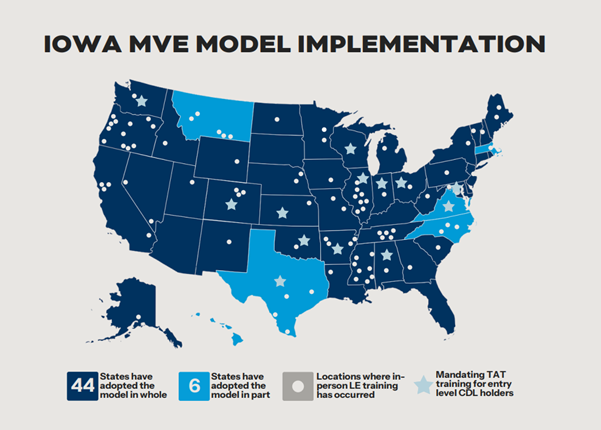
The Iowa MVE Model is a nationally recognized framework for combating human trafficking within the transportation sector, developed through a partnership between Truckers Against Trafficking (TAT) and the Iowa Department of Transportation’s Motor Vehicle Enforcement (MVE) Office.
Launched in 2013, The Iowa MVE Model is a comprehensive, state-level approach that integrates anti-trafficking training, awareness, and reporting protocols into the daily operations of commercial vehicle enforcement and related agencies. It ensures that all commercial vehicle enforcement officers, as well as other public agency transportation personnel, are trained to recognize the signs of human trafficking and know how to respond appropriately.
By 2024, the Iowa MVE Model had been adopted fully or partly by all 50 states, making it a national standard for anti-trafficking efforts in the transportation sector. It has led to increased identification and reporting of trafficking cases, improved coordination between industry and law enforcement, and has been credited with saving lives and disrupting trafficking networks.
2) Collaborating with Partners across Sectors to Inform, Involve, Consult and Train Trucking, Bus, and Energy Professionals
A cornerstone of TAT’s approach is its industry-specific training and certification, which has been carefully designed to be both accessible and highly relevant to the realities of trucking, bus, and energy sector professionals.
TAT develops free, niche-specific training resources—videos, toolkits, posters, wallet cards, and digital modules—that are integrated into onboarding and continuing education programs at hundreds of companies across North America, like UPS, Walmart, and Waste Connections.
TAT works with 214 associations in the U.S., including all 50 state trucking associations, and 11 associations in Canada. TAT facilitated consultation and activation efforts for 29 human trafficking task forces across 20 states.
'When approaching new partners, you can’t ask them to hire somebody new or pay for this or build that, etc. Instead, we have always worked our programming into existing infrastructures to remove implementation barriers toward swift adoption."
This philosophy has led to widespread uptake, with over 2 million individuals trained and 50 states adopting the Iowa MVE Model, embedding TAT training into regulatory frameworks. The training is reinforced with visible cues, such as TAT window decals and hotline cards in vehicles, and companies like UPS now surveying drivers post-training to measure knowledge retention and intent to act.
3) Collaborating with Law Enforcement Agencies to Involve & Train Law Enforcement Officers
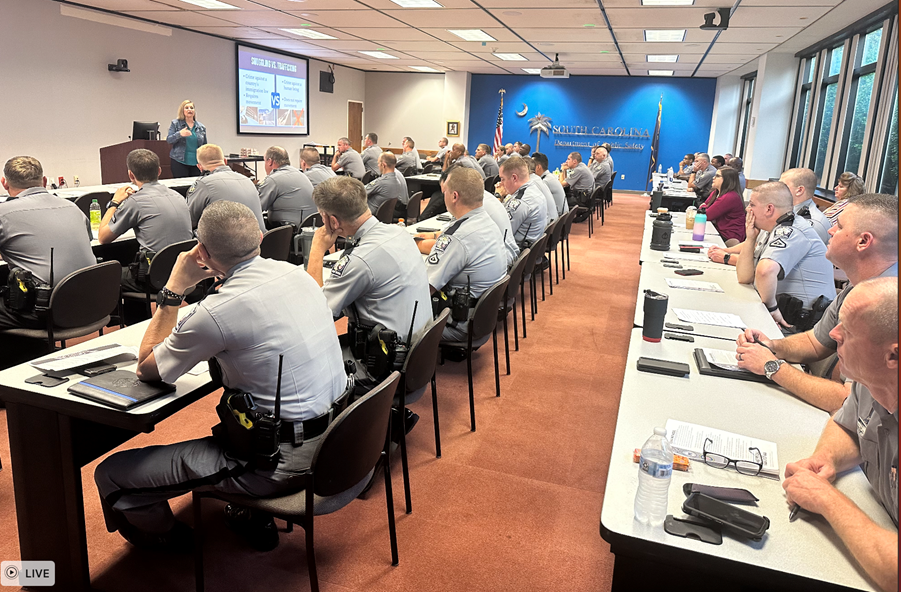
TAT provides specialized training modules for law enforcement, focusing on victim-centered approaches and practical case handling. These are delivered through in-person and online modules, briefings, and scenario-based training.
TAT adapts content to address gaps in the system; for example, when truckers reported that law enforcement didn’t always respond appropriately to hotline tips, TAT realized it had to train law enforcement as well.
By building relationships (with 351 & 41 government agencies in the US & Canada respectively) and sometimes directly facilitating connections between truckers and police, TAT works to ensure that tips are acted upon. This approach has resulted in over 10,000 law enforcement officers trained and documented cases where TAT-trained officers have identified and intervened in trafficking situations.
4) Co-Creating Coalitions through Public-Private Partnerships to Foster Collaboration, Share Best Practices & Co-create Solutions/Strategies
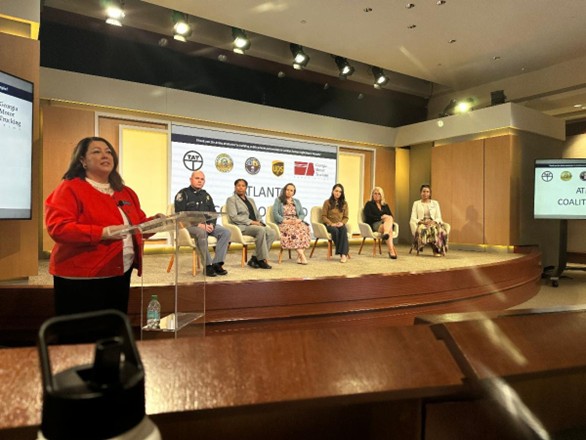
A core tactic of TAT’s systems change strategy is the convening of multi-stakeholder “Coalition Builds” (CBs), which are designed to foster collaboration, share best practices, and close the systemic loopholes that traffickers exploit. These gatherings bring together a diverse array of stakeholders at the decision-maker level, including law enforcement, government agencies, NGOs, industry associations, and survivor leaders. The goal is to create a space where trucking companies, truck stop managers, public agencies, and survivor advocates can work side by side to address the complexities of human trafficking within the transportation sector.
Coalition Builds began in 2012 as small, targeted meetings, but have since grown in scale and sophistication. To date, TAT has held 106 CBs, often hosted by major partners such as UPS headquarters or state Attorney General offices. Each CB is tailored to the local context, ensuring that the strategies and solutions developed are relevant and actionable for the specific region or sector. These convenings frequently result in the creation of new protocols, awareness campaigns, or reporting mechanisms—such as the “Eyes on the Road” campaign in Atlanta, which mobilizes local drivers and businesses to identify and report at-risk youth.
A distinctive feature of TAT’s Coalition Builds is the central role given to survivor voices. As Kendis Paris notes, “We need to move in their hearts and minds,” underscoring the importance of personal stories in shifting attitudes and inspiring action. The impact of these CBs is significant: they have led to the establishment of new reporting pathways, the launch of state-level campaigns, and increased direct engagement with law enforcement. In 2024 alone, 34 law enforcement agencies were activated through Coalition Builds, demonstrating the power of this collaborative approach to drive systemic change.
Over the years TAT has engaged well over 6,000 transportation-focused personnel through the CBs with 94% of surveyed attendees stating they now know what next steps to take to combat human trafficking.
5) Collaborating with Partners to Spread Awareness to Inform & Invite People to be a part of the change
By maintaining a consistent presence in both mainstream and industry-specific media, TAT ensures that the issue of human trafficking remains visible and urgent.
Even just in 2024, there were 127 media, and publication mentions establishing the organization as a leading voice in the anti-trafficking movement. TAT staff appeared on 14 episodes of the Dave Nemo Show, reaching an audience of one million drivers and industry stakeholders, and authored 10 trade publication articles and 3 industry newsletter pieces to share best practices and encourage protocol adoption within the sector. Their presence extended further through 20 podcast appearances, 10 radio and TV interviews, and additional storytelling via a blog and a newspaper interview, ensuring TAT’s message resonated across diverse audiences and platforms.
TAT also addresses the demand side of trafficking through its Man-to-Man Campaign, a narrative-shifting initiative targeting men in the transportation sector and beyond to have conversations that involve them in being a part of social change and tackling the demand for commercial sex. This campaign uses videos and wallet cards distributed at events and through partners and is integrated into “buyer diversion programs” (geared towards deterring the demand for commercial sex) in multiple states.
In 2024, six buyer diversion programs in five states used TAT materials, and 6,500 wallet cards were distributed.

Many of these efforts are working, but no one centralized location analyses and records the data. Thus, TAT has to rely on 'one off' stories coming in from time to time.
"From TAT's inception we promised our partners that if they would ‘make the call’ they would indeed ‘save lives.’ To date thousands of tips have been reported to the hotline or law enforcement resulting in numerous arrests and the disruption of trafficking networks. In addition, TAT's partners have implemented a victim-centered approach time and again, leading to survivor recovery and restorative care."
TAT in Action showcases the stories of individuals who have taken steps to fight human trafficking within the key industries and agencies that work alongside TAT.
By recognizing the signs and reporting suspicious activity, these individuals have played a vital role in combating human trafficking. Their stories serve as a powerful reminder that everyone can contribute to this fight, no matter their role or background.
To dive deep into the process of catalyzing the network of changemakers towards the systems change missiob, tune into Season 1, Episode 5 of the Ashoka Systems Change Podcast where Kendis Paris shares about their journey.

For more than 40 years, Ashoka has built and nurtured a network of 4000+ leading social entrepreneurs in the world. Read more about the Ashoka Fellowship here.
- 2017,
The Globalizer strategy accelerator supports social entrepreneurs gain clarity on systemic root causes of social and environmental problems and the importance of engaging more changemakers as part of the solutions. It enables them to design effective collaborative systems change strategies (based on respect to all humans and nature).
Refined since 2010, the accelerator is a structured collective thinking and experimenting process between social entrepreneurs, systems thought partners from Ashoka and selected leaders from business and the social sector.
Participated with support from
Elements of the Collaborative Systems Change Strategy
Hover/Click on things to dive deepType of Root Cause identified as a Leverage Point for Systems Change (Donella Meadows)
The first element of crafting a collaborative systems change strategy to address a problem is to define the problem and identify the most strategic change needed to address the root cause(s) of the problem. That becomes the targeted Systems Change Goal or the Mission.
To identify it, analyze the root causes—barriers, factors, dynamics, points or conditions driving the problem—and determine which offers the greatest leverage for change.
According to the FSG, leverage points include:
- Policies
- Practices
- Resource Flows
- Relationships & Roles
- Power Dynamics
- Mental Models
These "leverage points" are derived from the work of Donella Meadows, the pioneer in the field of systems thinking who articulated and conceptualized "Leverage Points: Places to Intervene in a System to Create Effective Change".
Explore Case Studies of different types of "Systems Change Goal(s)" in our Library.
Endgame / Pathway applied towards Activating a Network of Changemakers towards the targeted Systems Change
The second element of crafting a collaborative systems change strategy includes determining how to achieve the systems change goal.
This means choosing a strategy suited to the system’s context. The strategy could be to:
- Work with government
- Create a new field/market
- Build a competitive advantage
- Shift societal narratives
The items on the list are neither mutually exclusive, nor collectively exhaustive.
You can read more about the types of systems change strategies/pathways/endgames/stories we have come across in this article by Odin Muehlenbein.
Explore Case Studies on different "Types of Strategy" in our Library.
Types of stakeholders activated as changemakers towards the systems change
The third element of crafting a collaborative systems change strategy includes identifying the critical stakeholders to activate as partners- those who influence an exponential number of people in the context of the system.
Irrespective of the type of strategy, systemic change always requires activation of a network of stakeholders for different tactics towards the mission.
Typical stakeholder groups for systemic change include:
- government agencies
- universities (e.g. education schools for the empathy paradigm, public health and med schools for the health paradigm, etc.)
- publishers (e.g. education publishers for empathy, medical journals for health, etc.)
- informal & formal communities / unions (e.g. AARP for longevity, teachers' unions for empathy, families, etc.)
- media companies
- industry-specific companies / organizations (e.g. tech companies and financial institutions for the technology paradigm, insurance and healthcare companies for longevity, relevant civil society organizations etc.).
Explore Case Studies on different "Types of Partners Engaged" in our Library.
The depths of engagements in play for the different stakeholders (CoCreative)
The fourth and final element of crafting a collaborative systems change strategy includes reflecting on what depth to engage with each stakeholder.
Activating a broad network is essential, but so is clarifying their role: Are they simply informed, consulted, or co-creating the strategy?
CoCreative's Five Levels of Engagement Framework guides how one may engage with each stakeholder. Are you:
- co-creating?
- collaborating?
- involving?
- consulting?
- informing?
Explore Case Studies on different "Levels of Stakeholder Engagement" in our Library.
Their work contributes towards


The 2030 Agenda for Sustainable Development, adopted by all United Nations Member States in 2015, provides a shared blueprint for peace and prosperity for people and the planet, now and into the future. At its heart are the 17 Sustainable Development Goals (SDGs), which are an urgent call for action by all countries - developed and developing - in a global partnership.
Explore Case Studies on strategies contributing to addressing different "SDGs" in our Library.
The root causes of global socio-ecological unsustainability their work is addressing (FSSD)
According to the Framework for Strategic Sustainable Development (FSSD) co-created by Ashoka Fellow Dr. Karl-Henrik Robèrt and Dr. Göran Broman and Dr. Merlina Missimer of the Blekinge Institute of Technology, Sweden, there are 8 root causes of all socio-ecological unsustainability problems (also referred to as Sustainability Principles):
- extraction from Earth's crust
- chemical pollution
- physical destruction
- barriers to health
- barriers to competence
- barriers to influence/participation
- barriers to impartiality
- barriers to meaning-making
To get a deeper feel, here are videos on the ecological and social sustainability principles.
You can see case studies of changemakers contributing to addressing different root causes ("Sustainability Principles") in our Library.