The Social Innovation
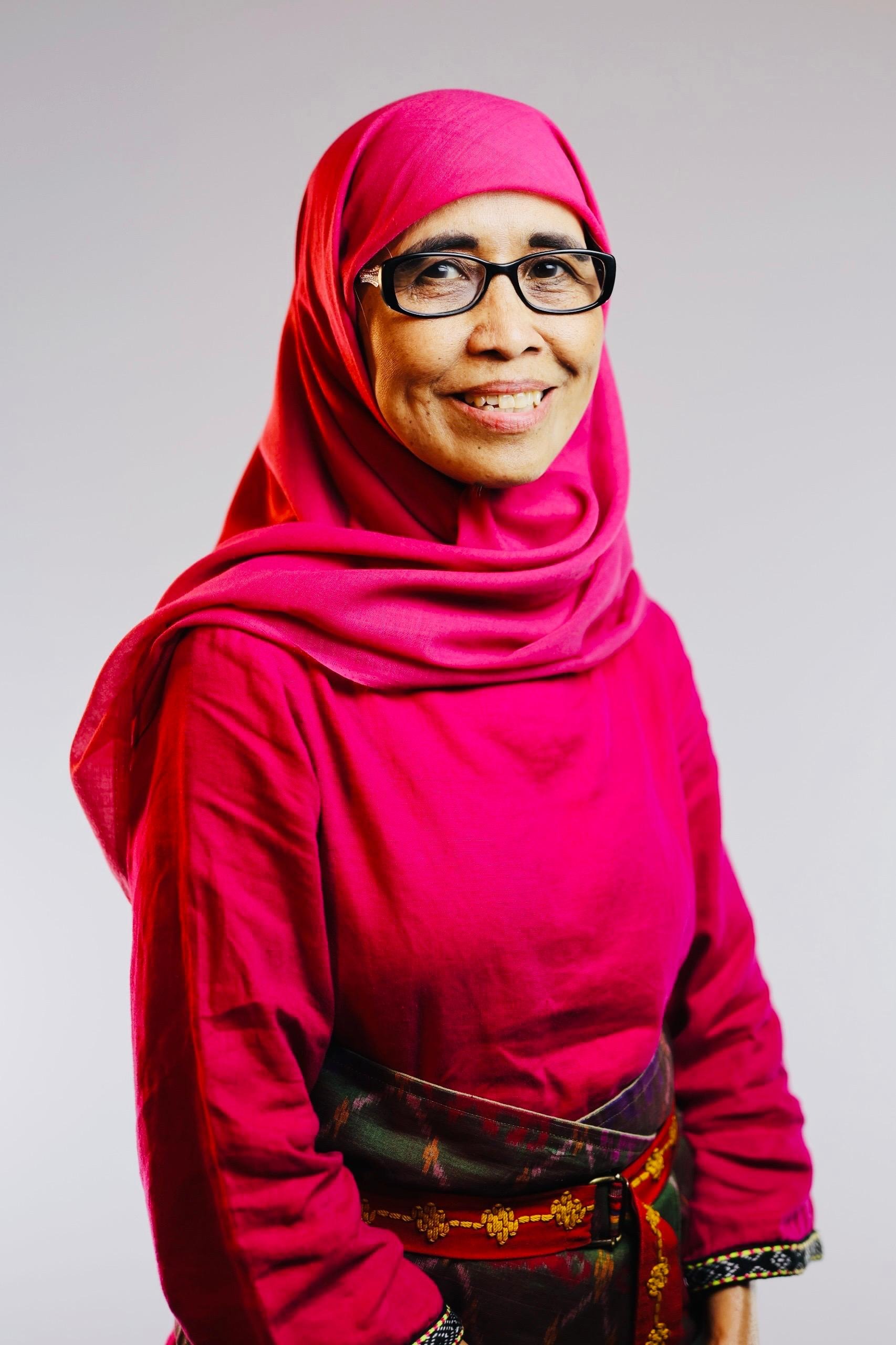
Founded in 2001 by Nani Zulminarni, PEKKA — Pemberdayaan Perempuan Kepala Keluarga (Women Headed Family Empowerment) — began as a grassroots organizing effort to give Indonesia's women-led families economic footing, social recognition, and political voice. Starting with savings-and-loans groups as an entry point — "because it answered basic daily financial needs" — they built a nationwide network of women who support one another, advocate for their rights, and increasingly lead change in their own communities.
From that foundation, PEKKA offers leadership training, small business development, and creates spaces for women to engage on issues affecting their communities — healthcare, education, domestic violence, local budgets. These activities are deliberately inclusive: in West Java, motorcycle taxi drivers joined PEKKA's savings and loans training, which became an entry point for conversations about domestic violence prevention. In conflict-ridden North Maluku, members pioneered peace education.
Today, PEKKA has reached 27 provinces, 187 districts, and 2,037 villages, organised more than 100,000 women-led families, and cultivated over 5,000 volunteer community leaders.
Magnitude of the Problem, and its Root Causes
Millions of women in Indonesia are the sole breadwinners and decision-makers of their families — yet who are functionally invisible to the state- widows, divorcees, women abandoned by or married to incapacitated husbands, single mothers.
Officially, 9 million households (14.57%) in Indonesia are recorded as women-led. PEKKA's own 2012 community census — using the government's methodology, in the same villages — puts the real figure closer to 15 million families (23%), nearly double. Government data recorded 12% of families as women-led in the villages surveyed; PEKKA found 24% — same place, same time.
That gap is not a statistical error. It is the consequence of a system built on assumptions that no longer reflect reality, and millions of women pay the price in denied services, rights and dignity. Women-led families account for 75% of Indonesia's poorest households; 57% are illiterate; 44% lack health insurance; fewer than 2% receive cash transfers they are legally entitled to.
During their participation in the Dela Program, co-created by Ashoka and IKEA Social Entrepreneurship in 2019, the PEKKA team highlighted the following key factors contributing to the magnitude of the problem:
- Sociocultural norms and religious interpretation: Indonesian marriage law defines the man as head of household and the woman as housewife — making women-led families socially stigmatised, legally ambiguous, and politically marginalised.
- A flawed data architecture: Indonesia's citizen data system uses "household" rather than "family" as its unit of analysis, missing the reality that divorced or widowed daughters often return to their parents' homes and constitute entirely separate families. Millions are undercounted before the policy conversation even begins.
- Public services gated by documents women don't have: Access to healthcare, welfare, and legal protection is tied to marriage-related documents that many women-led families simply lack. No document, no service.
Based on their systems change analysis, the PEKKA team made it a mission to change how Indonesia defines, counts, and registers women-led families in its official data systems — shifting from a "household" unit of analysis (which renders millions of women invisible) to a "family" unit that captures the reality on the ground.
Strategy to Catalyze a Network of Changemakers towards the Targeted Mission
The strategy to improve data and representation for women-led households revolves around improving formal systems through a mix of bottom-up and top-down approaches.
Some of the tactics they deployed towards the mission as a part of the strategy include:
1) Co-creating a Digital Community-Driven Data System with Local Government to Influence the National Government
Armed with its 2012 census evidence, PEKKA went looking for a willing institutional partner to pilot a digitised, participatory data system. They found one in a district head in West Kalimantan — Nani's home province — who was himself deeply frustrated by the gaps in his public service data. His district faced serious stunting rates, and he wanted to know exactly how many children were affected and how many pregnant women lacked access to prenatal care. PEKKA's approach matched his problem precisely.
Together, PEKKA's community women leaders and the district government's team designed and ran a pilot across several villages where PEKKA had strong community roots — supported by research institutions and technology partners including UN Pulse Lab and Telkomsel. PEKKA collected grassroots data, processed it, and presented findings in focused group discussions with government officers — iterating the system based on their feedback. The district head was so convinced by the results that he established a dedicated data unit within his office and embedded PEKKA's inputs into the district's own digitised data system. The pilot demonstrated a simple but powerful logic: when communities are supported to register themselves, data quality improves dramatically — and government services can reach people who were previously invisible.
The ripple effect extended beyond that one district. Other district heads in West Kalimantan, inspired by their peer's results, began adopting similar approaches — proof that peer influence among government officials can be as powerful a change mechanism as top-down policy reform.
COVID-19 disrupted plans to scale nationally, yet the horizontal spread continued: PEKKA now operates in 27 provinces and 108 districts, using data as the constant currency of its government relationships, and participates as a formal consultant in Indonesia's national effort to build a unified "one big data" system.
"There's always situations where we don't expect it — COVID happened, governments change, interpretations shift. But the core of Ashoka is entrepreneurial. What is entrepreneurial? It's really to look at opportunity. When we have a challenge, we don't focus our energy on solving the problem — because we know this challenge is huge and you cannot really solve it alone. We drive our energy into looking for opportunities. As long as they support what system we want to change, we anticipate them, we adapt, we move. You have to be really entrepreneurial and strong in that."
2) Created a Replicable Model to Collaborate with Multiple Stakeholders to Influence and Involve the Community in Improving Data
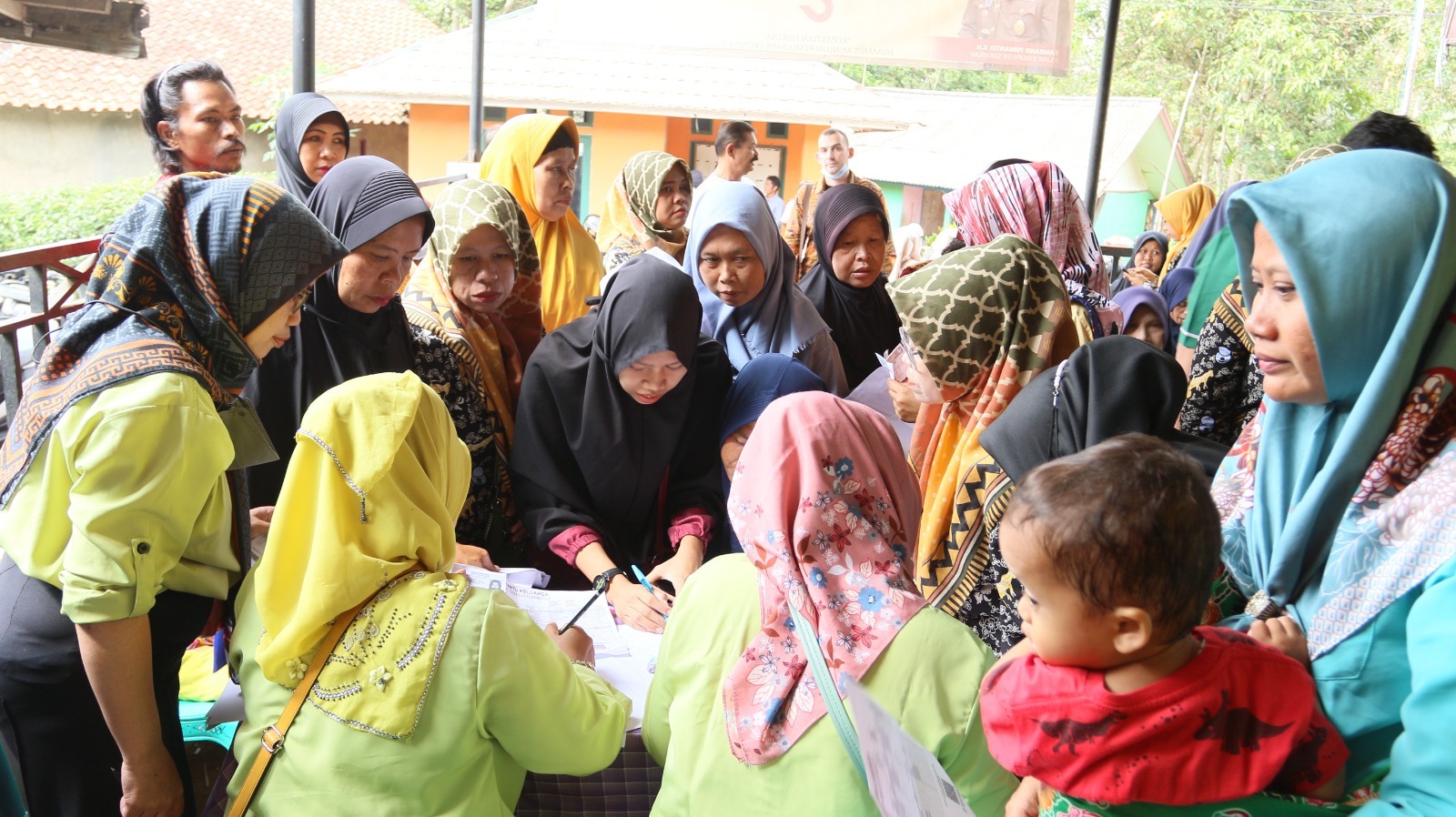
Klik PEKKA is a community-led consultation clinic with a simple but powerful premise: many women-led families lack the ID cards, family cards, birth certificates, and marriage documentation they need to access public services — not because they are ineligible, but because the system never came to them. Klik PEKKA reverses that dynamic.
In a single-day event at district level,
- PEKKA's community women leaders organize the space with support of multiple stakeholders— civil registration authorities, religious affairs officers, social affairs departments, research institutions, and universities under one roof.
- Community members arrive without documents; many leave with ID cards, birth certificates for their children, and formally registered marriages — made visible to the state, often for the first time.
- Religious affairs officers can formally register previously unregistered marriages on the spot;
- Civil registration officials issue ID cards the same day.
- Schools and youth organisations are engaged in parallel — ensuring that children of women-led families obtain the birth certificates they need to access education, and that young people understand and support the rights of women-led families in their communities.
So far, 18 district government agencies, 2 universities and more than 10 other stakeholders have collaborated with Klik PEKKAs, supporting thousands of women/community members
Klik PEKKA is not a parallel system — it is an experiment designed to showcase what is possible within the government system that already exists.
The goal was never for government to adopt PEKKA's platform — but to convince them of the logic: that self-registration produces better, more honest data than top-down collection.
"We experiment and we showcase to them. This is the way — you have to organise the community, build awareness of how important data is for them, encourage the community to actively register themselves, and make the system available for them to do so. The government actually has this kind of system, but it does not work because they don't inform the community. So, they adopt our system — they integrate Klik PEKKA into their own system."
When that logic lands, governments build the change themselves. Across 3 districts, local governments have embedded Klik PEKKA into their own service delivery strategies — funding it through local budgets and running it as their own initiative.
This alignment is not coincidental: Klik PEKKA speaks directly to two of the Indonesian national government's own priorities — improving citizen data quality through its "one big data" initiative and strengthening decentralised public service delivery at district and village level. For local governments already under pressure to deliver better services with limited resources, Klik PEKKA offers a ready-made, community-powered solution that makes them look good and perform better.
For more than 40 years, Ashoka has built and nurtured a network of 4000+ leading social entrepreneurs in the world. Read more about the Ashoka Fellowship here.
- 2019,
The Globalizer strategy accelerator supports social entrepreneurs gain clarity on systemic root causes of social and environmental problems and the importance of engaging more changemakers as part of the solutions. It enables them to design effective collaborative systems change strategies (based on respect to all humans and nature).
Refined since 2010, the accelerator is a structured collective thinking and experimenting process between social entrepreneurs, systems thought partners from Ashoka and selected leaders from business and the social sector.
Participated with support from
Elements of the Collaborative Systems Change Strategy
Hover/Click on things to dive deepType of Root Cause identified as a Leverage Point for Systems Change (Donella Meadows)
The first element of crafting a collaborative systems change strategy to address a problem is to define the problem and identify the most strategic change needed to address the root cause(s) of the problem. That becomes the targeted Systems Change Goal or the Mission.
To identify it, analyze the root causes—barriers, factors, dynamics, points or conditions driving the problem—and determine which offers the greatest leverage for change.
According to the FSG, leverage points include:
- Policies
- Practices
- Resource Flows
- Relationships & Roles
- Power Dynamics
- Mental Models
These "leverage points" are derived from the work of Donella Meadows, the pioneer in the field of systems thinking who articulated and conceptualized "Leverage Points: Places to Intervene in a System to Create Effective Change".
Explore Case Studies of different types of "Systems Change Goal(s)" in our Library.
Endgame / Pathway applied towards Activating a Network of Changemakers towards the targeted Systems Change
The second element of crafting a collaborative systems change strategy includes determining how to achieve the systems change goal.
This means choosing a strategy suited to the system’s context. The strategy could be to:
- Work with government
- Create a new field/market
- Build a competitive advantage
- Shift societal narratives
The items on the list are neither mutually exclusive, nor collectively exhaustive.
You can read more about the types of systems change strategies/pathways/endgames/stories we have come across in this article by Odin Muehlenbein.
Explore Case Studies on different "Types of Strategy" in our Library.
Types of stakeholders activated as changemakers towards the systems change
The third element of crafting a collaborative systems change strategy includes identifying the critical stakeholders to activate as partners- those who influence an exponential number of people in the context of the system.
Irrespective of the type of strategy, systemic change always requires activation of a network of stakeholders for different tactics towards the mission.
Typical stakeholder groups for systemic change include:
- government agencies
- universities (e.g. education schools for the empathy paradigm, public health and med schools for the health paradigm, etc.)
- publishers (e.g. education publishers for empathy, medical journals for health, etc.)
- informal & formal communities / unions (e.g. AARP for longevity, teachers' unions for empathy, families, etc.)
- media companies
- industry-specific companies / organizations (e.g. tech companies and financial institutions for the technology paradigm, insurance and healthcare companies for longevity, relevant civil society organizations etc.).
Explore Case Studies on different "Types of Partners Engaged" in our Library.
The depths of engagements in play for the different stakeholders (CoCreative)
The fourth and final element of crafting a collaborative systems change strategy includes reflecting on what depth to engage with each stakeholder.
Activating a broad network is essential, but so is clarifying their role: Are they simply informed, consulted, or co-creating the strategy?
CoCreative's Five Levels of Engagement Framework guides how one may engage with each stakeholder. Are you:
- co-creating?
- collaborating?
- involving?
- consulting?
- informing?
Explore Case Studies on different "Levels of Stakeholder Engagement" in our Library.
Their work contributes towards
The 2030 Agenda for Sustainable Development, adopted by all United Nations Member States in 2015, provides a shared blueprint for peace and prosperity for people and the planet, now and into the future. At its heart are the 17 Sustainable Development Goals (SDGs), which are an urgent call for action by all countries - developed and developing - in a global partnership.
Explore Case Studies on strategies contributing to addressing different "SDGs" in our Library.
The root causes of global socio-ecological unsustainability their work is addressing (FSSD)
According to the Framework for Strategic Sustainable Development (FSSD) co-created by Ashoka Fellow Dr. Karl-Henrik Robèrt and Dr. Göran Broman and Dr. Merlina Missimer of the Blekinge Institute of Technology, Sweden, there are 8 root causes of all socio-ecological unsustainability problems (also referred to as Sustainability Principles):
- extraction from Earth's crust
- chemical pollution
- physical destruction
- barriers to health
- barriers to competence
- barriers to influence/participation
- barriers to impartiality
- barriers to meaning-making
To get a deeper feel, here are videos on the ecological and social sustainability principles.
You can see case studies of changemakers contributing to addressing different root causes ("Sustainability Principles") in our Library.