
The Social Innovation
Since 2006, Gastromotiva has been running programs that use the transformative power of food and gastronomy to address poverty, hunger, malnutrition, and social exclusion.
Through its Community Action programs, Gastromotiva has touched the lives of over 100,000 families, reaching 232 communities across Brazil. They did so through more than 1,116 workshops they have held, focusing on nutrition, health, and food education for mothers, children, and school cooks.
At the heart of their operations is Refettorio Gastromotiva, a unique social gastronomy hub in Rio de Janeiro. Every week, the Refettorio receives a truck full of food surplus, which is transformed into delicious and nutritious meals for the city’s homeless population. To date, they have served 25,000 dishes, rescued more than 25 tons of ingredients that would otherwise go to waste, and mobilized over 1,000 volunteers to support their mission. Their innovative approach and powerful story have also garnered significant attention, resulting in $30 million in brand coverage in 2016 alone.
Gastromotiva’s vocational training programs have trained and placed more than 3,000 kitchen assistants in the job market, with an impressive 80% employability rate. The organization has also accelerated the journeys of 200 food entrepreneurs from low-income backgrounds, helping them build sustainable businesses.
Their network now includes over 100 chefs and gastronomic establishments, among them 10 of the world’s best chefs, all united in the mission to make social gastronomy a force for dignity, opportunity, and wellbeing.
Magnitude of the Problem, and its Root Causes
While the hospitality industry in Brazil (and beyond) is growing exponentially and creating millions of jobs, it is becoming more and more profit driven and even contributes to a growing gap between rich and poor. While over 811 million people go hungry, still one-third of food produced is wasted.
During their participation in the Globalizer co-created by Ashoka, Hystra and Swiss Development Corporation in 2017, they highlighted the following key factors contributing to the magnitude of the problem:
- Socially excluded people have less access to training due to prohibitive cost, leading to reduced opportunities for social mobility.
- Those living in exclusion also have reduced access to nutritious food, as well as employment, perpetuating a cycle of poor health, lack of dignity, and poverty.
- Hospitality, and restaurant employers, require even lower level staff to have basic training, social skills and understanding of the sector.
- Although employers may want to help, they lack the knowledge of what socially excluded people need, and how to best help them (lack of dialogue).
- Overall, there is a lack of tools, frameworks and guidelines for using the sector to help and do good, while fulfilling business requirements.
Based on their systems change analysis, Gastromotiva made it their mission to make social gastronomy the norm in the hospitality industry as a recognized way to reduce poverty, hunger & malnutrition by developing the field of social gastronomy in Brazil and beyond.
Strategy to Catalyze a Network of Changemakers towards the Targeted Mission
The strategy involved going beyond their own model to create this global platform where food actors and organizations prototyping just and inclusive food systems can come together and collaborate toward collective impact versus individual impact.
Some of the tactics they deployed towards the mission as a part of the strategy include:
1) Involving Stakeholders to Replicate the Gastromotiva Model using Social Franchising
Gastromotiva is piloting a social franchise model with 50 out of the 130 solidarity kitchens. These kitchens are social businesses that provide food (free or at reasonable cost), training, education, and advocacy, aiming for self-sustainability.
The pandemic accelerated Gastromotiva’s impact, leading to the replication of their model in 130 neighborhoods across 8 states in Brazil. This has engaged over 15,000 students and led to an 80% employability rate.
5.5 million meals were distributed feeding 3.5 million people, saving 350 tons of food from getting waste.
The Gastromotiva model is also being replicated in East Timor, where the Social Entrepreneur of the year was Simone Assis. She is leading a social gastronomy enterprise (restaurant, cafe, chocolate factory and more) and running 16 solidarity kitchens around the country.
Biggest achievement for me to see social gastronomy becoming a norm

2) Co-creating the Social Gastronomy Movement (SGM) to Develop Guiding Principles and Inspiring a Movement around Social Gastronomy
Along with expanding the Gastromotiva model - a broader impact network idea emerged. Social gastronomy change-makers around the world connecting, exchanging best practices, encouraging open-source replication, and forging collaborations and partnerships. This evolution gave birth to the Social Gastronomy Movement.
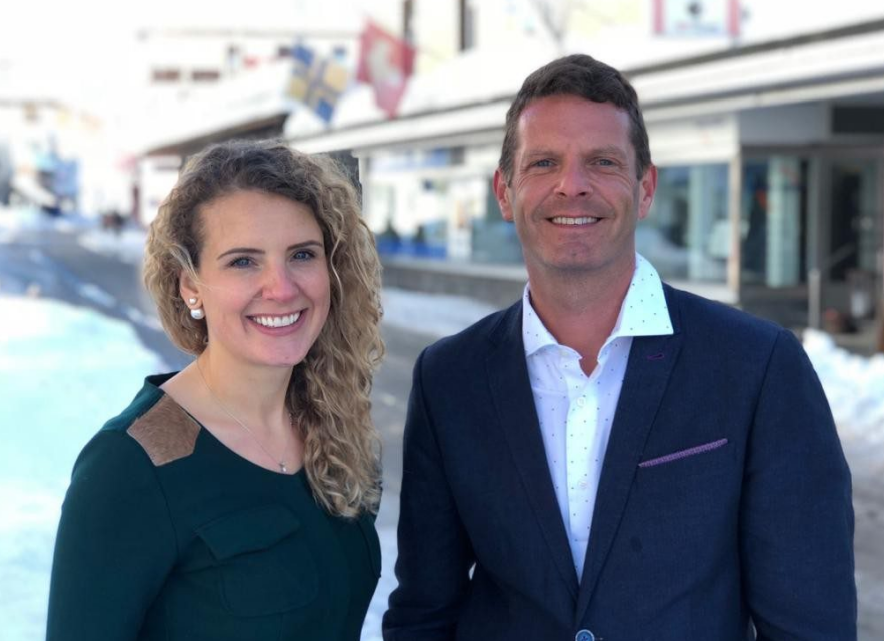
Nicky described,
David had long dreamed of such a community,
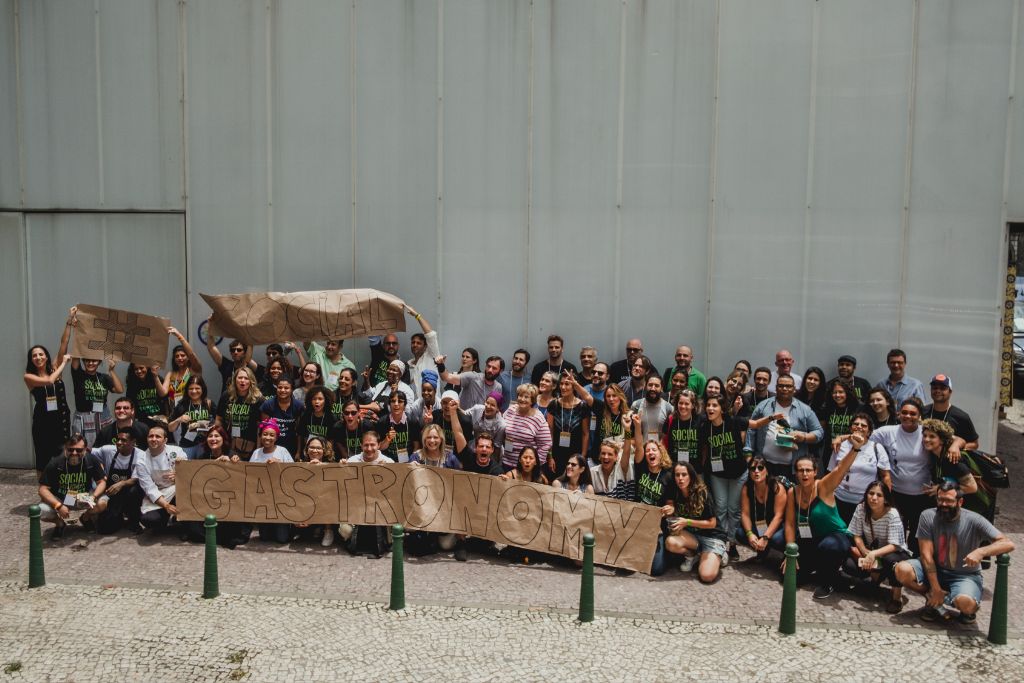
The idea in 2018 was simple but ambitious: host a summit to gather changemakers from around the world who were using food as a tool for social change and create a space for genuine collaboration. This would include chefs, social entrepreneurs, business leaders, government officials, and academics.
The original plan was to have 10 founding members, each putting in $1,000, and we’d co-create this together. We brought in tons of other people and went out with a lot of invitations, hoping for a few confirmations. And almost everyone confirmed, so we ended up in the first co-creation group with 60 people.
For about two years, Gastromotiva “incubated” the Social Gastronomy Movement, acting as its backbone organization. This allowed SGM to grow roots, and naturally brought up creative tensions around identity, governance, and funding. In early 2020, SGM was formally spun out as an independent foundation in Switzerland. Gastromotiva became one of many organizations within the SGM umbrella. This allowed SGM to “fly free,” grow, and attract its own funding and leadership.
Between the backbone team and members of the Network, they have:
- 400+ Members and local communities across 70+ countries
- convened five global summits, countless local convenings and dialogues
- established 1000+ collaborations and connections
- collectively served over 74 million+ meals
- distributed $100,000+ to local organizations in emergency response
- co-created and formalized a collective impact framework for social gastronomy
- built a knowledge hub for best practice- and knowledge sharing
- shaped and advanced the narrative and field of social gastronomy
SGM made it their mission to make social gastronomy a norm by building bridges between producers and consumers, re-establishing food sovereignty of local communities.
With the advent of covid, fighting hunger was everywhere. Governments paid restaurants to stay open so they could retain the star chefs and staff, and feed meals to people in need. This happened across Brazil, the US, Europe, and this also continued as a practice after Covid - notable examples include Eleven Madison Park - where they give away food as much as they sell.
This by itself has shown early signs of social gastronomy becoming a norm. Not necessarily through the tactics we imagined, but it’s happening!
SGM as a brand has achieved it’s mission.
Out of the 400 organizations, 16 organizations continue to meet once a year for peer learning and exploring synergies to further shape the field.
For more than 40 years, Ashoka has built and nurtured a network of 4000+ leading social entrepreneurs in the world. Read more about the Ashoka Fellowship here.
- 2017,
- 2021,
The Globalizer strategy accelerator supports social entrepreneurs gain clarity on systemic root causes of social and environmental problems and the importance of engaging more changemakers as part of the solutions. It enables them to design effective collaborative systems change strategies (based on respect to all humans and nature).
Refined since 2010, the accelerator is a structured collective thinking and experimenting process between social entrepreneurs, systems thought partners from Ashoka and selected leaders from business and the social sector.
Participated with support from
Elements of the Collaborative Systems Change Strategy
Hover/Click on things to dive deepType of Root Cause identified as a Leverage Point for Systems Change (Donella Meadows)
The first element of crafting a collaborative systems change strategy to address a problem is to define the problem and identify the most strategic change needed to address the root cause(s) of the problem. That becomes the targeted Systems Change Goal or the Mission.
To identify it, analyze the root causes—barriers, factors, dynamics, points or conditions driving the problem—and determine which offers the greatest leverage for change.
According to the FSG, leverage points include:
- Policies
- Practices
- Resource Flows
- Relationships & Roles
- Power Dynamics
- Mental Models
These "leverage points" are derived from the work of Donella Meadows, the pioneer in the field of systems thinking who articulated and conceptualized "Leverage Points: Places to Intervene in a System to Create Effective Change".
Explore Case Studies of different types of "Systems Change Goal(s)" in our Library.
Endgame / Pathway applied towards Activating a Network of Changemakers towards the targeted Systems Change
The second element of crafting a collaborative systems change strategy includes determining how to achieve the systems change goal.
This means choosing a strategy suited to the system’s context. The strategy could be to:
- Work with government
- Create a new field/market
- Build a competitive advantage
- Shift societal narratives
The items on the list are neither mutually exclusive, nor collectively exhaustive.
You can read more about the types of systems change strategies/pathways/endgames/stories we have come across in this article by Odin Muehlenbein.
Explore Case Studies on different "Types of Strategy" in our Library.
Types of stakeholders activated as changemakers towards the systems change
The third element of crafting a collaborative systems change strategy includes identifying the critical stakeholders to activate as partners- those who influence an exponential number of people in the context of the system.
Irrespective of the type of strategy, systemic change always requires activation of a network of stakeholders for different tactics towards the mission.
Typical stakeholder groups for systemic change include:
- government agencies
- universities (e.g. education schools for the empathy paradigm, public health and med schools for the health paradigm, etc.)
- publishers (e.g. education publishers for empathy, medical journals for health, etc.)
- informal & formal communities / unions (e.g. AARP for longevity, teachers' unions for empathy, families, etc.)
- media companies
- industry-specific companies / organizations (e.g. tech companies and financial institutions for the technology paradigm, insurance and healthcare companies for longevity, relevant civil society organizations etc.).
Explore Case Studies on different "Types of Partners Engaged" in our Library.
The depths of engagements in play for the different stakeholders (CoCreative)
The fourth and final element of crafting a collaborative systems change strategy includes reflecting on what depth to engage with each stakeholder.
Activating a broad network is essential, but so is clarifying their role: Are they simply informed, consulted, or co-creating the strategy?
CoCreative's Five Levels of Engagement Framework guides how one may engage with each stakeholder. Are you:
- co-creating?
- collaborating?
- involving?
- consulting?
- informing?
Explore Case Studies on different "Levels of Stakeholder Engagement" in our Library.
Their work contributes towards


The 2030 Agenda for Sustainable Development, adopted by all United Nations Member States in 2015, provides a shared blueprint for peace and prosperity for people and the planet, now and into the future. At its heart are the 17 Sustainable Development Goals (SDGs), which are an urgent call for action by all countries - developed and developing - in a global partnership.
Explore Case Studies on strategies contributing to addressing different "SDGs" in our Library.
The root causes of global socio-ecological unsustainability their work is addressing (FSSD)
According to the Framework for Strategic Sustainable Development (FSSD) co-created by Ashoka Fellow Dr. Karl-Henrik Robèrt and Dr. Göran Broman and Dr. Merlina Missimer of the Blekinge Institute of Technology, Sweden, there are 8 root causes of all socio-ecological unsustainability problems (also referred to as Sustainability Principles):
- extraction from Earth's crust
- chemical pollution
- physical destruction
- barriers to health
- barriers to competence
- barriers to influence/participation
- barriers to impartiality
- barriers to meaning-making
To get a deeper feel, here are videos on the ecological and social sustainability principles.
You can see case studies of changemakers contributing to addressing different root causes ("Sustainability Principles") in our Library.