The Social Innovation
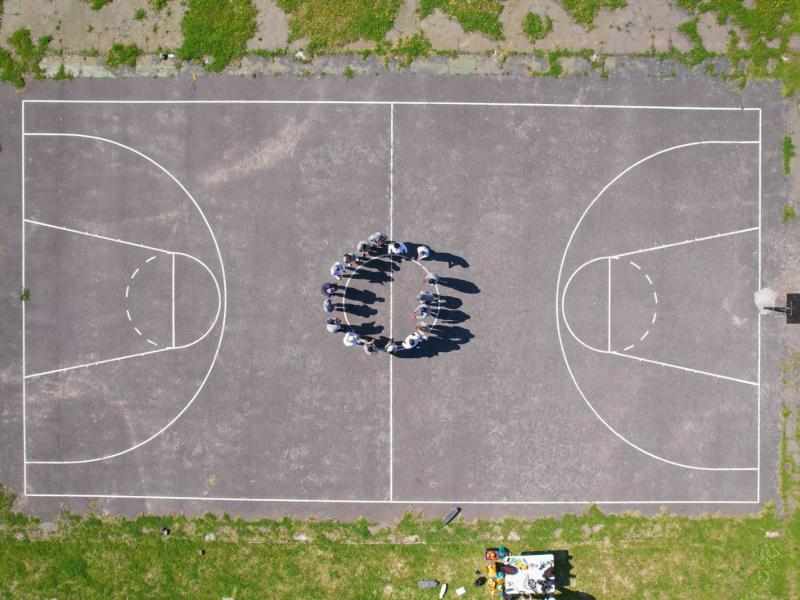
Afforestt is a service provider for creating natural, wild, maintenance free, native forests using the Miyawaki Method since 2011.
So far, they have been involved in creating 20+ hectares of forests across 60+ cities in 12+ countries.
Magnitude of the Problem, and its Root Causes
Between 2010 and 2020, the net loss in forests globally was 4.7 million hectares per year. However, deforestation rates were much higher. The UN FAO estimates that 10 million hectares of forest are cut down each year.
During their participation in the Globalizer in 2020 co-created by Ashoka and HSBC, they outlined that the key factors driving the problem include:
- deforestation for agriculture, mining and infrastructure development
- conventional landscaping practices
- lack of awareness and methodology for forest makers to create natural, wild, maintenance free, native forests
Based on their systems change analysis, Afforestt have made it their mission to improve the practices used by forest makers by building the field of authentic forest making.
I would say the Globalizer helped us articulate it so well that now we have one slide which we can use as the guiding stone for the next 10-15 years. Starting from a peer community and going up to the level of changing the policy the policy and there could be a day where we will say okay, why do we have to still run Afforestt because of everything that has already been achieved?
I love the way the strategy has grown organically so far just like a forest. But also, I feel to give it a structure helps you to sleep better, because you know what you're doing. Otherwise, it could be a huge burden on the shoulders of the founder or the core team that is running the show, when it's articulated well in a slide format, we can have each of those blocks a separate vertical and find the best people to run those verticals. So, somebody would be working on policy, only somebody would be working on creating this peer community or somebody would be working on formalizing the sector making the SOPs early. So, this is the set foundation that Globalizer has given us.
Now if I'm talking to Sunny (the CEO), we're talking about strategy and the bigger vision - all the stuff that's supposed to be done in the next three, four or five years; before the Globalizer our conversation was what's going on right now and what is the next firefighting that we have to do. Now that he is focusing more on strategy, a second line of leadership has evolved, and they are showing their strength.
Strategy to Catalyze a Network of Changemakers towards the Targeted Mission
The strategy involves orchestrating and training the reforestation efforts ecosystem to take a more authentic approach to create natural, wild, maintenance free and native forests.
Some of the tactics they deployed towards the mission as a part of the strategy include:
1) Involving and Inviting everyone to Create Forests Using their Methodology
The Afforestt methodology was documented in a manual as well as shared in a book called Mini Forest Revolution by Hannah Lewis, but the Afforestt team realized that given the amount of laypeople who work on creating forests it needed to be documented in an implementable way that is accessible to laypeople and can be spread across the masses.
Their past engagements like the TED Talks and INK talks where Shubhendu shared about the Miyawaki methodology were a great call to action for “how anyone can build a forest in their backyard or community.” It gained great traction and reached more than 5,000,000 viewers, who in comments and via email started sharing their intent to create their own forests and asking for books and resources that could guide them.
Thus, given the impact potential, and the risks of the methodology being replicated half-heartedly and not producing the results, Afforestt open sourced the methodology in a way that it is implementable.
They did so by raising 10,000 USD through a Kickstarter campaign to develop video tutorials on YouTube. These have reached 16,000 views till date, and there is data of the methodology being used by 100+ organizations in 30+ countries. It is already accessible in English, Hindi and Punjabi and they are continuing to develop it in other languages like Spanish, Arabic and French.
Also, as they opened up their methodology, organizations started reaching out with questions and requests for consultations, which led to Afforestt's online training and consulting model which now makes up for 50% of their organization’s revenue. They have trained 500+ people with their methodology contractual projects, online and offline workshops and consulting projects.
2) Collaborating with Peers and Co-creating a Peer Community Network to share Know-hows, Information and Consulting Peers
Afforestt is collaborating with key organizations in the field using the hub and spoke model. Organizations like- Say Trees (India), Dharti Amrit (India), Eco Sikh (India), Natural Urban Forests (USA), Bosco (Chille), Miti Alliance (Kenya), Bretta Corp (Australia), IVN (The Netherlands), Green Yatra (India), Eco Satva (India), Urban Forest (Pakistan) and Mzanzi Organics (South Africa).
They are also working on creating an independent entity- Association of Authentic Forest Makers to give the stakeholders committed to working on bringing back native flora, integrating land, water, soil, fungi and microbiology and caring for the whole environment.
And to create that kind of ecosystem, we need some authentic forest makers who are not afraid of sharing their knowledge, even if it is about the supply chain that is available.
If everyone works as a team, on different items, then the team as a large achieves a bigger vision, which is the global change that we are imagining. And to make that change realize we have to become that body that makes sure that we are getting authentic people on board who are not afraid of not fearful of sharing their knowledge openly.
It would create a platform for stakeholders like suppliers, nursery owners, allied academicians, etc. the recognition they deserve as well as to create a peer community network to share know how's so that the overall methodology improves and to enhance each other's quality of work.
It would include monthly gatherings, and an online directory would serve as a simple platform for people across the world to find authentic forest makers and their contact details.

For more than 40 years, Ashoka has built and nurtured a network of 4000+ leading social entrepreneurs in the world. Read more about the Ashoka Fellowship here.
- 2020,
The Globalizer strategy accelerator supports social entrepreneurs gain clarity on systemic root causes of social and environmental problems and the importance of engaging more changemakers as part of the solutions. It enables them to design effective collaborative systems change strategies (based on respect to all humans and nature).
Refined since 2010, the accelerator is a structured collective thinking and experimenting process between social entrepreneurs, systems thought partners from Ashoka and selected leaders from business and the social sector.
Participated with support from
Elements of the Collaborative Systems Change Strategy
Hover/Click on things to dive deepType of Root Cause identified as a Leverage Point for Systems Change (Donella Meadows)
The first element of crafting a collaborative systems change strategy to address a problem is to define the problem and identify the most strategic change needed to address the root cause(s) of the problem. That becomes the targeted Systems Change Goal or the Mission.
To identify it, analyze the root causes—barriers, factors, dynamics, points or conditions driving the problem—and determine which offers the greatest leverage for change.
According to the FSG, leverage points include:
- Policies
- Practices
- Resource Flows
- Relationships & Roles
- Power Dynamics
- Mental Models
These "leverage points" are derived from the work of Donella Meadows, the pioneer in the field of systems thinking who articulated and conceptualized "Leverage Points: Places to Intervene in a System to Create Effective Change".
Explore Case Studies of different types of "Systems Change Goal(s)" in our Library.
Endgame / Pathway applied towards Activating a Network of Changemakers towards the targeted Systems Change
The second element of crafting a collaborative systems change strategy includes determining how to achieve the systems change goal.
This means choosing a strategy suited to the system’s context. The strategy could be to:
- Work with government
- Create a new field/market
- Build a competitive advantage
- Shift societal narratives
The items on the list are neither mutually exclusive, nor collectively exhaustive.
You can read more about the types of systems change strategies/pathways/endgames/stories we have come across in this article by Odin Muehlenbein.
Explore Case Studies on different "Types of Strategy" in our Library.
Types of stakeholders activated as changemakers towards the systems change
The third element of crafting a collaborative systems change strategy includes identifying the critical stakeholders to activate as partners- those who influence an exponential number of people in the context of the system.
Irrespective of the type of strategy, systemic change always requires activation of a network of stakeholders for different tactics towards the mission.
Typical stakeholder groups for systemic change include:
- government agencies
- universities (e.g. education schools for the empathy paradigm, public health and med schools for the health paradigm, etc.)
- publishers (e.g. education publishers for empathy, medical journals for health, etc.)
- informal & formal communities / unions (e.g. AARP for longevity, teachers' unions for empathy, families, etc.)
- media companies
- industry-specific companies / organizations (e.g. tech companies and financial institutions for the technology paradigm, insurance and healthcare companies for longevity, relevant civil society organizations etc.).
Explore Case Studies on different "Types of Partners Engaged" in our Library.
The depths of engagements in play for the different stakeholders (CoCreative)
The fourth and final element of crafting a collaborative systems change strategy includes reflecting on what depth to engage with each stakeholder.
Activating a broad network is essential, but so is clarifying their role: Are they simply informed, consulted, or co-creating the strategy?
CoCreative's Five Levels of Engagement Framework guides how one may engage with each stakeholder. Are you:
- co-creating?
- collaborating?
- involving?
- consulting?
- informing?
Explore Case Studies on different "Levels of Stakeholder Engagement" in our Library.
Their work contributes towards


The 2030 Agenda for Sustainable Development, adopted by all United Nations Member States in 2015, provides a shared blueprint for peace and prosperity for people and the planet, now and into the future. At its heart are the 17 Sustainable Development Goals (SDGs), which are an urgent call for action by all countries - developed and developing - in a global partnership.
Explore Case Studies on strategies contributing to addressing different "SDGs" in our Library.
The root causes of global socio-ecological unsustainability their work is addressing (FSSD)
According to the Framework for Strategic Sustainable Development (FSSD) co-created by Ashoka Fellow Dr. Karl-Henrik Robèrt and Dr. Göran Broman and Dr. Merlina Missimer of the Blekinge Institute of Technology, Sweden, there are 8 root causes of all socio-ecological unsustainability problems (also referred to as Sustainability Principles):
- extraction from Earth's crust
- chemical pollution
- physical destruction
- barriers to health
- barriers to competence
- barriers to influence/participation
- barriers to impartiality
- barriers to meaning-making
To get a deeper feel, here are videos on the ecological and social sustainability principles.
You can see case studies of changemakers contributing to addressing different root causes ("Sustainability Principles") in our Library.