The Social Innovation
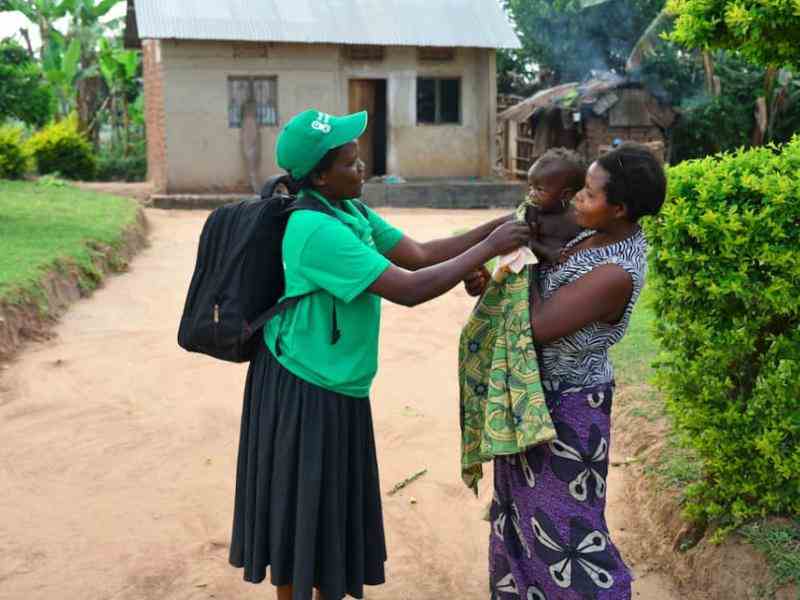
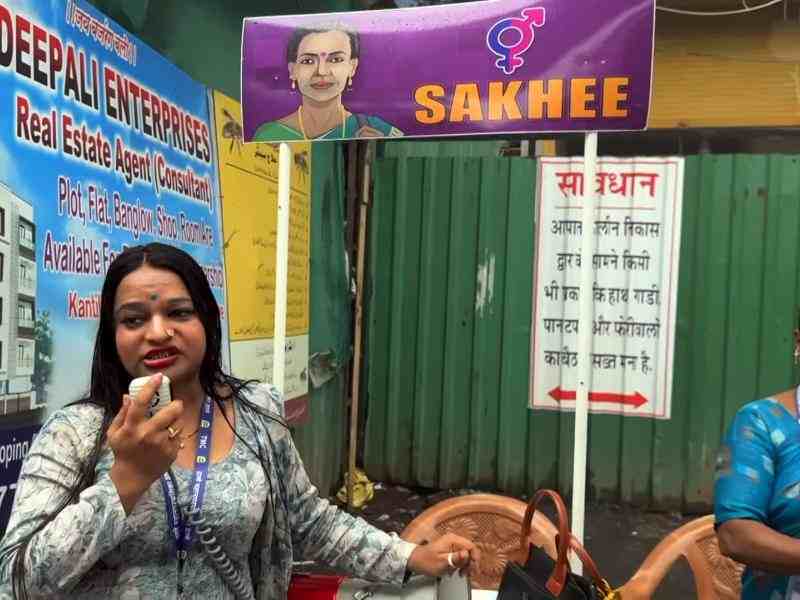
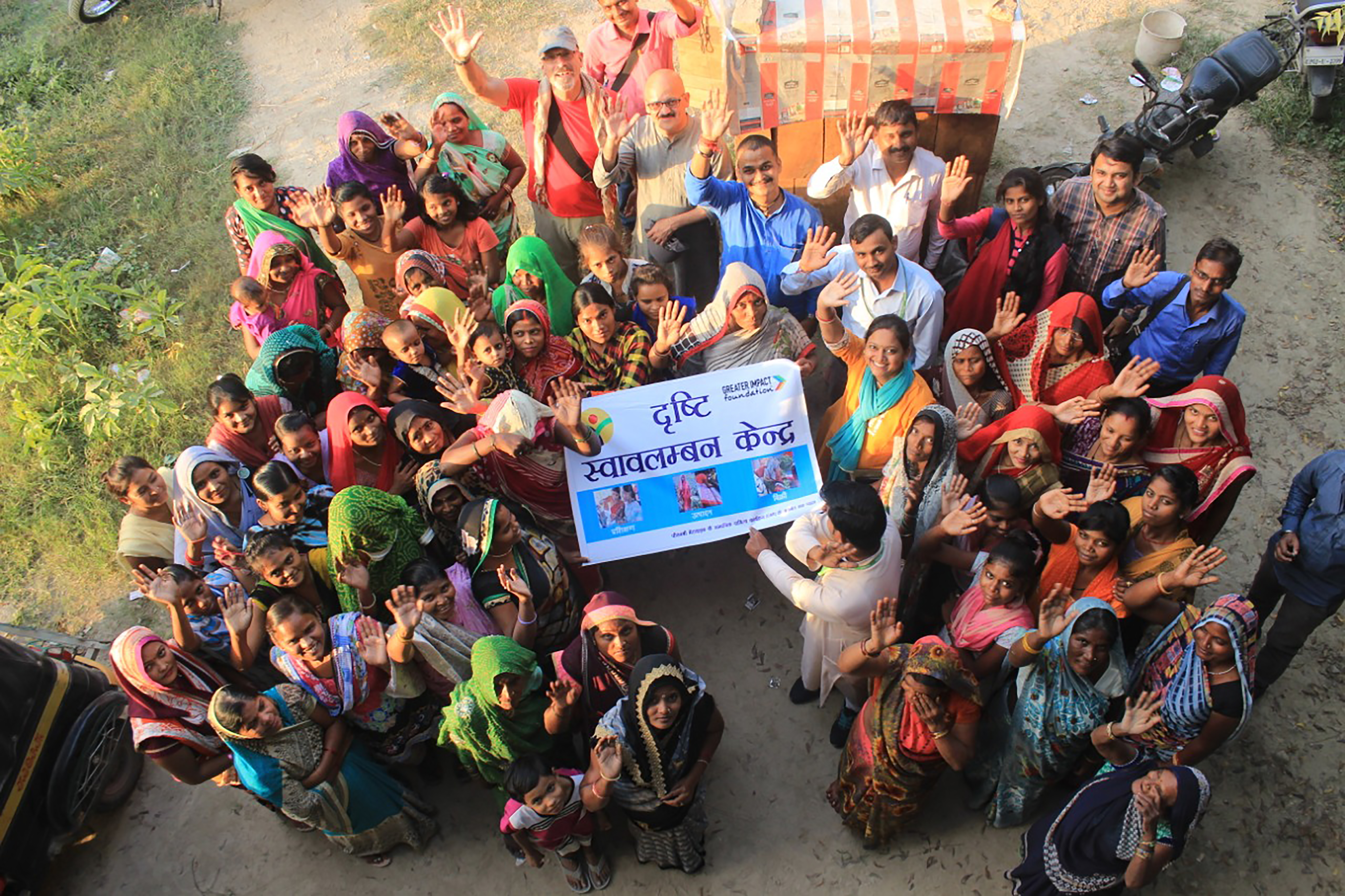
Since 1998, Drishtee has been building the infrastructure for rural economic self-reliance across India's most marginalised villages. Starting with internet-enabled government service kiosks, Drishtee evolved into a full 4C platform — Community, Capacity, Channel, Capital — that today reaches 8,000+ villages across 10 Indian states, with a particular focus on Uttar Pradesh, Bihar, and Assam, home to 40% of India's rural population.
At the heart of the model is the Swāvalamban approach — a revival of Gandhi's swadeshi idea of self-reliance, now operationalised as a modern rural economic ecosystem. Rather than deliver services to communities, Drishtee builds the conditions under which communities generate, exchange, and retain their own wealth. Every village in the Drishtee network is anchored by a Swāvalamban Pranaam Samiti: a local governing council comprising women entrepreneurs, a Sevak (male champion), a Sevika (female champion), and the local Customer Service Point (CSP) operator. Together, they own the village's livelihood journey.
Each CSP serves 25–30 surrounding villages and roughly 20,000–30,000 people; local entrepreneurs contribute equity capital (₹15,000), with the balance financed by nationalised banks including the State Bank of India.
Drishtee has supported over 15,000 rural entrepreneurs and served more than one million families. Its kiosk and CSP network — 4,000+ entrepreneur-run banking and services access points — processes over ₹850 crore in transactions annually and reaches an outreach of 16,000 villages.
Magnitude of the Problem, and its Root Causes
India's 600,000 villages are quietly losing their economic vitality. Over 10 million people migrate from rural to urban areas every year. Rural per capita income is one-third of the national average. Agriculture grows at 2.8% while inflation runs at 6%. Communities that make up 65% of India's population contribute just 18% to GDP.
During their participation in the Globalizer co-created by Ashoka and eBay Foundation in 2014, the Drishtee team highlighted the following key factors contributing to the magnitude of the problem:
- Rural producers — especially women — have no reliable channel to market. Middlemen control access and extract value, leaving producers unable to convert skill and time into sustainable income.
- Development organisations, including Drishtee itself until 2016, placed themselves at the centre of rural development, creating dependency rather than ownership. Communities were partners, not authors.
- Government training programmes designed to build skills often funded migration to cities, because they were not embedded in local livelihood ecosystems. Free training attracted people looking for city jobs, not village futures.
- There is no capital available to initiate small enterprise development in villages, and no trusted exchange infrastructure for women whose economic activity falls outside the formal monetary system.
Based on their systems change analysis, Drishtee made it a mission to shift rural development from service delivery to communities, to economic ecosystems owned by communities — making rural entrepreneurship self-sustaining at a scale where the departure of any single organisation cannot cause collapse.
"With the confidence you gain from Globalizer — seeing programmes in pilot, seeing how other Fellows are doing what they are doing, knowing we are all in the same boat — it is extremely comforting as an entrepreneur with a dream. The plan I took in 2010 felt out of reach; I went to seek resources. By the 2014 one I realised the plan was within our reach, and I wanted guidance, not permission. Globalizer is a small family within the Ashoka family. What it did was make us imagine. Lifting that imagination itself has led us to what we are."
Strategy to Catalyze a Network of Changemakers towards the Targeted Mission
The strategy involves activating a village-level ecosystem of entrepreneurs, local governing bodies, banks, government agencies, and women's collectives — with each actor playing a defined role that outlasts Drishtee's direct presence.
"Systems change is to leave all your prior certainties behind and just be with the community. I learnt empathy from the women we work with. I see the same level of energy in them as I see in Ashoka Fellows — the platform is different, but the energy is identical."
Some of the tactics deployed as part of this strategy include:
1) Collaborating with Banks as Door-Openers for Involving Entrepreneurs in the Villages
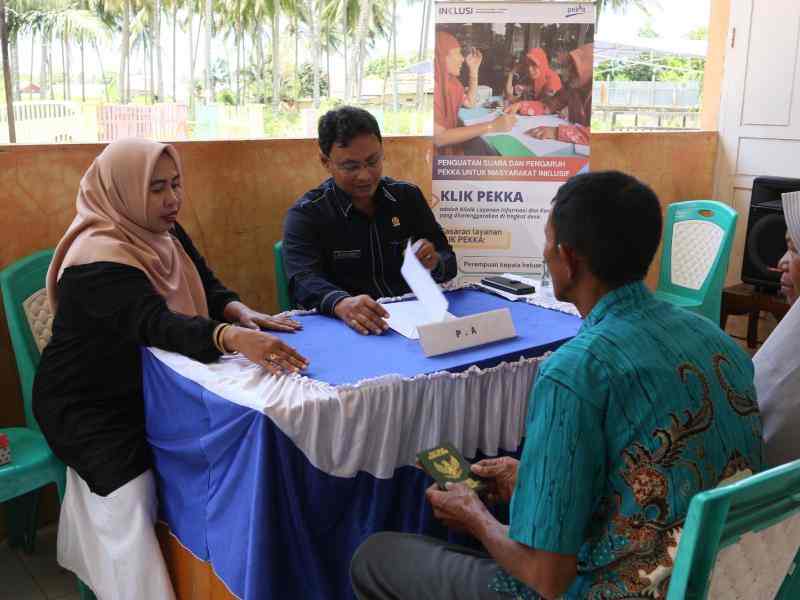
The Jan Dhan Yojana financial inclusion push created a structural opportunity. Drishtee partnered with State Bank of India, Punjab National Bank, Indian Bank, and other nationalised banks to establish Customer Service Points (CSPs) — entrepreneur-run banking access points — in underserved villages. The banks fund the village entry cost; within 3–6 months the CSP entrepreneur is profitable, earning a 20% revenue share. The model has been profitable in 13 of last 14 years of operation, funding its own innovation without a significant dependence on grants.
"The moment we have an entrepreneur in that location, they start doing camps in different villages, and those camps help introduce the livelihood model. The CSPs became door-openers — we were able to expand much faster."
Once embedded in a village, Drishtee establishes the Swāvalamban Samiti — the local governing council — and introduces the full livelihood model. Today, 4,000+ CSPs provide an outreach to 16,000+ villages, across 23 states growing at ~700 new CSPs per year. The goal: 20,000 CSPs reaching 80,000 villages by 2030.
2) Demonstrating the model to Inform and Influence Government Programs
Rather than lobbying, Drishtee demonstrates. In 2000, Satyan piloted government service delivery through locally-owned, revenue-sharing kiosks — entrepreneur-run computer terminals giving villagers access to government records, agricultural commodity prices, health insurance, distance learning, and certificate applications. Eliminating information intermediaries increased farmers' incomes by 3–5% in early impact assessments. The government's Common Service Centre (CSC) programme — today operating across 150,000 villages — directly echoes Drishtee's original design.
3) Reviving Barter with a Digital Livelihood Points Currency for the Ecosystem to Collaborate with each other
During COVID-19, when cash dried up, Drishtee rediscovered what communities already knew: barter. Women producing across 42 product categories — agarbatti, soap, textiles, pickles, handicrafts, heritage crafts — needed a way to exchange value without cash and without a distant market. Drishtee built a digital barter platform using Livelihood Points (LP): a unit based on time invested and skill level, not market price. Women list what they have and what they need; the platform matches them and credits LPs to a digital wallet.
Grain used to be the common currency in these villages — divisible, portable, a unit of trust. LP digitises and democratises that same logic. "It's what they were already doing — we just digitised it and democratised it."
4) Created EQ 1.0 — A Voice-Based AI Device for Village-Level Scale to be able to Influence and Involve more Villages
EQ 1.0: is a voice-based AI device — a village-adapted smart assistant built on edge computing with battery backup for off-grid environments — that can identify a user, personalise her livelihood journey, and guide her through training, product listing, and market navigation without a smartphone or external facilitator.
Developed in-house, the 1.0 application uses voice samples to build personalised personality and skills profiles. Voice samples of all 340 Drishtee staff are already in the system, now being used to build internal teams. The vision: EQ replaces the need to send a field worker to every village, taking Drishtee's reach from 8,000 to 80,000 villages.
5) Co-Created a Social Capital Fund for Involving & Supporting Women Entrepreneurs
Priya Dasgupta, a social finance enthusiast partnered with Drishtee to create Quiver — a dedicated social rural venture fund (started with about $500K investment from Drishtee) for rural women-led startups that have outgrown Drishtee's community infrastructure but are not yet ready for conventional venture capital. Quiver provides a combination of financial capital and social capital: introductions, board support, and advisory connections.
So far, Quiver has screened 200 startups, onboarded 59 startups, and invested in 3 startups.
6) Creating the Vidhushi Fellowship to Involve a new Generation of Leaders for the Field
In 2020, at the height of the pandemic, Drishtee launched the Vidhushi Fellowship (vidhushi: the learned one). Rather than struggle with lateral hires who require extensive unlearning, Drishtee recruits graduates from diverse disciplines — architecture, design, business — and sends them to live in villages for six months. Fellows orchestrate the Swāvalamban Samiti, launch barter circles, and experience the community from the inside out. Of 200 Vidhushi Fellows across cohorts since 2020, approximately 75–80 have stayed with the organisation and are on track to become its future leadership.
In 2025, Drishtee launched an international Vidhushi cohort, with 10 Fellows from across Africa — including two who spent six weeks in Indian villages (one an Ashoka Fellow from Kenya). "They come in capable, open to learn, with extreme empathy. In five years, they will be the top management of this organisation."
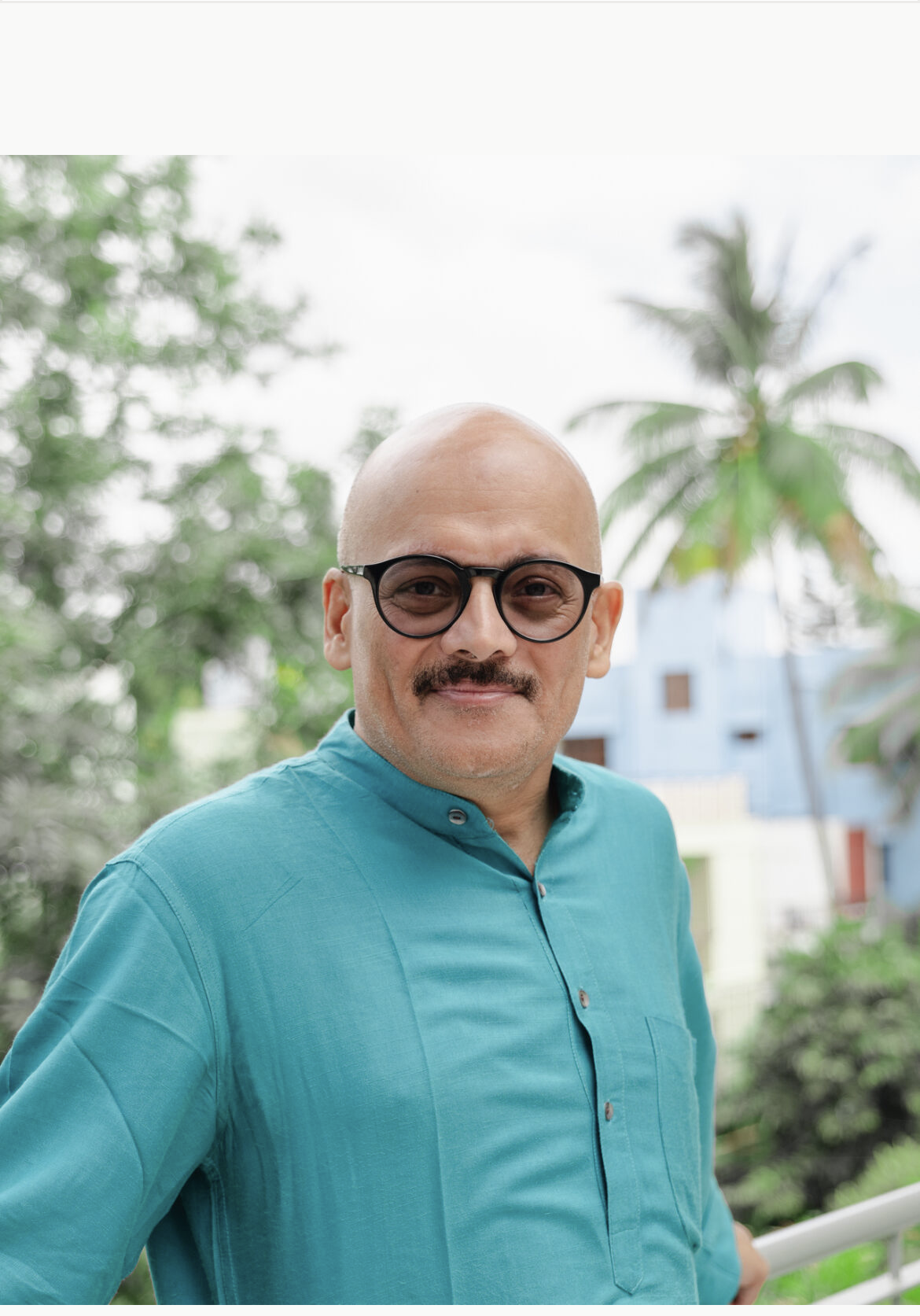
Satyan Mishra
For more than 40 years, Ashoka has built and nurtured a network of 4000+ leading social entrepreneurs in the world. Read more about the Ashoka Fellowship here.
- 2014,
- 2012,
- 2011,
The Globalizer strategy accelerator supports social entrepreneurs gain clarity on systemic root causes of social and environmental problems and the importance of engaging more changemakers as part of the solutions. It enables them to design effective collaborative systems change strategies (based on respect to all humans and nature).
Refined since 2010, the accelerator is a structured collective thinking and experimenting process between social entrepreneurs, systems thought partners from Ashoka and selected leaders from business and the social sector.
Participated with support from
Elements of the Collaborative Systems Change Strategy
Hover/Click on things to dive deepType of Root Cause identified as a Leverage Point for Systems Change (Donella Meadows)
The first element of crafting a collaborative systems change strategy to address a problem is to define the problem and identify the most strategic change needed to address the root cause(s) of the problem. That becomes the targeted Systems Change Goal or the Mission.
To identify it, analyze the root causes—barriers, factors, dynamics, points or conditions driving the problem—and determine which offers the greatest leverage for change.
According to the FSG, leverage points include:
- Policies
- Practices
- Resource Flows
- Relationships & Roles
- Power Dynamics
- Mental Models
These "leverage points" are derived from the work of Donella Meadows, the pioneer in the field of systems thinking who articulated and conceptualized "Leverage Points: Places to Intervene in a System to Create Effective Change".
Explore Case Studies of different types of "Systems Change Goal(s)" in our Library.
Endgame / Pathway applied towards Activating a Network of Changemakers towards the targeted Systems Change
The second element of crafting a collaborative systems change strategy includes determining how to achieve the systems change goal.
This means choosing a strategy suited to the system’s context. The strategy could be to:
- Work with government
- Create a new field/market
- Build a competitive advantage
- Shift societal narratives
The items on the list are neither mutually exclusive, nor collectively exhaustive.
You can read more about the types of systems change strategies/pathways/endgames/stories we have come across in this article by Odin Muehlenbein.
Explore Case Studies on different "Types of Strategy" in our Library.
Types of stakeholders activated as changemakers towards the systems change
The third element of crafting a collaborative systems change strategy includes identifying the critical stakeholders to activate as partners- those who influence an exponential number of people in the context of the system.
Irrespective of the type of strategy, systemic change always requires activation of a network of stakeholders for different tactics towards the mission.
Typical stakeholder groups for systemic change include:
- government agencies
- universities (e.g. education schools for the empathy paradigm, public health and med schools for the health paradigm, etc.)
- publishers (e.g. education publishers for empathy, medical journals for health, etc.)
- informal & formal communities / unions (e.g. AARP for longevity, teachers' unions for empathy, families, etc.)
- media companies
- industry-specific companies / organizations (e.g. tech companies and financial institutions for the technology paradigm, insurance and healthcare companies for longevity, relevant civil society organizations etc.).
Explore Case Studies on different "Types of Partners Engaged" in our Library.
The depths of engagements in play for the different stakeholders (CoCreative)
The fourth and final element of crafting a collaborative systems change strategy includes reflecting on what depth to engage with each stakeholder.
Activating a broad network is essential, but so is clarifying their role: Are they simply informed, consulted, or co-creating the strategy?
CoCreative's Five Levels of Engagement Framework guides how one may engage with each stakeholder. Are you:
- co-creating?
- collaborating?
- involving?
- consulting?
- informing?
Explore Case Studies on different "Levels of Stakeholder Engagement" in our Library.
Their work contributes towards

The 2030 Agenda for Sustainable Development, adopted by all United Nations Member States in 2015, provides a shared blueprint for peace and prosperity for people and the planet, now and into the future. At its heart are the 17 Sustainable Development Goals (SDGs), which are an urgent call for action by all countries - developed and developing - in a global partnership.
Explore Case Studies on strategies contributing to addressing different "SDGs" in our Library.
The root causes of global socio-ecological unsustainability their work is addressing (FSSD)
According to the Framework for Strategic Sustainable Development (FSSD) co-created by Ashoka Fellow Dr. Karl-Henrik Robèrt and Dr. Göran Broman and Dr. Merlina Missimer of the Blekinge Institute of Technology, Sweden, there are 8 root causes of all socio-ecological unsustainability problems (also referred to as Sustainability Principles):
- extraction from Earth's crust
- chemical pollution
- physical destruction
- barriers to health
- barriers to competence
- barriers to influence/participation
- barriers to impartiality
- barriers to meaning-making
To get a deeper feel, here are videos on the ecological and social sustainability principles.
You can see case studies of changemakers contributing to addressing different root causes ("Sustainability Principles") in our Library.