The Social Innovation
Dream a Dream - led by Sucheta Bhat and founded by Vishal Talreja - has been working to equip young people growing up in adversity with the life skills to thrive. It began in 1999.
At the core of Dream a Dream's work is its Creative Life Skills Approach — a relational pedagogy built on safety, play, and empathy, delivered through trained adult facilitators who hold space for young people navigating adversity to explore who they want to be. The approach rests on a foundational conviction: that a caring adult, equipped with the right approach, provides greater and more lasting impact than any curriculum. Life skills — the abilities for adaptive and positive behaviour that enable individuals to deal effectively with the demands of everyday life — are not a supplement to education. They are its irreducible purpose.
In Bangalore, this approach comes to life in 5 Thriving Schools and 2 permanent Thriving Centres, where the After School Life Skills Programme (launched 2002) and the Thriving Centre Programme serve young people aged 8 to 23, year-round. Multi-day outdoor experiential camps, developed using the Creative Community Model with Partners for Youth Empowerment (PYE) Global, extend this work beyond the classroom. Partners including the Bangalore Football Club, Grassroots Soccer, and the EKA Fellowship amplify its reach. Dream a Dream has directly reached 138,379 young people through these programmes in Karnataka.
Magnitude of the Problem, and its Root Causes
India has 140 million young people growing up in adversity — in homes shaped by abuse, neglect, extreme poverty, or displacement. The education system, built around a single measure of worth (academic grades), does not just fail them — it actively erases them.
In India, 53% of children drop out before completing Grade 10, only 15% reach college, and 47% of women aged 20–24 are married before adulthood — a compounding result of a system that abandons young people before they can find their footing. The consequences follow them into adulthood: 9 in 10 children who experience neglect are at risk of mental health challenges later in life, and 75% of young people entering the Indian workforce are considered unemployable or not job-ready.
During their participation in the Globalizer in 2011 and again in 2016 with Playing for Change and the LEGO Foundation respectively, the Dream a Dream team highlighted the following key factors contributing to the magnitude of the problem:
- Education systems globally are designed around cognitive outcomes, leaving social-emotional development unmeasured and undervalued
- Life skills, when introduced into school systems, risk co-optation — reframed as employability tools, behaviour management, or value education — rather than being understood as children's right to agency
Based on their systems change analysis, Dream a Dream made it a mission to shift mindsets about the purpose of education — from academic achievement to thriving — so that every young person, regardless of background, is equipped with the life skills to overcome adversity and flourish in the 21st century.
"The Globalizer came to us every time we were sitting on the question of what next. In 2009–10 we were hitting the ten-year mark. In 2014–15 we had just had a brand change and we were thinking about systems change as an idea, but we didn't know what it meant. The Globalizer helped us not through solutions and frameworks, but by asking good, tough questions — questions that pushed us to reflect on why we exist, what we are trying to do, what is the change we want to create in the world. That thinking really pushed us into how do we stay small but create large-level impact? How does systems change happen differently? How do we look at scale differently? The tough choices we have made around funding models, around culture building — the questions were actually much more powerful than any answer could have been."
Strategy to Catalyze a Network of Changemakers towards the Targeted Mission
The field-building strategy combines deep direct demonstration with government partnership, evidence generation and narrative building.
Some of the tactics they deployed towards the mission as a part of the strategy include:
1) Transitioning from Involving other Players to Replicate the Model to becoming a Laboratory to Influence the Education System
For a few years, Dream a Dream pursued replication as one of the key routes to scale — training partner organisations and NGOs to deliver its life skills programmes independently across Karnataka, working with affordable private schools, charitable institutions, and school networks. By 2016, the organisation had 30 partners across four states.
But as government partnerships began to open up — starting with Delhi in 2018–19 — a sharper strategic question emerged: what was actually being replicated? The programme was spreading. The mindset was not. Underneath that realisation was a values confrontation Dream a Dream could not ignore: the replication model was measuring success the same way the education system measured children — by numbers, not depth of change.
And that was an early warning: life skills spread without integrity risked being absorbed into the very mental model Dream a Dream was trying to disrupt — reframed as employability training, behaviour management, or value education — rather than being understood as children's right to agency.
By 2021, the replication effort had been brought to zero. What replaced it was a laboratory. Five schools and two community centres in Bangalore became the permanent space where the theory of change could be tested up close, kept honest, and continuously refined — not as the small part of the strategy, but as its anchor. The laboratory gave them something replication never could — the ability to hold the integrity of the idea close and on their own terms. The reasoning cut to the core of what Dream a Dream believed: the real unit of change was never the programme. It was the adult. And an adult could only shift through a transformative experience — not a training manual handed to a partner NGO three states away.
"Systems change begins with inner transformation of the mental models of the leaders and practitioners. Mindset shift happens when people have a transformative experience. So, we train facilitators on holding space and creating transformative experiences for people."
Dream a Dream made a deliberate choice: to focus their energy on demonstrating the value of that adult transformation — the moment an educator truly sees a child differently — and let that proof do the work of shifting what systems believe education is for.
2) Collaborating with Scientific Publishing & Media Partners to Build the Evidence Base to Inform & Influence — and Making the Narrative Impossible to Ignore
Shifting a system's beliefs about education requires more than a good programme. It requires proof that travels. From early in its journey, Dream a Dream invested in developing tools rigorous enough to capture what it was actually trying to change:
The Dream Life Skills Assessment Scale — developed in partnership with Dr. Fiona Kennedy and Dr. David Pearson, Clinical Psychologists from UK — gave the organisation a standardised way to measure life skills development and gave the field something it badly needed: a credible instrument for assessing what test scores cannot see. That investment in measurement laid the groundwork for everything that followed:
- 2 peer-reviewed papers published; presented at 2 international conferences, including ICSEI 2026 in Doha:
- The life skills assessment scale: Measuring life skills of disadvantaged children in the developing world, published in the Social Behavior and Personality: An International Journal in partnership with Fiona Kennedy and David Pearson – National Health Service, United Kingdom and Lucy Brett-Taylor – University of East London
- The Life Skills Assessment Scale: Measuring Life Skills of Disadvantaged Children in the Developing World published in the Social Behavior and Personality: An International Journal in partnership with Fiona Kennedy and David Pearson – National Health Service, United Kingdom and Katherine Newman-Taylor – Psychology Department, University of Southampton, UK
- Co-published the Student and teacher social and emotional measures for the Happiness Curriculum with Center for Universal Education, Brookings Institution
- Co-published Social and Emotional Wellbeing (SEW) Survey for Adolescents from Disadvantaged Backgrounds in collaboration with Life skills collaborative and SRM University
- Selection as the only Indian organisation in a Harvard Graduate School of Education seven-country case study on 21st century skills innovation, and featured in a book titled Preparing Teachers to Educate Whole Students: An International Comparative Study (Harvard Education Press, 2018)
- Recognition as one of 10 Global Champions from 630 entries in the LEGO Foundation and Ashoka Re-Imagine Learning Challenge in 2014
But evidence alone doesn't shift systems. Translation does. Dream a Dream built a parallel track of thought leadership to reach the system through media:
- 11 op-eds and over 50 media mentions from 2023-25
- 16 podcasts
- the #FromTheField storytelling series, which highlights 66 stories of educators, government officials, team members and partners in the education ecosystem
- Presence at 41 global convenings including the Learning Planet Festival — to move insights from research into the wider conversation about what education is for
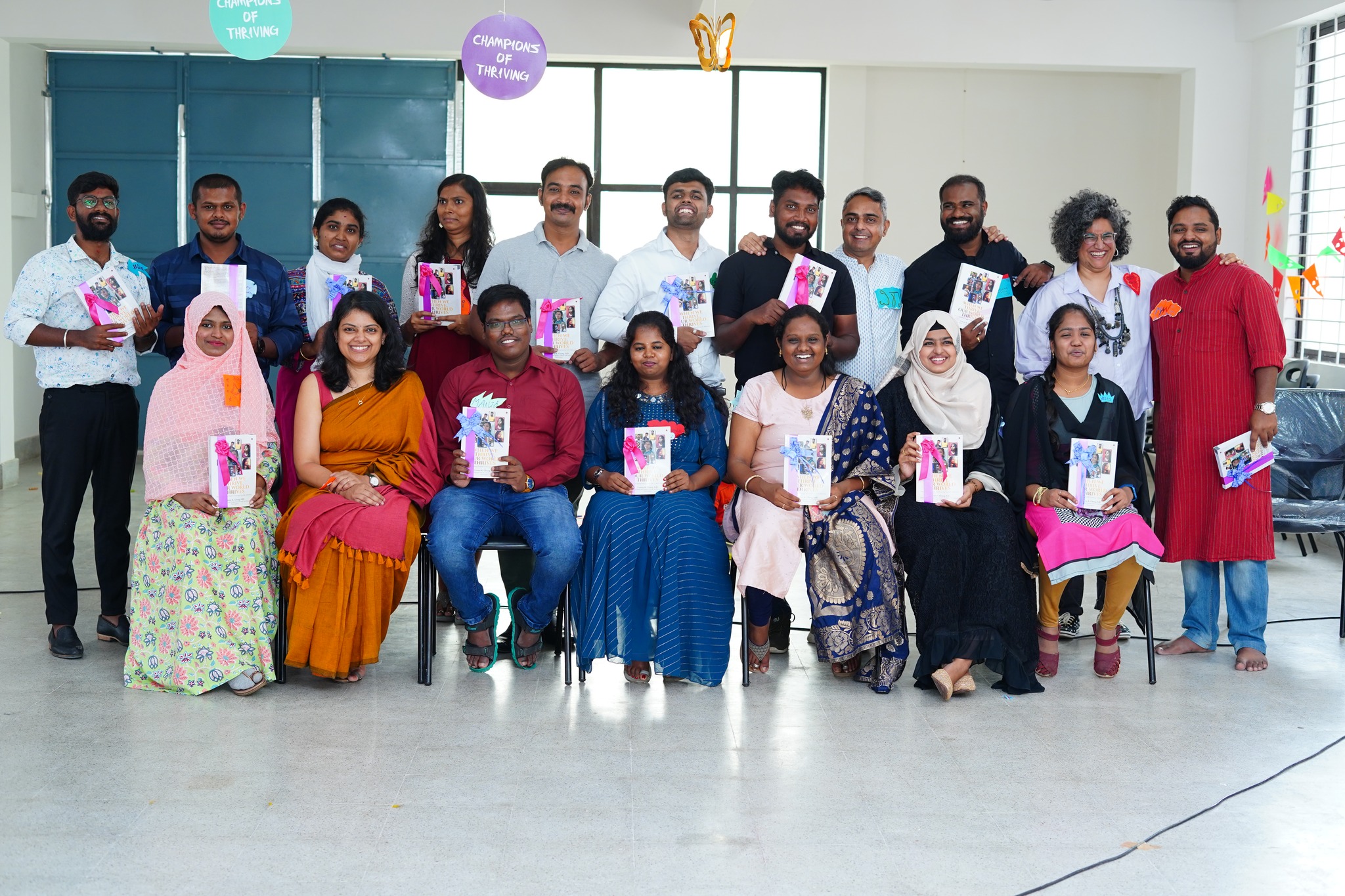
The culmination of this tactic is the book, When We Thrive, Our World Thrives: Stories of Young People Growing Up with Adversity, co-authored by Vishal Talreja and Dr. Connie K. Chung. Centring on the personal stories of Dream a Dream graduates, the book weaves together research on positive youth development, 25 years of life skills practice, and the organisation's own journey as an institution learning in public. It is the long argument made human. Research builds the case. Stories make it undeniable. So far, the book has sold 1700+ copies.
3) Collaborating with Governments to Involve & Train Teachers as Facilitators
Dream a Dream would only partner with governments willing to own the work themselves.
"It's always the state's programme. Our role is essentially in conceptualising, providing our expertise, and then training the teachers, building capacity and master trainers."
Active partnerships span across Delhi, Punjab, Jharkhand, Uttarakhand, Telangana, Karnataka, and Nagaland:
- Delhi – Happiness Curriculum (2018–19) reached 1M children almost immediately, opening up the SEL space nationally; impacts 1,024 schools, 800,000 young people, and 18,235 teachers & stakeholders trained
- Uttarakhand – Anandam Pathyacharya (holistic curriculum, grades 1–8) reached 592,097 young people across 15,979 government schools, with 1,104 teachers & stakeholders trained
- Jharkhand – Project Sampoorna reached 121 schools, 35,000 young people, and 2,312 teachers & stakeholders trained; recognised as one of 12 global finalists for the Transformative Partnerships Award by the Collective Leadership Institute (2024)
- Nagaland – Co-created Thriving Progress Profile embedded into the Nagaland Board of School Education's assessment architecture; 17 schools, 606 young people, and 240 teachers & stakeholders trained
- Telangana – 53 schools, 4,760 young people, and 161 teachers & stakeholders trained
- Karnataka – 97 schools, 15,530 young people, and 679 teachers & stakeholders trained
- At national level, the Diksha platform has trained 64,000 teachers through India's national online learning platform.
From 2023–2025, 2,171,592 young people were impacted through state partnerships spanning 17,291 schools and training 22,731 teachers and stakeholders.
Building on this momentum, by 2026–27, the strategy targets 9 state partnerships and 3 national partnerships reaching 5 million children.
4) Co-creating a Global Community of Practice to Influence, Consult & Collaborate together
Research can build the case. A laboratory can hold the integrity. Government partnerships can influence parts of the education system.
But neither can shift the dominant narrative about education alone. That requires a field — a growing community of practitioners, policymakers, researchers, educators, parents and young people who share the conviction that thriving, not test scores, is the purpose of education. Dream a Dream set out to build one deliberately.
The centrepiece of this effort is Change the Script — an annual residential, facilitated gathering that brings together social entrepreneurs, NGO leaders, academics, researchers, school leaders, policymakers, and young people from across India and beyond. Change the Script is not a conference. It is designed as a transformative experience in its own right — holding space for conversations and encounters that participants could not otherwise have, modelling the very pedagogy Dream a Dream advocates for in classrooms. The 2025 edition, held across three days in August, drew participants from across India and beyond, with Apni Shala among the organisational partners attending and co-building the agenda.
Over the years, they have engaged 219 practitioners, 39 policymakers, 8 researchers, and 45 young people via 8 editions of this experience.
The field-building strategy extends beyond the annual gathering:
- The Definition of Success campaign — running across cities and social media — directly challenges dominant assumptions about what education systems should be measuring and for whom.
- At the Learning Planet Festival, Dream a Dream co-hosted sessions with Apni Shala, with young people placed directly on stage — not as beneficiaries to be spoken about, but as voices shaping the global conversation.
Globally, other Ashoka Fellows have become partners in this work including Miss Hungary Foundation and 6 others who have attended Change the Script and are actively co-building the field internationally.
By 2026–27, Dream a Dream is targeting a global community of 50+ allies — organisations and individuals committed to shifting the narrative on education together.
The logic is the same logic that runs through everything Dream a Dream does: change happens through transformative experiences, not transactions. A field built on that principle — one where a policymaker from Nagaland, a social entrepreneur from Colombia, a researcher from Harvard, and a young person from Bangalore are in the same room, learning from each other — is itself a demonstration of what education could be.
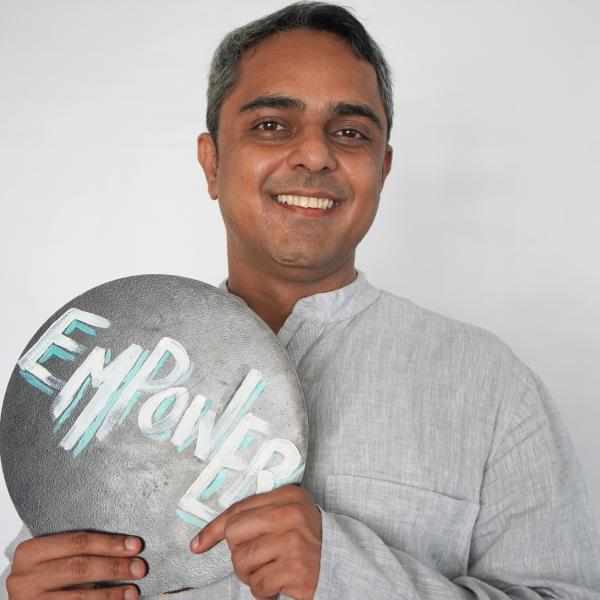
For more than 40 years, Ashoka has built and nurtured a network of 4000+ leading social entrepreneurs in the world. Read more about the Ashoka Fellowship here.
- 2016,
- 2011,
The Globalizer strategy accelerator supports social entrepreneurs gain clarity on systemic root causes of social and environmental problems and the importance of engaging more changemakers as part of the solutions. It enables them to design effective collaborative systems change strategies (based on respect to all humans and nature).
Refined since 2010, the accelerator is a structured collective thinking and experimenting process between social entrepreneurs, systems thought partners from Ashoka and selected leaders from business and the social sector.
Participated with support from
Elements of the Collaborative Systems Change Strategy
Hover/Click on things to dive deepType of Root Cause identified as a Leverage Point for Systems Change (Donella Meadows)
The first element of crafting a collaborative systems change strategy to address a problem is to define the problem and identify the most strategic change needed to address the root cause(s) of the problem. That becomes the targeted Systems Change Goal or the Mission.
To identify it, analyze the root causes—barriers, factors, dynamics, points or conditions driving the problem—and determine which offers the greatest leverage for change.
According to the FSG, leverage points include:
- Policies
- Practices
- Resource Flows
- Relationships & Roles
- Power Dynamics
- Mental Models
These "leverage points" are derived from the work of Donella Meadows, the pioneer in the field of systems thinking who articulated and conceptualized "Leverage Points: Places to Intervene in a System to Create Effective Change".
Explore Case Studies of different types of "Systems Change Goal(s)" in our Library.
Endgame / Pathway applied towards Activating a Network of Changemakers towards the targeted Systems Change
The second element of crafting a collaborative systems change strategy includes determining how to achieve the systems change goal.
This means choosing a strategy suited to the system’s context. The strategy could be to:
- Work with government
- Create a new field/market
- Build a competitive advantage
- Shift societal narratives
The items on the list are neither mutually exclusive, nor collectively exhaustive.
You can read more about the types of systems change strategies/pathways/endgames/stories we have come across in this article by Odin Muehlenbein.
Explore Case Studies on different "Types of Strategy" in our Library.
Types of stakeholders activated as changemakers towards the systems change
The third element of crafting a collaborative systems change strategy includes identifying the critical stakeholders to activate as partners- those who influence an exponential number of people in the context of the system.
Irrespective of the type of strategy, systemic change always requires activation of a network of stakeholders for different tactics towards the mission.
Typical stakeholder groups for systemic change include:
- government agencies
- universities (e.g. education schools for the empathy paradigm, public health and med schools for the health paradigm, etc.)
- publishers (e.g. education publishers for empathy, medical journals for health, etc.)
- informal & formal communities / unions (e.g. AARP for longevity, teachers' unions for empathy, families, etc.)
- media companies
- industry-specific companies / organizations (e.g. tech companies and financial institutions for the technology paradigm, insurance and healthcare companies for longevity, relevant civil society organizations etc.).
Explore Case Studies on different "Types of Partners Engaged" in our Library.
The depths of engagements in play for the different stakeholders (CoCreative)
The fourth and final element of crafting a collaborative systems change strategy includes reflecting on what depth to engage with each stakeholder.
Activating a broad network is essential, but so is clarifying their role: Are they simply informed, consulted, or co-creating the strategy?
CoCreative's Five Levels of Engagement Framework guides how one may engage with each stakeholder. Are you:
- co-creating?
- collaborating?
- involving?
- consulting?
- informing?
Explore Case Studies on different "Levels of Stakeholder Engagement" in our Library.
Their work contributes towards


The 2030 Agenda for Sustainable Development, adopted by all United Nations Member States in 2015, provides a shared blueprint for peace and prosperity for people and the planet, now and into the future. At its heart are the 17 Sustainable Development Goals (SDGs), which are an urgent call for action by all countries - developed and developing - in a global partnership.
Explore Case Studies on strategies contributing to addressing different "SDGs" in our Library.
The root causes of global socio-ecological unsustainability their work is addressing (FSSD)
According to the Framework for Strategic Sustainable Development (FSSD) co-created by Ashoka Fellow Dr. Karl-Henrik Robèrt and Dr. Göran Broman and Dr. Merlina Missimer of the Blekinge Institute of Technology, Sweden, there are 8 root causes of all socio-ecological unsustainability problems (also referred to as Sustainability Principles):
- extraction from Earth's crust
- chemical pollution
- physical destruction
- barriers to health
- barriers to competence
- barriers to influence/participation
- barriers to impartiality
- barriers to meaning-making
To get a deeper feel, here are videos on the ecological and social sustainability principles.
You can see case studies of changemakers contributing to addressing different root causes ("Sustainability Principles") in our Library.