
The Social Innovation
Doncel is a groundbreaking initiative that addresses the critical gap in support for young people transitioning out of alternative (e.g. foster) care systems in Latin America.
The core innovation is its dual focus: providing direct transition support to young people who are leaving care systems and placing their voices at the center of policy and practice reform. This approach is unique in the region, where historically, care leavers have been excluded from decision-making about their own futures.
From 2005-2017, Doncel worked with over 2,000 young people in Argentina.
Magnitude of the Problem, and its Root Causes
Across Latin America, an estimated 350,000 children and adolescents live in alternative care institutions, often facing violence, neglect, and a lack of preparation for independent adulthood (RELAF, 2010).
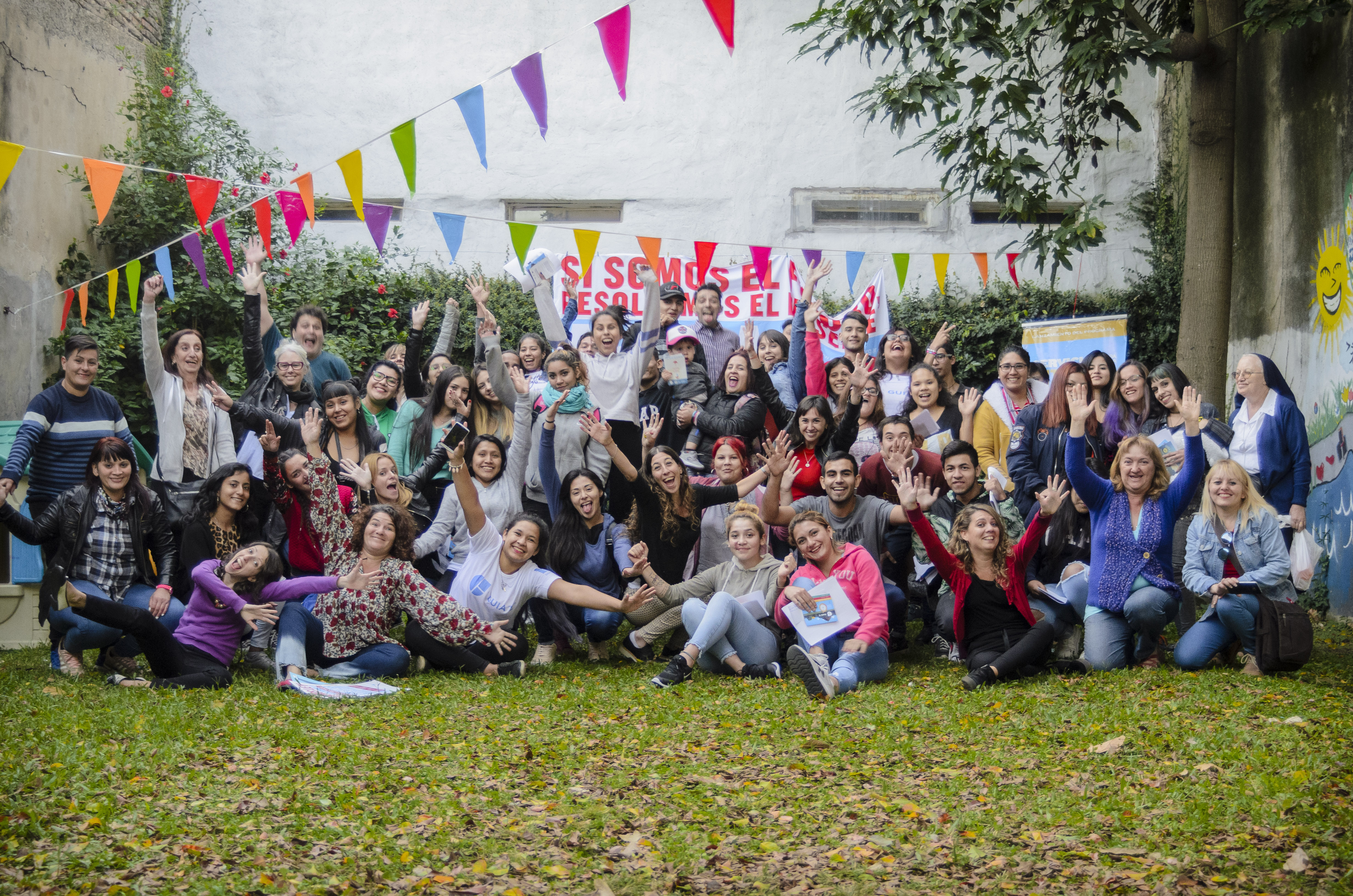
Upon leaving care, these young people encounter high rates of poverty, unemployment, housing insecurity, and social isolation. The costs—both human and societal—are immense. Here is a glimpse into what it’s like to turn 18 and have to leave care.
During their participation in the Globalizer co-created by Ashoka, Hystra and Swiss Development Corporation in 2017, they highlighted the following key factors contributing to the magnitude of the problem:
- Lack of state investment in transition support and aftercare policies
- Weak or absent legislation addressing the needs of care leavers
- Poorly trained and underpaid care staff
- Limited youth participation in decision-making
- Societal invisibility and stigma toward care leavers
Based on their systems change analysis, Doncel made it a mission to improve the role the state and civil society play so they are active and involved in the process of transition of adolescents and young people who leave care in Argentina and beyond.
“I found the [Globalizer] process tremendously effective and fruitful. There was enough time for reflection, for understanding, and also for receiving support from experts to help us understand risks and challenges before we were in the field. It was really the right time for that.
After Globalizer, we really followed the steps that we had designed. Today, we have a network in Latin America with 11 countries included and 31 organizations. The process was really impressive for me, because we have used it until today—whenever we need to go back to the foundations of Ashoka or the Latin American network, we go back to Globalizer.”
Strategy to Catalyze a Network of Changemakers towards the Targeted Mission
The strategy involves developing the field to improve formal processes to support care leavers.
Some of the tactics they deployed towards the mission as a part of the strategy include:
1) Co-Creating a Regional Latin America Network to Collaborate with Stakeholders across Sectors to Define & Drive the Agenda
The process began during the Globalizer program, when Doncel co-created the initial framework of the The Red Latinoamericana de Egresados de Protección (Latin American Network of Care Leavers) together with Ascep (Colombia), Proyecto B (Chile) and Fundación TIA (Bolivia).
This collaborative approach led to a network that is intentionally horizontal and inclusive. Member organizations are encouraged to invite others, creating a ripple effect of engagement. Annual in-person meetings and co-created action plans foster trust and alignment, while a membership fee model ensures sustainability and commitment.
“It is critical to try to be as horizontal as you can. Because the network is not the main activity of any organization. Organizations belong to networks, but they don’t live through networks. We understood that this network was a platform to help countries and help organizations in their own agendas and not vice versa. We needed to have care leavers in the center, to help public policies develop and strengthen from their own perspective. Kids in care are not usually asked about what they think or what they need or what they believe the system should be like.”
From the outset, the network established youth committees in each country, with elected representatives who serve on the executive committee. These young leaders are not just symbolic; they have real power in shaping the network’s agenda, leading advocacy, research, and peer support initiatives.
“Today, this network is considered as a network run by young people, which is what I really wanted to happen. Anytime somebody needs to include the voice of young people, then that’s where they call us, either in the countries or regionally.”
The network’s democratic structure ensures that care leavers choose their own representatives and set their own priorities, making youth leadership a lived reality rather than a slogan.
As of 2025, the network has 30 member organizations from 11 countries and is now recognized as a regional reference point for care leaving and the voice of young people.
2) Co-creating the Case & Data by Consulting Care Leavers to Inform & Involve Institutions in Prioritizing Support
Recognizing the lack of data and visibility around care leaver issues, the network made research a main component of its annual plans. Regional diagnostics and studies were conducted to highlight the lived experiences and needs of care leavers, providing a foundation for advocacy and policy change.
- Transitions of Adolescents and Youth from the Alternative Care System to Independent Life
- A six-country Latin American study (Argentina, Bolivia, Brazil, Colombia, Mexico, Peru) that examines policies, gaps, and good practices in how states support young people leaving residential care systems, and offers concrete public policy recommendations to ensure rights-based, sustained transition to independent life.
- The research was conducted in alliance with Universidad de Monterrey (Mexico), Associação Fazendo História (Brazil), Buckner (Peru), ASCEP (Colombia), and Fundación TIA Bolivia, with additional support from UNICEF's Regional Office for Latin America and the Caribbean and Hope and Homes for Children.
- Adolescents and Youth Without Parental Care in Latin America
- A country-by-country examination — covering Argentina, Bolivia, Brazil, Colombia, Mexico, Paraguay, and Peru — of the realities faced by adolescents and young people leaving state alternative care systems, with policy recommendations to better support their transition to independent life.
- Published with the Cátedra por la Infancia of the Universidad de Monterrey (Mexico), the book brings together contributions from organizations across nine countries — including Asociación Civil Doncel (Argentina) and 19 member organizations in Bolivia, Brazil, Colombia, Paraguay, Peru, and Uruguay.
- First Regional Mapping: Activism of Care Leavers in Latin America and the Caribbean
- A regional mapping initiative to identify and connect activists, associations, and informal groups of care leavers across Latin America and the Caribbean, with the goal of building a directory that strengthens the network and amplifies their voice in shaping child protection systems.
- The project is a joint initiative of the Red Latinoamericana de Egresados de Protección, Doncel, Better Care Network, and Changing The Way We Care, organized across three sub-regions (Mexico, Central America & the Caribbean; the Andean Region; and the Southern Cone), with care leavers themselves forming part of the project team.
“These studies provided concrete data on the realities and needs of young people leaving care, which was essential for making the case to policymakers and the public. The network’s research was not just academic—it was co-created with care leavers themselves, who contributed their stories, priorities, and recommendations.”
This evidence-based approach has been critical in raising awareness and driving legislative reform.
3) Co-creating Advocacy Campaigns to Influence Governments for new Care Leaver Welfare Laws
Armed with the evidence, the network engaged in targeted advocacy campaigns in each member country. This included organizing public events, publishing articles and reports, and holding meetings with legislators, government officials, and other key stakeholders.
The network also facilitated the direct participation of care leavers in these advocacy efforts. Youth representatives spoke at parliamentary hearings, participated in roundtables, and met with decision-makers to share their experiences and articulate what effective support would look like. This includes participation in spaces like UN Committee on the Rights of the Child (CRC) 2021 Day of General Discussion to the theme of "children's rights and alternative care", and youth advocating for effective support through media interactions like this.
The network also leveraged its partnerships with international organizations like UNICEF and Hope and Homes to gain technical support, legitimacy, and access to regional policy forums to run advocacy campaigns for new care leaving laws, collaborating closely with governments, legislators, and civil society.
Three countries (Argentina, Colombia, Peru) have passed new laws specifically addressing the transition of young people out of alternative care, while other countries in the region have raised the issue on their national agendas. The National Law for care leavers in Argentina created a Program that includes more than 3200 Youth so far.
The network is now a go-to resource for policymakers seeking youth input, and its advocacy has resulted in new legislation in four countries and increased visibility of care leaver issues across the region. Importantly, the network’s approach ensures that policy change is not just about passing laws, but about shifting the narrative and building a culture of youth participation and accountability in the care system.
“All the countries have really raised this subject and raised awareness of what happened to young people after care at the same time. This network belongs to other networks that are global, and there’s a dialogue between different networks that have helped countries see new models to implement care leaving policies.”

For more than 40 years, Ashoka has built and nurtured a network of 4000+ leading social entrepreneurs in the world. Read more about the Ashoka Fellowship here.
- 2017,
The Globalizer strategy accelerator supports social entrepreneurs gain clarity on systemic root causes of social and environmental problems and the importance of engaging more changemakers as part of the solutions. It enables them to design effective collaborative systems change strategies (based on respect to all humans and nature).
Refined since 2010, the accelerator is a structured collective thinking and experimenting process between social entrepreneurs, systems thought partners from Ashoka and selected leaders from business and the social sector.
Participated with support from
Elements of the Collaborative Systems Change Strategy
Hover/Click on things to dive deepType of Root Cause identified as a Leverage Point for Systems Change (Donella Meadows)
The first element of crafting a collaborative systems change strategy to address a problem is to define the problem and identify the most strategic change needed to address the root cause(s) of the problem. That becomes the targeted Systems Change Goal or the Mission.
To identify it, analyze the root causes—barriers, factors, dynamics, points or conditions driving the problem—and determine which offers the greatest leverage for change.
According to the FSG, leverage points include:
- Policies
- Practices
- Resource Flows
- Relationships & Roles
- Power Dynamics
- Mental Models
These "leverage points" are derived from the work of Donella Meadows, the pioneer in the field of systems thinking who articulated and conceptualized "Leverage Points: Places to Intervene in a System to Create Effective Change".
Explore Case Studies of different types of "Systems Change Goal(s)" in our Library.
Endgame / Pathway applied towards Activating a Network of Changemakers towards the targeted Systems Change
The second element of crafting a collaborative systems change strategy includes determining how to achieve the systems change goal.
This means choosing a strategy suited to the system’s context. The strategy could be to:
- Work with government
- Create a new field/market
- Build a competitive advantage
- Shift societal narratives
The items on the list are neither mutually exclusive, nor collectively exhaustive.
You can read more about the types of systems change strategies/pathways/endgames/stories we have come across in this article by Odin Muehlenbein.
Explore Case Studies on different "Types of Strategy" in our Library.
Types of stakeholders activated as changemakers towards the systems change
The third element of crafting a collaborative systems change strategy includes identifying the critical stakeholders to activate as partners- those who influence an exponential number of people in the context of the system.
Irrespective of the type of strategy, systemic change always requires activation of a network of stakeholders for different tactics towards the mission.
Typical stakeholder groups for systemic change include:
- government agencies
- universities (e.g. education schools for the empathy paradigm, public health and med schools for the health paradigm, etc.)
- publishers (e.g. education publishers for empathy, medical journals for health, etc.)
- informal & formal communities / unions (e.g. AARP for longevity, teachers' unions for empathy, families, etc.)
- media companies
- industry-specific companies / organizations (e.g. tech companies and financial institutions for the technology paradigm, insurance and healthcare companies for longevity, relevant civil society organizations etc.).
Explore Case Studies on different "Types of Partners Engaged" in our Library.
The depths of engagements in play for the different stakeholders (CoCreative)
The fourth and final element of crafting a collaborative systems change strategy includes reflecting on what depth to engage with each stakeholder.
Activating a broad network is essential, but so is clarifying their role: Are they simply informed, consulted, or co-creating the strategy?
CoCreative's Five Levels of Engagement Framework guides how one may engage with each stakeholder. Are you:
- co-creating?
- collaborating?
- involving?
- consulting?
- informing?
Explore Case Studies on different "Levels of Stakeholder Engagement" in our Library.
Their work contributes towards


The 2030 Agenda for Sustainable Development, adopted by all United Nations Member States in 2015, provides a shared blueprint for peace and prosperity for people and the planet, now and into the future. At its heart are the 17 Sustainable Development Goals (SDGs), which are an urgent call for action by all countries - developed and developing - in a global partnership.
Explore Case Studies on strategies contributing to addressing different "SDGs" in our Library.
The root causes of global socio-ecological unsustainability their work is addressing (FSSD)
According to the Framework for Strategic Sustainable Development (FSSD) co-created by Ashoka Fellow Dr. Karl-Henrik Robèrt and Dr. Göran Broman and Dr. Merlina Missimer of the Blekinge Institute of Technology, Sweden, there are 8 root causes of all socio-ecological unsustainability problems (also referred to as Sustainability Principles):
- extraction from Earth's crust
- chemical pollution
- physical destruction
- barriers to health
- barriers to competence
- barriers to influence/participation
- barriers to impartiality
- barriers to meaning-making
To get a deeper feel, here are videos on the ecological and social sustainability principles.
You can see case studies of changemakers contributing to addressing different root causes ("Sustainability Principles") in our Library.