The Social Innovation
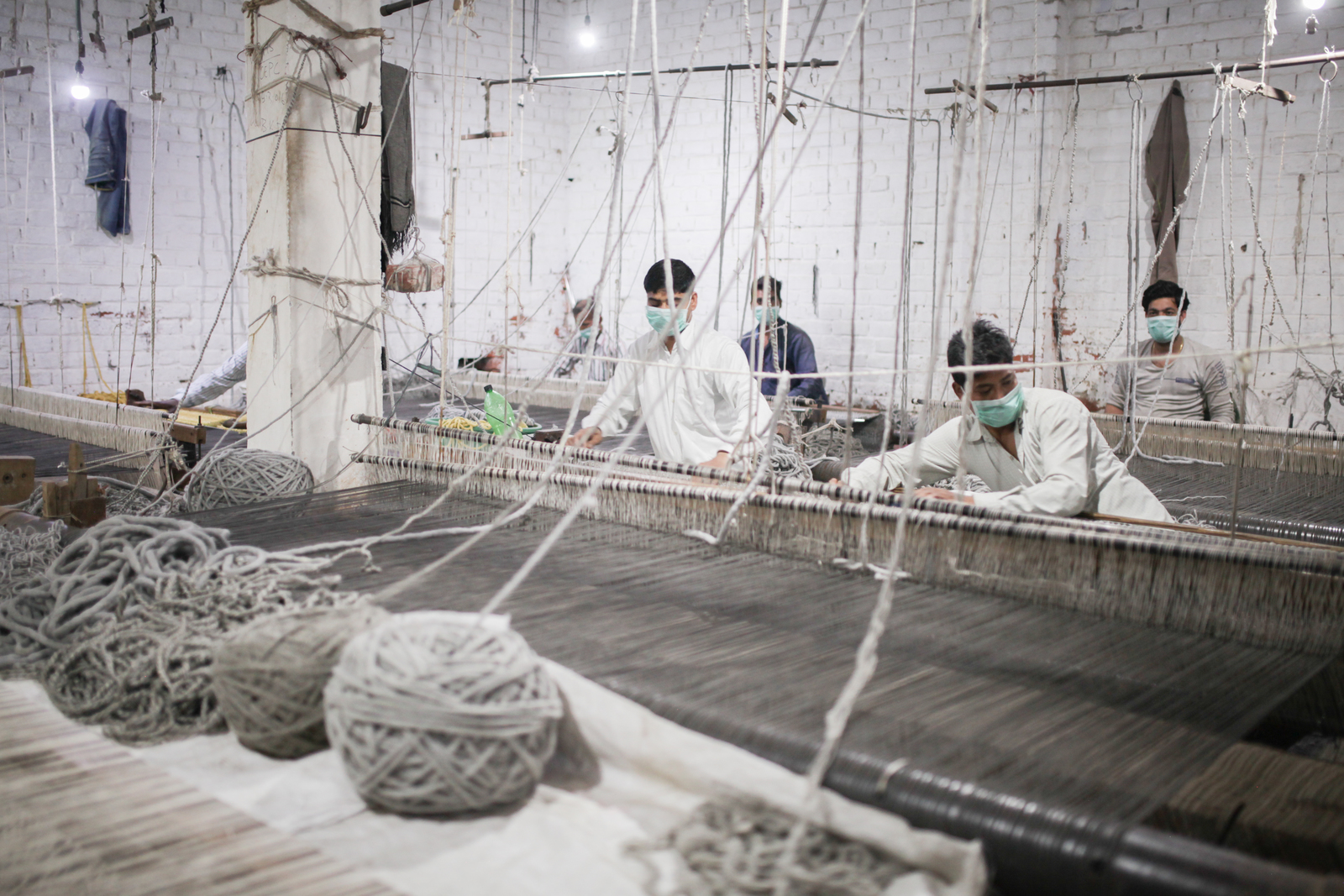
Nest is a nonprofit organization founded in 2006 that connects a community of artisans, retailers, and philanthropies to bring the beauty of handcraft to the world. We provide the resources and relationships that uplift the people, places, and practices behind each handcrafted piece — so artisans, in the US and around the world, are respected, traditions are celebrated, and families and communities can grow and thrive.
This includes supporting the invisible handworker economy — an estimated 300 million people, predominantly women, who produce goods from homes and small workshops for the global fashion and home décor industry.
One of Nest's core innovations is the Ethical Handcraft Program: the first-ever universally applicable set of compliance standards and verification methodology designed specifically for decentralized, informal supply chains. Unlike traditional factory auditing models — which typically do not include home-based subcontracting in their scope, or only touch on it superficially — Nest's training-first approach builds genuine capacity within artisan businesses before ever conducting an assessment. The process moves through five steps: Supply Chain Mapping → Artisan & Home-based worker Training → Remediation and Systems Development → Ethical Compliance Assessment → Corrective Action Plan. Businesses that reach a defined level of compliance are certified and become eligible to use the Nest Seal of Ethical Handcraft, a consumer-facing certification now visible on products at major retailers including Target, West Elm, and Pottery Barn.
Launched publicly at the United Nations in December 2017, the program has since reached supply chains on five continents. After enrolling in Nest's Ethical Handcraft Program, participating businesses have seen a 57% increase in policies on critical rights and wellbeing for home-based workers, a 72% increase in businesses with a set minimum hiring age to limit child labor, and a 78% increase in businesses with environmental protection guidelines for their production.
Magnitude of the Problem, and its Root Causes
The global handcraft sector is valued at nearly one trillion dollars and growing at a rate of 8% annually. Yet the workers at its heart remain almost entirely invisible. Estimates suggest that between 20–60% of fashion and home goods production is subcontracted to home-based workers — approximately 300 million individuals worldwide, most of them women. On average, these workers earn just $1.80 per day, 50% less than their factory-based counterparts, in an informal, cash-based economy with no regulatory protection.
During their participation in the Fabric of Change Globalizer, co-created by Ashoka and C&A Foundation in 2016, the Nest team highlighted the following key factors contributing to the magnitude of the problem:
- No applicable compliance standard or methodology: A review of 30+ existing factory auditing models found not a single one globally applicable to home-based or decentralized workers.
- Systematic non-disclosure: Antiquated "no home-based worker" brand policies incentivize factories to discontinue or deny subcontracting — leading either to critical job loss or to workers remaining hidden and unprotected.
- Race to the bottom in fast fashion: Industry pressure for speed and low cost drives unsustainable piece-rate wages and cuts that fall hardest on workers at the bottom of complex supply chains.
- Lack of brand awareness and policy: A double-blind survey of multinational brands found that 92% have artisans and home-based workers in their supply chains, yet most have no adequate policy for this workforce.
- Zero investment in the sector: Of 50 institutional funders surveyed, only 0.02% had invested in the hand and home-based work sector.
Based on their systems change analysis, the Nest team made it a mission to make home and small workshop-based labor visible, safe, and economically viable — by creating a universally applicable ethical standard for decentralized supply chains and shifting industry norms so that home-based work is embraced, not hidden.
"The framework for viewing systems change was very eye-opening for me at the time. It really helped me think through — and gave me the language to talk about — how we address root causes rather than symptoms. It's the first step: at least it gets you in the door."
Strategy to Catalyze a Network of Changemakers towards the Targeted Mission
The field/market building strategy involves establishing the first industry-wide standard for home-based work, then engineering adoption across the entire supply chain ecosystem — brands, auditing bodies, governments, and consumers — so that ethical home-based work becomes the norm, not the exception. The strategy leverages market forces (brand purchasing power and consumer demand) as the engine of change, while philanthropy ensures the independence and rigor of the standard itself.
Some of the tactics they deployed towards the mission as a part of the strategy include:
1) Influencing the Field: Co-Creating the First Ethical Compliance Standard for Home-Based Workers
Nest recognized early that a standard only has power if the industry it seeks to govern has a hand in building it. After conducting a competitive analysis of 30+ factory auditing systems and a double-blind brand survey, Nest convened a Steering Committee of nine industry-leading brands — including Eileen Fisher, Patagonia, PVH, Target, The Children's Place, and Williams Sonoma — to co-develop the Nest Standards for Homes and Small Workshops. These brands brought compliance expertise, credibility, and peer influence to bear on the rest of the retail sector.
The Standards were co-built in close partnership or consultation with several standard-setting bodies and industry organizations — including Fair Trade USA, SAI, ISEAL, the United Nations Office of Partnership, the Center for Child Rights and Business, and Arche Advisors — and subjected to extensive piloting across three countries before public launch. A permanent Nest Standards Committee — a multi-stakeholder governance body comprising worker rights groups, auditing partners, artisan businesses, brands, and legal experts — oversees each revision cycle to ensure the standard remains current with shifting labor law, field realities, and global best practices. The standard recently underwent its latest public revision, with open feedback invited from any stakeholder across the sector.
"Some of our strongest brand partners have made our Standards a requirement for eligible suppliers: if you're going to use home-based work in your supply chain, you have to be certified or making progress through Nest's compliance program. The more that brands adopt our Standards, require disclosure, and expect transparency from their suppliers, the more effective and positive our program will be for the sector as a whole."
2) Collaborating with Select Auditing Partners & Artisan Businesses through a Tiered Delivery Model to Scale Reach without compromising the Integrity of the Standard
To expand reach beyond Nest's own bandwidth while maintaining the rigor and relational quality that define the program, Nest developed a two-tier delivery model. In the first tier, Nest delivers the full training-first program directly in select supply chains. In the second, Nest works with a small group of rigorously vetted and trained auditing firms who can implement the program — but never independently of Nest's involvement in remediation and pre-training.
To date, Nest has collaborated with three auditing partner firms across three countries, carefully selected for their mission alignment and willingness to adopt Nest's trust-based, improvement-oriented approach — a significant departure from conventional audit-and-grade models. The program has also engaged three NGO expert consultants to strengthen child labor, health and safety, and worker voice components within the Standards and methodology, deepening impact for participating workers.
In parallel, Nest open-sourced the Standards and launched an online digital curriculum that mirrors the training and remediation phases of the Ethical Handcraft Program, enabling artisan businesses globally to begin their own journey toward compliance — while preserving the Ethical Handcraft Certification and Seal exclusively for those verified through Nest's full onsite assessment process. A new Nest Verified Handcraft™ program — establishing verifiable, production technique-specific definitions of what "handcrafted" means and elevating the value of truly handcrafted products — is set to launch in Spring 2026. This parallel and complementary verification mark can be used independently or alongside Ethical Handcraft certification, offering a clearer pathway toward full worker wellbeing standards.
"We understand that social compliance at this level of the supply chain is challenging and new for most vendors. Our programs were specifically designed to support vendors through the process, focused on continuous improvement and learning rather than just scoring. We want to provide vendors with the education and tools they need to succeed."
3) Involving Maker Communities in the US & Informal Workers in Adjacent Sectors to Adapt the Model beyond its Original Scope
What began as a global program serving artisan businesses in developing economies has grown significantly in scope. In 2016, Nest launched Makers United, a parallel program investing in maker entrepreneurs in the United States, reaching 2,726 makers and creative entrepreneurs across all 50 states and Puerto Rico. Accelerated by COVID-19 and the Black Lives Matter movement in 2020, this domestic program has grown to represent approximately 50% of Nest's work — demonstrating that the conditions of informality, invisibility, and underinvestment facing home-based workers are not unique to the Global South.
Beyond geography, Nest has begun piloting the Ethical Handcraft model in adjacent informal sectors — most notably with two waste collector communities in Mexico and Indonesia, whose piece-rate-per-kilo payment systems and supply chain structures closely mirror the dynamics of artisan home-based work. Nest is currently seeking partnerships and funding to develop a parallel version of the standard specifically adapted for waste collection, with accompanying auditing practices — a significant proof of concept for the model's transferability across the informal economy.
"It's been really exciting to see the adaptation into other sectors. We're learning that the model has longer legs than even we originally found during the Globalizer. The basics — informal work, piece-rate wages, no visibility, no protections — those dynamics appear in more places than we thought."

For more than 40 years, Ashoka has built and nurtured a network of 4000+ leading social entrepreneurs in the world. Read more about the Ashoka Fellowship here.
- 2017,
The Globalizer strategy accelerator supports social entrepreneurs gain clarity on systemic root causes of social and environmental problems and the importance of engaging more changemakers as part of the solutions. It enables them to design effective collaborative systems change strategies (based on respect to all humans and nature).
Refined since 2010, the accelerator is a structured collective thinking and experimenting process between social entrepreneurs, systems thought partners from Ashoka and selected leaders from business and the social sector.
Participated with support from
Elements of the Collaborative Systems Change Strategy
Hover/Click on things to dive deepType of Root Cause identified as a Leverage Point for Systems Change (Donella Meadows)
The first element of crafting a collaborative systems change strategy to address a problem is to define the problem and identify the most strategic change needed to address the root cause(s) of the problem. That becomes the targeted Systems Change Goal or the Mission.
To identify it, analyze the root causes—barriers, factors, dynamics, points or conditions driving the problem—and determine which offers the greatest leverage for change.
According to the FSG, leverage points include:
- Policies
- Practices
- Resource Flows
- Relationships & Roles
- Power Dynamics
- Mental Models
These "leverage points" are derived from the work of Donella Meadows, the pioneer in the field of systems thinking who articulated and conceptualized "Leverage Points: Places to Intervene in a System to Create Effective Change".
Explore Case Studies of different types of "Systems Change Goal(s)" in our Library.
Endgame / Pathway applied towards Activating a Network of Changemakers towards the targeted Systems Change
The second element of crafting a collaborative systems change strategy includes determining how to achieve the systems change goal.
This means choosing a strategy suited to the system’s context. The strategy could be to:
- Work with government
- Create a new field/market
- Build a competitive advantage
- Shift societal narratives
The items on the list are neither mutually exclusive, nor collectively exhaustive.
You can read more about the types of systems change strategies/pathways/endgames/stories we have come across in this article by Odin Muehlenbein.
Explore Case Studies on different "Types of Strategy" in our Library.
Types of stakeholders activated as changemakers towards the systems change
The third element of crafting a collaborative systems change strategy includes identifying the critical stakeholders to activate as partners- those who influence an exponential number of people in the context of the system.
Irrespective of the type of strategy, systemic change always requires activation of a network of stakeholders for different tactics towards the mission.
Typical stakeholder groups for systemic change include:
- government agencies
- universities (e.g. education schools for the empathy paradigm, public health and med schools for the health paradigm, etc.)
- publishers (e.g. education publishers for empathy, medical journals for health, etc.)
- informal & formal communities / unions (e.g. AARP for longevity, teachers' unions for empathy, families, etc.)
- media companies
- industry-specific companies / organizations (e.g. tech companies and financial institutions for the technology paradigm, insurance and healthcare companies for longevity, relevant civil society organizations etc.).
Explore Case Studies on different "Types of Partners Engaged" in our Library.
The depths of engagements in play for the different stakeholders (CoCreative)
The fourth and final element of crafting a collaborative systems change strategy includes reflecting on what depth to engage with each stakeholder.
Activating a broad network is essential, but so is clarifying their role: Are they simply informed, consulted, or co-creating the strategy?
CoCreative's Five Levels of Engagement Framework guides how one may engage with each stakeholder. Are you:
- co-creating?
- collaborating?
- involving?
- consulting?
- informing?
Explore Case Studies on different "Levels of Stakeholder Engagement" in our Library.
Their work contributes towards


The 2030 Agenda for Sustainable Development, adopted by all United Nations Member States in 2015, provides a shared blueprint for peace and prosperity for people and the planet, now and into the future. At its heart are the 17 Sustainable Development Goals (SDGs), which are an urgent call for action by all countries - developed and developing - in a global partnership.
Explore Case Studies on strategies contributing to addressing different "SDGs" in our Library.
The root causes of global socio-ecological unsustainability their work is addressing (FSSD)
According to the Framework for Strategic Sustainable Development (FSSD) co-created by Ashoka Fellow Dr. Karl-Henrik Robèrt and Dr. Göran Broman and Dr. Merlina Missimer of the Blekinge Institute of Technology, Sweden, there are 8 root causes of all socio-ecological unsustainability problems (also referred to as Sustainability Principles):
- extraction from Earth's crust
- chemical pollution
- physical destruction
- barriers to health
- barriers to competence
- barriers to influence/participation
- barriers to impartiality
- barriers to meaning-making
To get a deeper feel, here are videos on the ecological and social sustainability principles.
You can see case studies of changemakers contributing to addressing different root causes ("Sustainability Principles") in our Library.