The Social Innovation
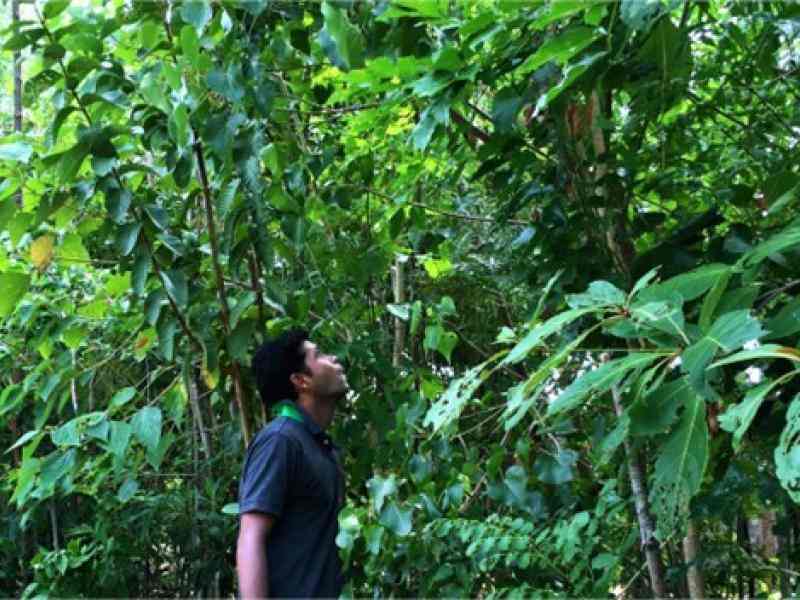
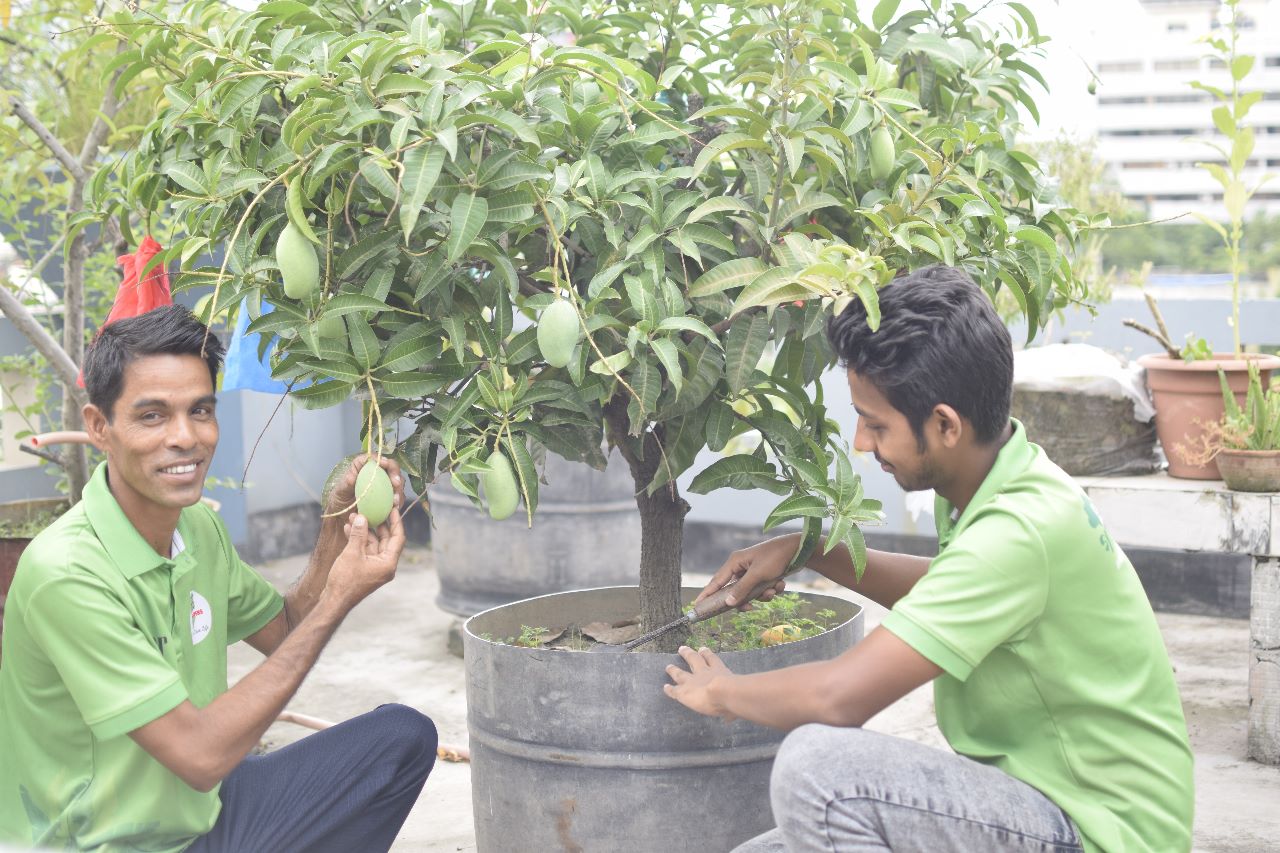
Green Savers have been working on leveraging unused rooftops in Dhaka, Bangladesh for gardens and farming, and training marginalized youth as professional “Tree Doctors.”
Green Savers provides technical training, employment pathways, and a new sense of dignity to urban gardeners, while also contributing towards improving nutrition, air quality, and biodiversity in the communities they reach.
Between 2010-2021, Green Savers:
- Planted 1.5 million trees, generating an estimated 484 tonnes of oxygen daily.
- Transformed over 360 rooftops for gardens and farming (about 1% of Dhaka’s rooftops).
- Engaged 200+ schools and 15,000+ students in tree planting and gardening.
Magnitude of the Problem, and its Root Causes
Dhaka suffers from an acute lack of green space- the city is so densely populated and built that there is very little free space for any green areas with less than 2% of the city classified as green. Hence the roof tops are pretty much the only space that can be used for this purpose, and so far, only 6–8% of its 500,000 rooftops have been converted to gardens.
The result is environmental degradation including heightened air pollution and declining urban biodiversity, limited access to fresh produce and ultimately, a diminishing connection with nature.
During their participation in the Dela Program, co-created by Ashoka and IKEA Social Entrepreneurship in 2021, the Green Savers team reflected on the key factors contributing to the problem:
- Unplanned urbanization and high population density
- Lack of technical expertise and qualified service providers to build productive gardens
- Social stigma around gardening as a profession
- Limited civic appreciation for shared green spaces
Based on their systems change analysis, the Green Savers’ team made it their mission to make it a norm in Bangladeshi cities to use rooftops for gardens and farming by building the rooftop gardening services market/field.
Strategy to Catalyze a Network of Changemakers towards the Targeted Mission
The field building strategy includes strengthening demand for transforming rooftops for gardening and farming through policies and building supply by training rooftop gardeners.
Some of the tactics they deployed towards the mission as a part of the strategy include:
1) Collaborating with the Agriculture Extension Office to launch the first Urban Garden Academy to Involve Youth as Urban Gardeners
Green Savers launched the Urban Gardening Academy to generate the supply of workforce that is required, which provides six months of technical training followed by a six-month internship.
The Academy collaborates with government agencies (such as the Agriculture Extension Office) to ensure high-quality, relevant training, and targets underprivileged youth for participation.
Graduates are equipped to either join the workforce or start their own ventures, creating a ripple effect of new green leaders in the city.
Since 2021, they completed 20 cohorts, training 30-40 urban gardeners per cohort. The cohorts were run in collaboration with partners like IKEA Social Entrepreneurship, US Foresty Service and more.
As of 2025, 800 urban gardeners have been trained and equipped to either join the workforce or start their own ventures, creating a ripple effect of new green leaders in the city.
If I can sum it up in one line, participating in the program fulfilled my dream—starting the Training Academy. If it hadn’t begun when it did, I believe it would have taken much longer to achieve the growth and success we’ve seen over the past four years. The program was truly the kick-off. After that, I received support from organizations like the US Forest Service and Concern Worldwide, but all of this was possible because I had groundwork and proof that the model worked. Without that foundation, no one would have come forward to fund or support us. It was groundbreaking. I can tell you, in one line, that was a kick-off.
2) Co-Creating Policies with City Authorities & Courts to Increase Demand for Transforming Rooftops for Gardens & Farming
Green Savers led advocacy efforts with city authorities, municipal development bodies, and the courts to include rooftops for gardens and farming as a part of the building code. Their persistent engagement resulted in a landmark policy: property owners who establish rooftop gardens now receive a 10% tax rebate.
There yes yet to be proper data on it, but incentive catalyzed a surge in demand for rooftop gardening across Dhaka.
3) Collaborating with Stakeholders across sectors to Establish Institutions for Public Awareness and Engagement
Green Savers has joined hands with the Dhaka North City Corporation to establish innovative institutions such as the Tree Hospital (mobile plant care) and the Tree Museum (preserving native species).
The Tree Hospital is envisioned as a dedicated facility where sick or damaged trees can be diagnosed and treated by trained “Tree Doctors.” This initiative not only provides practical support for urban greenery but also serves as a powerful symbol, highlighting the importance of plant health and the need for professional care of urban nature. By inviting the public to witness and participate in the care of trees, the hospital demystifies plant health and encourages responsible stewardship.
The Tree Museum is designed to preserve and showcase Dhaka’s native and exotic plant species, many of which are at risk of disappearing due to rapid and unplanned urbanization. The museum acts as a living archive and a learning hub, offering educational programs, guided tours, and interactive exhibits for students, researchers, and the general public. By celebrating the city’s botanical heritage and making it accessible, the museum fosters a sense of pride and connection to local biodiversity, inspiring citizens to value and protect their natural environment, and strengthening their connection to nature.
As of 2025, the city corporation has provided the Land for establishing Tree Hospital & Tree Museum at the centre of the capital city, and the Green Savers team is in the process of setting up partnerships to develop these innovations.

For more than 40 years, Ashoka has built and nurtured a network of 4000+ leading social entrepreneurs in the world. Read more about the Ashoka Fellowship here.
- 2021,
The Globalizer strategy accelerator supports social entrepreneurs gain clarity on systemic root causes of social and environmental problems and the importance of engaging more changemakers as part of the solutions. It enables them to design effective collaborative systems change strategies (based on respect to all humans and nature).
Refined since 2010, the accelerator is a structured collective thinking and experimenting process between social entrepreneurs, systems thought partners from Ashoka and selected leaders from business and the social sector.
Participated with support from
Elements of the Collaborative Systems Change Strategy
Hover/Click on things to dive deepType of Root Cause identified as a Leverage Point for Systems Change (Donella Meadows)
The first element of crafting a collaborative systems change strategy to address a problem is to define the problem and identify the most strategic change needed to address the root cause(s) of the problem. That becomes the targeted Systems Change Goal or the Mission.
To identify it, analyze the root causes—barriers, factors, dynamics, points or conditions driving the problem—and determine which offers the greatest leverage for change.
According to the FSG, leverage points include:
- Policies
- Practices
- Resource Flows
- Relationships & Roles
- Power Dynamics
- Mental Models
These "leverage points" are derived from the work of Donella Meadows, the pioneer in the field of systems thinking who articulated and conceptualized "Leverage Points: Places to Intervene in a System to Create Effective Change".
Explore Case Studies of different types of "Systems Change Goal(s)" in our Library.
Endgame / Pathway applied towards Activating a Network of Changemakers towards the targeted Systems Change
The second element of crafting a collaborative systems change strategy includes determining how to achieve the systems change goal.
This means choosing a strategy suited to the system’s context. The strategy could be to:
- Work with government
- Create a new field/market
- Build a competitive advantage
- Shift societal narratives
The items on the list are neither mutually exclusive, nor collectively exhaustive.
You can read more about the types of systems change strategies/pathways/endgames/stories we have come across in this article by Odin Muehlenbein.
Explore Case Studies on different "Types of Strategy" in our Library.
Types of stakeholders activated as changemakers towards the systems change
The third element of crafting a collaborative systems change strategy includes identifying the critical stakeholders to activate as partners- those who influence an exponential number of people in the context of the system.
Irrespective of the type of strategy, systemic change always requires activation of a network of stakeholders for different tactics towards the mission.
Typical stakeholder groups for systemic change include:
- government agencies
- universities (e.g. education schools for the empathy paradigm, public health and med schools for the health paradigm, etc.)
- publishers (e.g. education publishers for empathy, medical journals for health, etc.)
- informal & formal communities / unions (e.g. AARP for longevity, teachers' unions for empathy, families, etc.)
- media companies
- industry-specific companies / organizations (e.g. tech companies and financial institutions for the technology paradigm, insurance and healthcare companies for longevity, relevant civil society organizations etc.).
Explore Case Studies on different "Types of Partners Engaged" in our Library.
The depths of engagements in play for the different stakeholders (CoCreative)
The fourth and final element of crafting a collaborative systems change strategy includes reflecting on what depth to engage with each stakeholder.
Activating a broad network is essential, but so is clarifying their role: Are they simply informed, consulted, or co-creating the strategy?
CoCreative's Five Levels of Engagement Framework guides how one may engage with each stakeholder. Are you:
- co-creating?
- collaborating?
- involving?
- consulting?
- informing?
Explore Case Studies on different "Levels of Stakeholder Engagement" in our Library.
Their work contributes towards

The 2030 Agenda for Sustainable Development, adopted by all United Nations Member States in 2015, provides a shared blueprint for peace and prosperity for people and the planet, now and into the future. At its heart are the 17 Sustainable Development Goals (SDGs), which are an urgent call for action by all countries - developed and developing - in a global partnership.
Explore Case Studies on strategies contributing to addressing different "SDGs" in our Library.
The root causes of global socio-ecological unsustainability their work is addressing (FSSD)
According to the Framework for Strategic Sustainable Development (FSSD) co-created by Ashoka Fellow Dr. Karl-Henrik Robèrt and Dr. Göran Broman and Dr. Merlina Missimer of the Blekinge Institute of Technology, Sweden, there are 8 root causes of all socio-ecological unsustainability problems (also referred to as Sustainability Principles):
- extraction from Earth's crust
- chemical pollution
- physical destruction
- barriers to health
- barriers to competence
- barriers to influence/participation
- barriers to impartiality
- barriers to meaning-making
To get a deeper feel, here are videos on the ecological and social sustainability principles.
You can see case studies of changemakers contributing to addressing different root causes ("Sustainability Principles") in our Library.