The Social Innovation
Vivenda is revolutionizing the market for home renovations for Brazil’s low-income families. Vivenda’s core innovation is a scalable, integrated platform—both digital and physical—that connects families, social architects, building material stores, and financial mechanisms to make safe, dignified housing accessible.
Over the course of 8 years, Vivenda has directly renovated 4000+ homes, impacting thousands of people.
Magnitude of the Problem, and its Root Causes
Brazil faces a staggering housing challenge: 26 million inadequate homes affect the quality of life of 80 million people. Inadequate housing leads to increased levels of health issues, reduced productivity, family stress, and social inequality. The market lacks a structured system for renovations for low-income families.
During their participation in the Dela Program, co-created by Ashoka and IKEA Social Entrepreneurship in 2019, the Vivenda team highlighted the following key factors contributing to the magnitude of the problem:
- Policy focus on new construction, not renovating existing homes
- Lack of affordable credit for low-income families
- Lack of technical assistance for renovation for low-income families
- Disconnected value chain: fragmented actors, high costs, and little incentive for industry or government to serve this market
- Players not realising the market potential of working on housing for low-income families
Based on their systems change analysis, Vivenda made it their mission to make adequate housing accessible for every low-income family in Brazil.
Taking time to reflect and think systemically is critical. The science of systems change is beautiful—and necessary. I really think the strategy we made in 2019 is really the plan- it’s really the map that we were following all these years. When we arrived, we said, ‘We’ve been executing renovation for a long time, and we need to scale.’ The programme started with all this indirect impact and so on. The programme was 100% responsible for this moment… we structured this other strategy, of being a platform. The value was huge for us.
Strategy to Catalyze a Network of Changemakers towards the Targeted Mission
The strategy involved building the market for housing renovations for low-income families in Brazil and beyond.
Some of the tactics they deployed towards the mission as a part of the strategy include:
1) Involving Families to Test Viability by Creating Renovation-Kits & Renovation-Store
The team developed and delivered over 1,600 renovation kits, each providing a turnkey solution that bundled architectural design, skilled labor, materials, and access to credit. By managing the entire process themselves, Vivenda ensured quality and built trust with the families they served.
To further test and expand their approach, Vivenda opened dedicated renovation stores in target communities. These stores acted as accessible entry points for families, offering information, support, and a tangible presence for the brand. At the same time, Vivenda piloted innovative financing models, including Brazil’s first social impact debenture for home renovations, making it possible for families to pay in affordable instalments.
Through these hands-on efforts, Vivenda built credibility with both beneficiaries and partners, demonstrating that a sustainable, scalable solution for home renovations was not only possible but in high demand. This groundwork established the foundation for the organization’s later shift to a platform and network-based model.
2) Collaborating with Partners to create a Platform to Decentralize the Engagement between Families & Social Architects
Vivenda shifted from direct service delivery to building infrastructure that could enable others to others to use their model and thus scale impact.
Vivenda built an initial network of 45 social architects and 73 material suppliers and hosted annual events to foster knowledge sharing and peer learning.
With these communities onboard, the organization launched a digital platform that seamlessly connected low-income families with social architects, bricklayers, and building material suppliers. This online system streamlined project management, budgeting, and access to financing, making the renovation process more efficient and transparent for all involved.
Alongside the digital platform, Vivenda established a physical presence by partnering with local building material stores—branded as “Vivenda inside.” These stores became community hubs where families could access renovation services, view materials, and receive support, bridging the gap between online coordination and in-person service.
For two years, the platform served 7000 people renovate 2000 homes. This meant a 78% increase in impact given the introduction of the platform.
3) Collaborating with Companies to Replicate Network Infrastructure
After establishing the viability of its renovation model and building a strong network of social architects and material suppliers, Vivenda recognized that true scale would require involving other organizations to drive impact at large scale.
Some companies started to invite us to operate with them. They decided to create their own programs of home renovation, and invited us to help them structure and manage, using the social architects already working with us.
The organization’s next move was to enable companies—especially large ones—to leverage Vivenda’s infrastructure and expertise to launch their own home renovation programs for low-income families. This shift marked a transition from direct execution to a B2B2C (business-to-business-customer) approach, where Vivenda’s digital and physical platforms became the backbone for corporate-led initiatives.
For instance, Gerdau, a major Brazilian multinational, invited Vivenda to help design, structure, and manage a home renovation program across 12 cities. Vivenda provided access to its vetted network of social architects and suppliers, operational know-how, digital tools for project management and financing, and training for company staff and local partners.
As a result, companies could efficiently launch and scale their own programs, expanding Vivenda’s reach to new communities and sometimes even creating financing mechanisms larger than Vivenda’s original models.
This approach fostered a broader movement of private sector engagement in addressing Brazil’s housing inadequacy and helped companies de-risk the entrance into the housing market for low income families.
Vivenda leveraged its infrastructure of social architects to collaborate with 8 companies (including Gerdau, Cyrela, and Lorenzetti) who renovated another 2000 houses impacting housing for 7000 more people.
4) Co-creating, with IDB, a Value Proposition to Collaborate with Governments
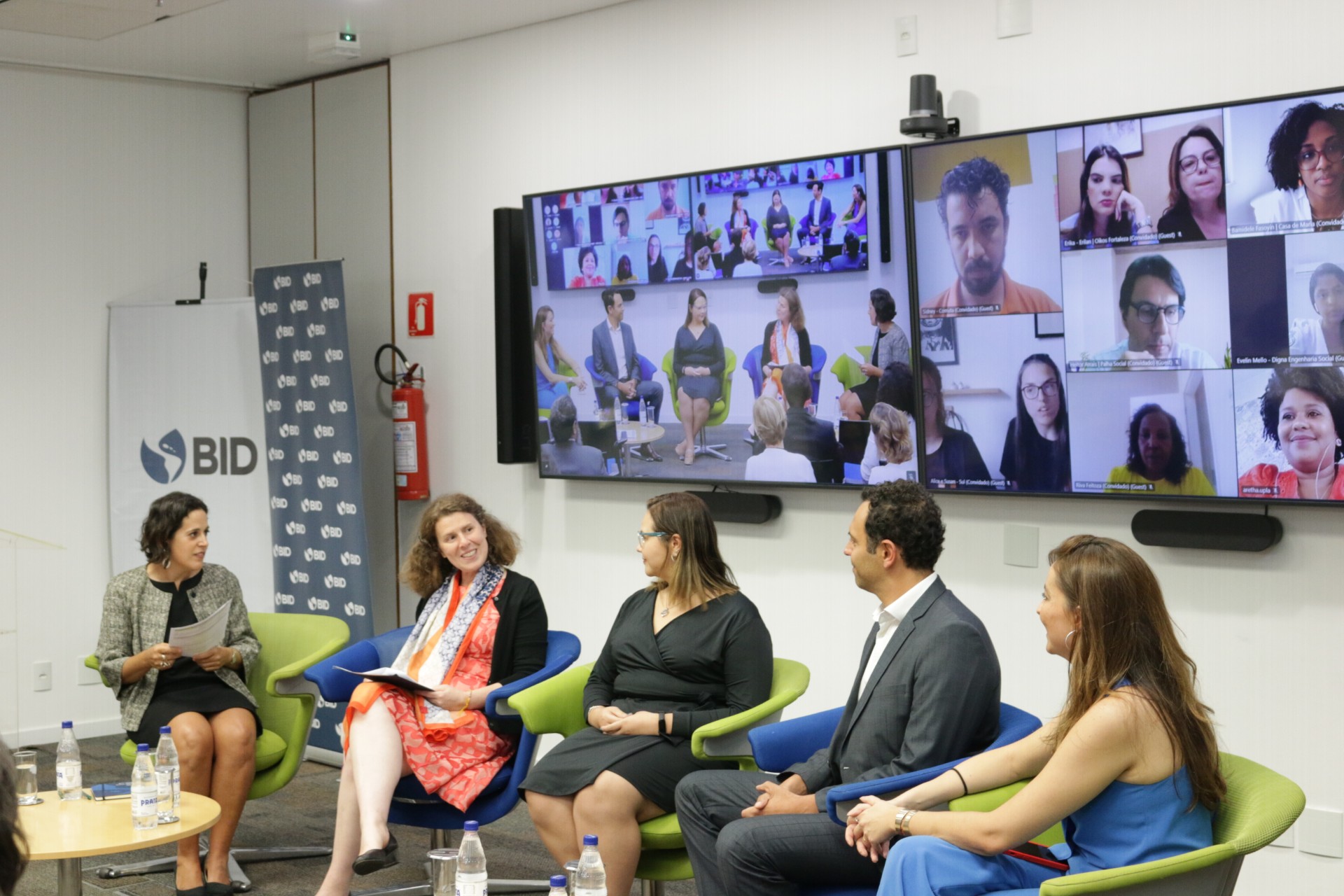
The Inter-American Development Bank (IDB) emerged as a key ally, viewing Vivenda’s model as a blueprint for broader public sector adoption across Latin America.
Recognizing the immense scale of Brazil’s housing challenge, the IDB and Vivenda co-created as value proposition for collaborating with government entities to deliver renovations at the city and state levels.
With IDB’s funding and technical support, Vivenda adapted its platform and processes to meet government procurement and compliance requirements. This involved significant legal and administrative work to enable Vivenda to contract with governments as a social business, rather than as an NGO, navigating Brazil’s complex regulatory landscape.
Vivenda then piloted large-scale public renovation programs, such as a contract with São Paulo’s city government to deliver 5,000 renovations in one year, and supported disaster response efforts by offering its systems to local governments in times of crisis, such as after major floods in southern Brazil.
5) Co-creating the Federal Home Improvement Policy
Over several years, Vivenda’s team invested in cultivating trust with policymakers, consistently sharing evidence of the model’s impact and lessons learned from the field.
They built relationships with federal government officials and ministries, such as the Ministry of Cities and Caixa Econômica Federal, as well as with presidential advisors and public bank leadership, who invited to co-design elements of a federal home improvement policy, participating directly in strategy sessions with the hi-level officials from these organizations.
A central focus of their work was the inclusion of solutions to enable technical guidance and supervision for families, as well as the use of tools to control the use of resources, aiming to make the public program safe and efficient in achieving its objectives.
However, the path was far from linear. Vivenda had to navigate shifting political winds and last-minute changes in policy direction, often tied to electoral cycles and changes in government priorities. Despite these setbacks—including a major policy reversal that deprioritized technical orientation after more than a year of collaborative work—Vivenda’s advocacy left a lasting mark. The organization contributed to the design of a federal credit line for home renovations, with a planned investment of up to 40 billion reais (approximately US$8 billion). Their efforts also raised awareness among policymakers about the critical need for technical support and monitoring in renovation programs, highlighting the risks of poorly designed interventions or even fraud.
The groundwork is done, and we know it's only a matter of time before the program transforms into a more comprehensive model.
Through this persistent and strategic engagement, Vivenda has helped shape the national conversation on adequate housing and laid the groundwork for future reforms, even in the face of political setbacks.
Vivenda’s work evolved from direct execution of renovations to a networked approach, enabling indirect impact at scale. It is a journey that transcends from Business-to-Customer to Business-to-Business to Business-to-Government!

For more than 40 years, Ashoka has built and nurtured a network of 4000+ leading social entrepreneurs in the world. Read more about the Ashoka Fellowship here.
- 2019,
The Globalizer strategy accelerator supports social entrepreneurs gain clarity on systemic root causes of social and environmental problems and the importance of engaging more changemakers as part of the solutions. It enables them to design effective collaborative systems change strategies (based on respect to all humans and nature).
Refined since 2010, the accelerator is a structured collective thinking and experimenting process between social entrepreneurs, systems thought partners from Ashoka and selected leaders from business and the social sector.
Participated with support from
Elements of the Collaborative Systems Change Strategy
Hover/Click on things to dive deepType of Root Cause identified as a Leverage Point for Systems Change (Donella Meadows)
The first element of crafting a collaborative systems change strategy to address a problem is to define the problem and identify the most strategic change needed to address the root cause(s) of the problem. That becomes the targeted Systems Change Goal or the Mission.
To identify it, analyze the root causes—barriers, factors, dynamics, points or conditions driving the problem—and determine which offers the greatest leverage for change.
According to the FSG, leverage points include:
- Policies
- Practices
- Resource Flows
- Relationships & Roles
- Power Dynamics
- Mental Models
These "leverage points" are derived from the work of Donella Meadows, the pioneer in the field of systems thinking who articulated and conceptualized "Leverage Points: Places to Intervene in a System to Create Effective Change".
Explore Case Studies of different types of "Systems Change Goal(s)" in our Library.
Endgame / Pathway applied towards Activating a Network of Changemakers towards the targeted Systems Change
The second element of crafting a collaborative systems change strategy includes determining how to achieve the systems change goal.
This means choosing a strategy suited to the system’s context. The strategy could be to:
- Work with government
- Create a new field/market
- Build a competitive advantage
- Shift societal narratives
The items on the list are neither mutually exclusive, nor collectively exhaustive.
You can read more about the types of systems change strategies/pathways/endgames/stories we have come across in this article by Odin Muehlenbein.
Explore Case Studies on different "Types of Strategy" in our Library.
Types of stakeholders activated as changemakers towards the systems change
The third element of crafting a collaborative systems change strategy includes identifying the critical stakeholders to activate as partners- those who influence an exponential number of people in the context of the system.
Irrespective of the type of strategy, systemic change always requires activation of a network of stakeholders for different tactics towards the mission.
Typical stakeholder groups for systemic change include:
- government agencies
- universities (e.g. education schools for the empathy paradigm, public health and med schools for the health paradigm, etc.)
- publishers (e.g. education publishers for empathy, medical journals for health, etc.)
- informal & formal communities / unions (e.g. AARP for longevity, teachers' unions for empathy, families, etc.)
- media companies
- industry-specific companies / organizations (e.g. tech companies and financial institutions for the technology paradigm, insurance and healthcare companies for longevity, relevant civil society organizations etc.).
Explore Case Studies on different "Types of Partners Engaged" in our Library.
The depths of engagements in play for the different stakeholders (CoCreative)
The fourth and final element of crafting a collaborative systems change strategy includes reflecting on what depth to engage with each stakeholder.
Activating a broad network is essential, but so is clarifying their role: Are they simply informed, consulted, or co-creating the strategy?
CoCreative's Five Levels of Engagement Framework guides how one may engage with each stakeholder. Are you:
- co-creating?
- collaborating?
- involving?
- consulting?
- informing?
Explore Case Studies on different "Levels of Stakeholder Engagement" in our Library.
Their work contributes towards

The 2030 Agenda for Sustainable Development, adopted by all United Nations Member States in 2015, provides a shared blueprint for peace and prosperity for people and the planet, now and into the future. At its heart are the 17 Sustainable Development Goals (SDGs), which are an urgent call for action by all countries - developed and developing - in a global partnership.
Explore Case Studies on strategies contributing to addressing different "SDGs" in our Library.
The root causes of global socio-ecological unsustainability their work is addressing (FSSD)
According to the Framework for Strategic Sustainable Development (FSSD) co-created by Ashoka Fellow Dr. Karl-Henrik Robèrt and Dr. Göran Broman and Dr. Merlina Missimer of the Blekinge Institute of Technology, Sweden, there are 8 root causes of all socio-ecological unsustainability problems (also referred to as Sustainability Principles):
- extraction from Earth's crust
- chemical pollution
- physical destruction
- barriers to health
- barriers to competence
- barriers to influence/participation
- barriers to impartiality
- barriers to meaning-making
To get a deeper feel, here are videos on the ecological and social sustainability principles.
You can see case studies of changemakers contributing to addressing different root causes ("Sustainability Principles") in our Library.